Emanuela Zampa

199 UNKNOWN

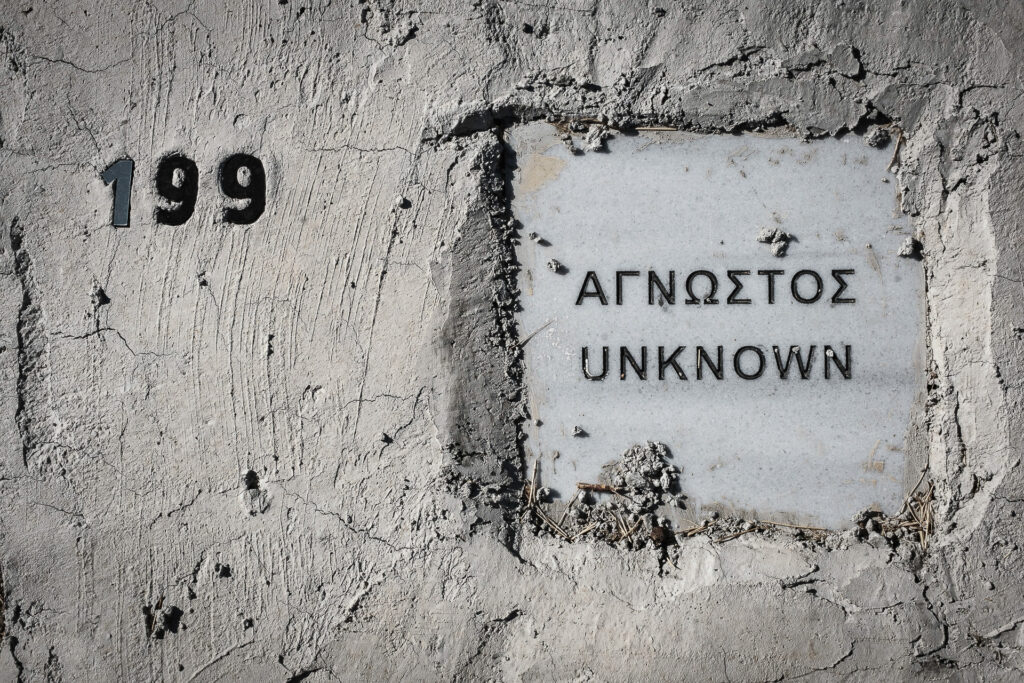
199 Unknown is a multimedia video exploring the erasure and invisibility of migration. Shot on the Greek island of Lesvos in November 2024, its title refers to the 199 graves in the refugee cemetery of Kato Tritos, most marked simply as “UNKNOWN.”

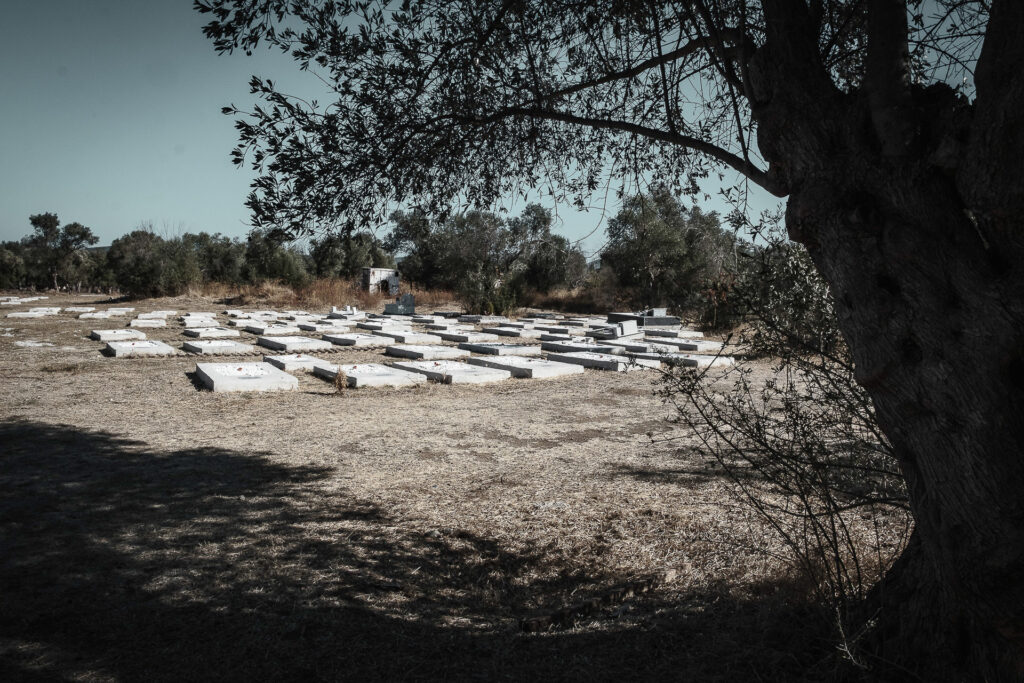
Hidden among olive groves 15 km from Mytilene, the cemetery remained an unmarked field of stones and sticks until 2024. Recently restored by a local NGO, it now stands as a stark reminder of the unacknowledged loss of life along these routes.

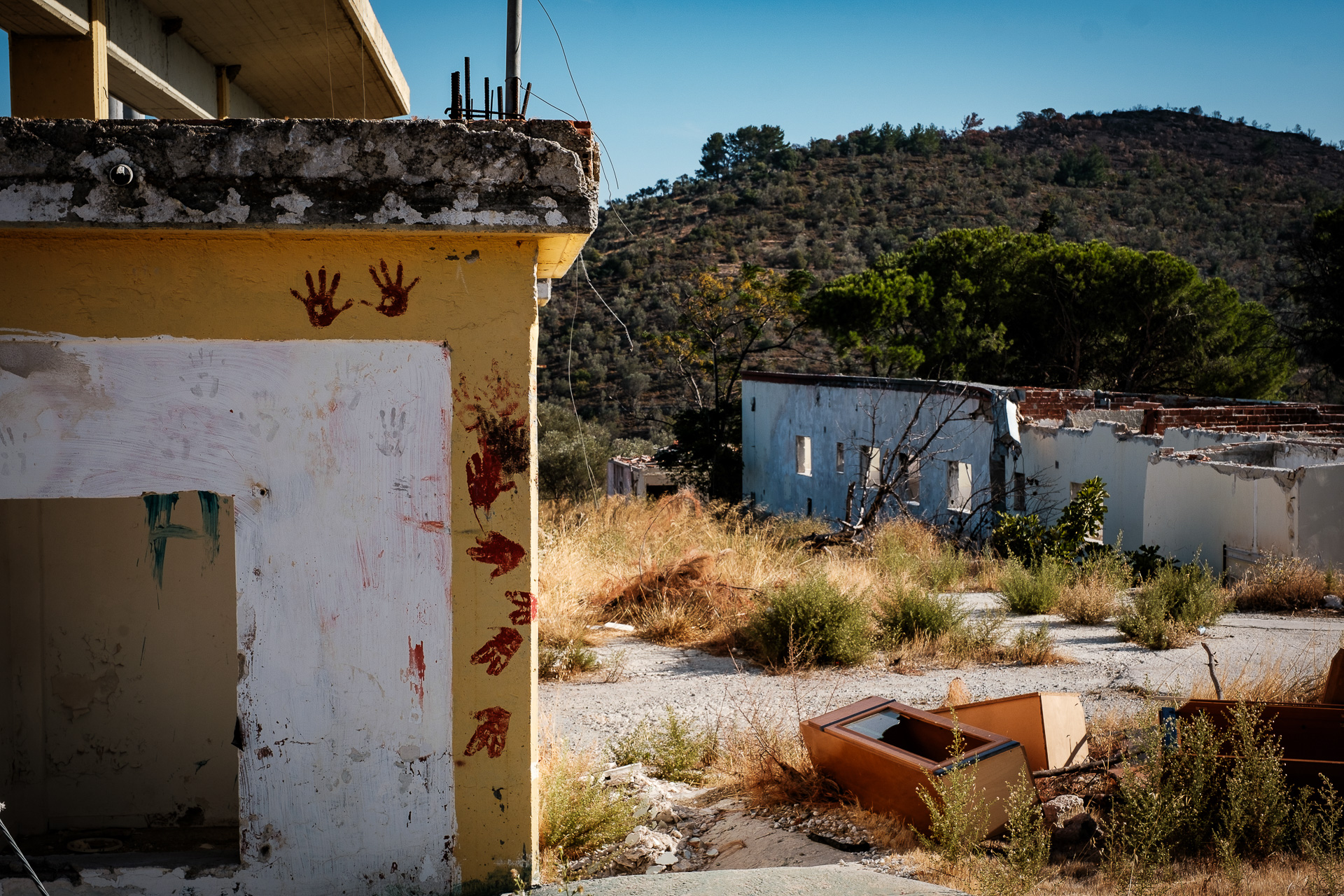
Set to the rhythm of the Synaxis Day parade, the work weaves together three visual layers: the cemetery itself; the traces left along Lesvos’ north-eastern shores—abandoned rafts, life vests, clothes; and the island’s contested spaces, from restricted camps like Kara Tepe to the ruins of Moria and the planned Vastria center.

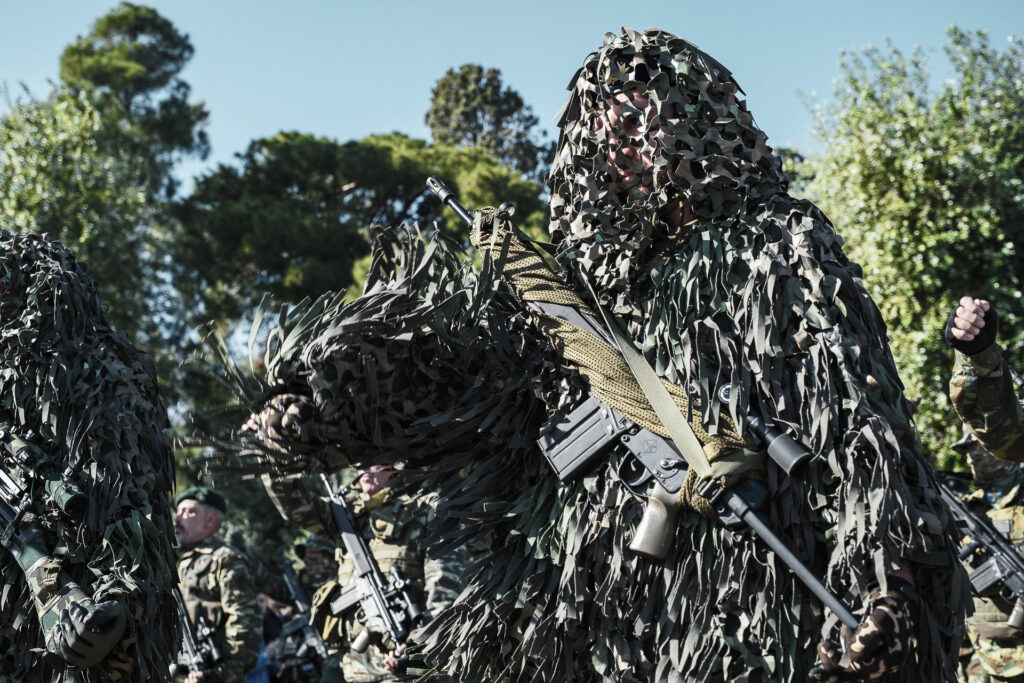
The parade—shifting from children’s march to a display of military power—mirrors a passage from innocence to authority. Within this rhythm, 199 Unknown reflects the ongoing movement of society over migrants’ memories, turning absence into a form of collective amnesia and calling into question what we choose not to see.

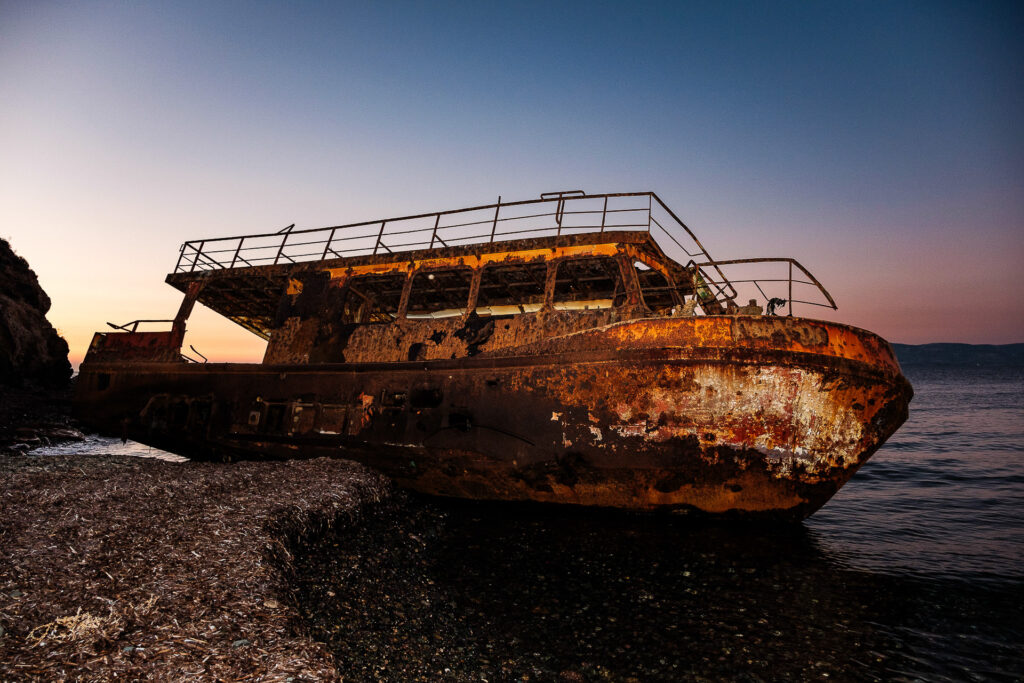
A stranded wreck on the north-eastern coast of Lesvos, Greece, 2024. Once even visible on Google Maps, with user tags and reviews, it stands as one of the many abandoned vessels left behind along the Aegean migration route—a silent remnant of journeys that remain largely unrecorded and unnamed.
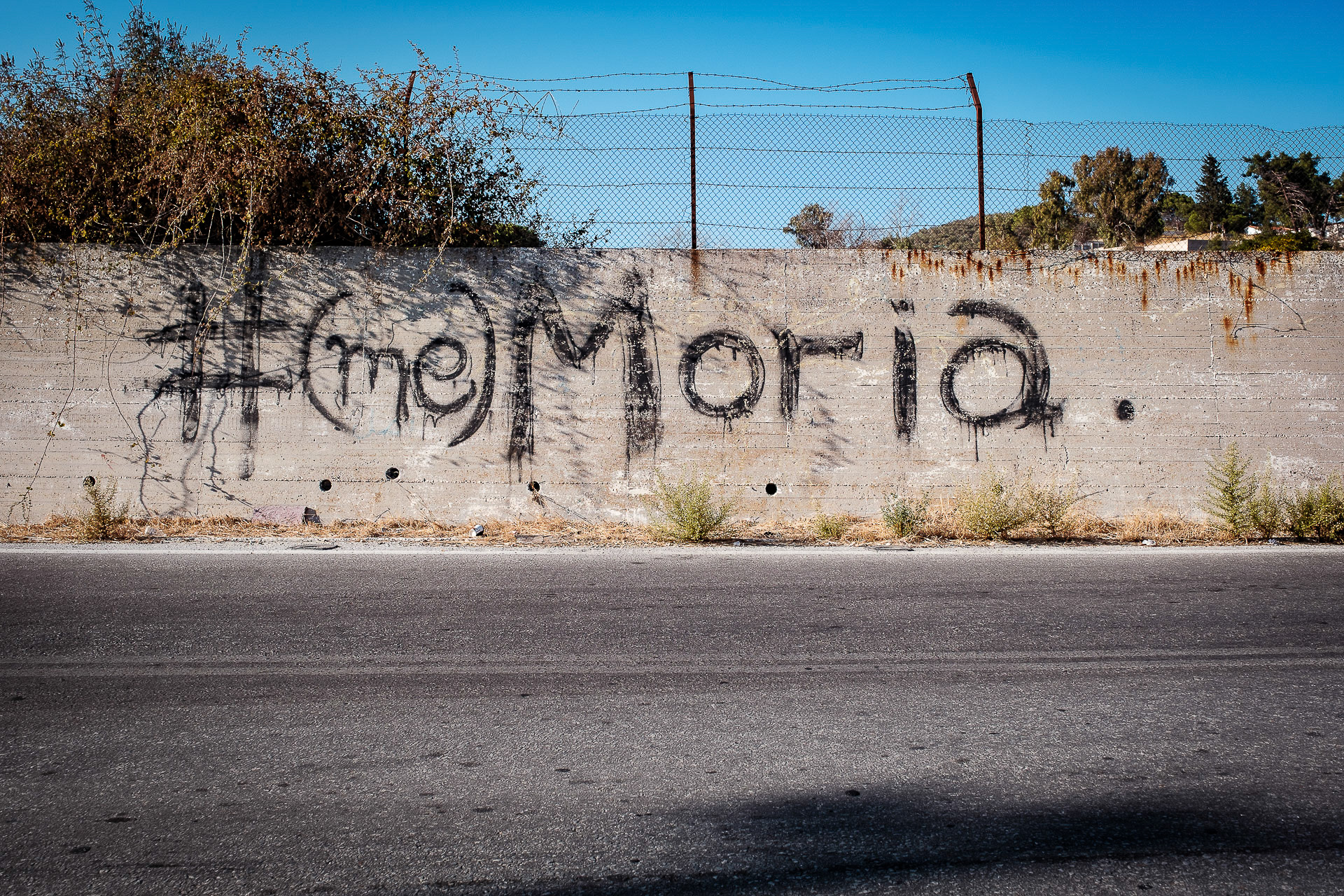
A mural on the perimeter wall of the former Moria Refugee Camp on Lesvos, Greece, destroyed by fire in September 2020. Originally built in 2013 with a capacity of around 3,000 people, Moria eventually hosted up to 20,000, becoming the largest and most overcrowded camp in Europe. The mural reads “Me(M)oria”—a wordplay that combines “memory”," in italian, and “Moria"
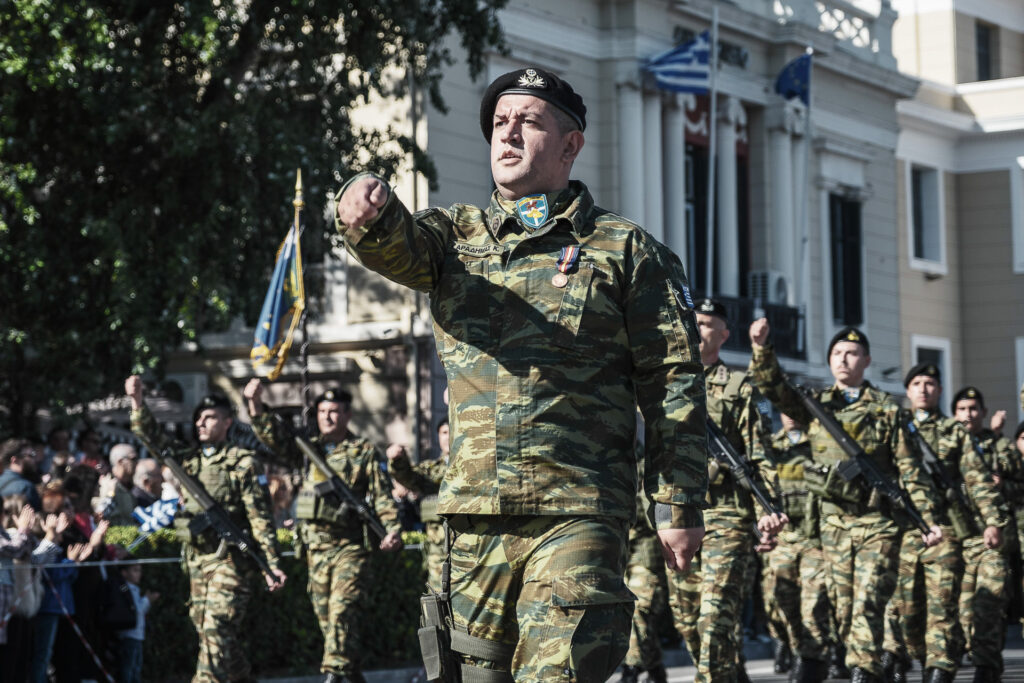
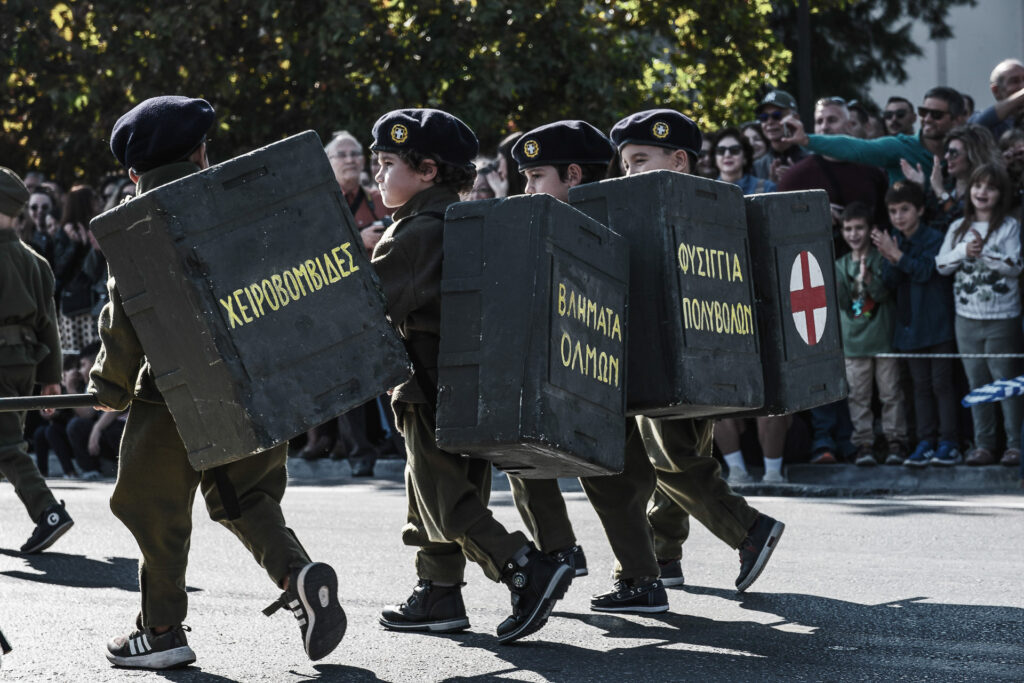
Lesvos, Greece, 2024. The island's military forces officially march trough the city center of Mytilini during the official celebrations for the Oxy day parade, commemorating Greece’s refusal of the Italian ultimatum in 1940.
A general view of the refugee's cemetery of Kato Tritos, unmarked and hidden among olive groves 15 km from Mytilene, was an unmarked field dotted with stones and sticks until 2024. It has recently been restored by a local NGO.
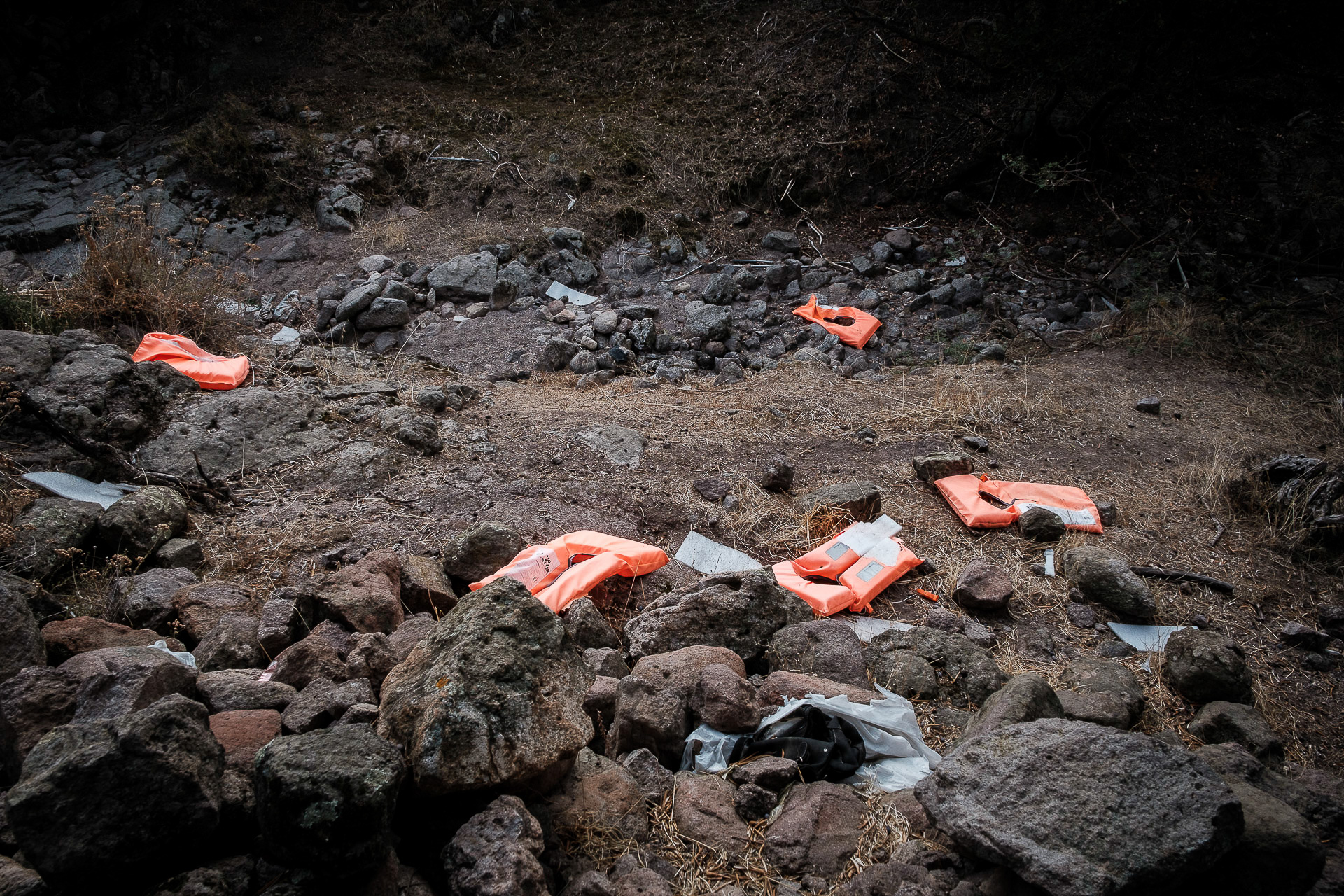
A small clearing in the brush above the Korakas Hut lighthouse, Lesvos, Greece, 2024. Scattered orange life jackets mark a place where newly arrived migrants stop briefly to change out of wet clothes before continuing their journey inland.
Remains of the Moria Refugee Camp in Lesvos, Greece, 2024. Destroyed by fire in September 2020 and originally built in 2013 with a capacity of around 3,000 people, Moria eventually hosted up to 20,000, becoming the largest and most overcrowded camp in Europe.
Lesvos, Greece, 2024, Oxi Day parade. After all school classes have marched—from the youngest children to the oldest—come the grown versions of the uniformed soldiers.
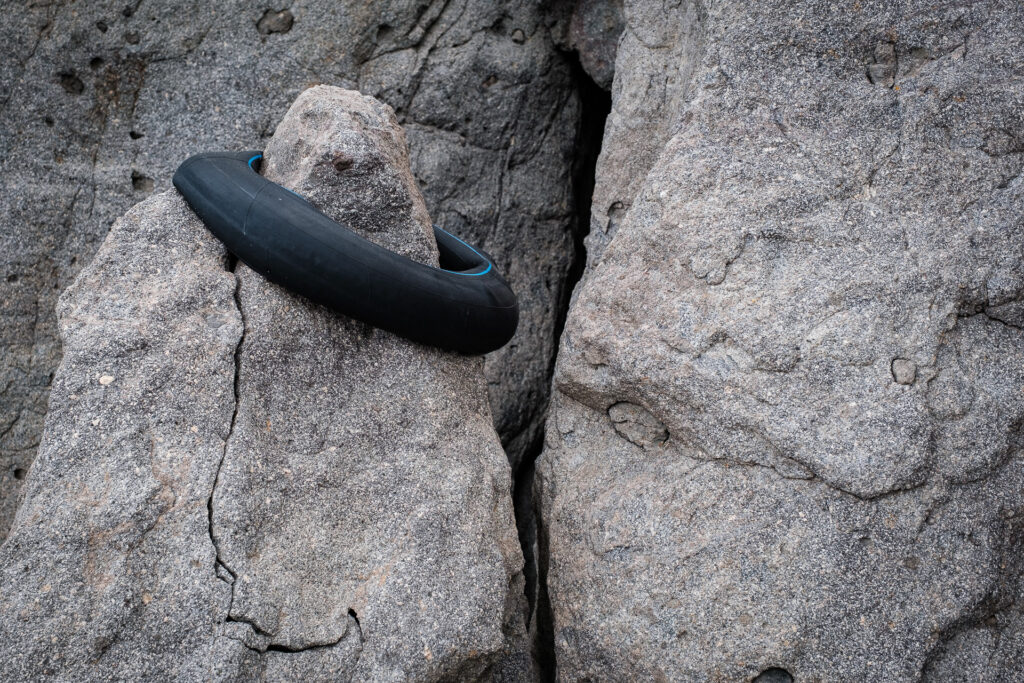
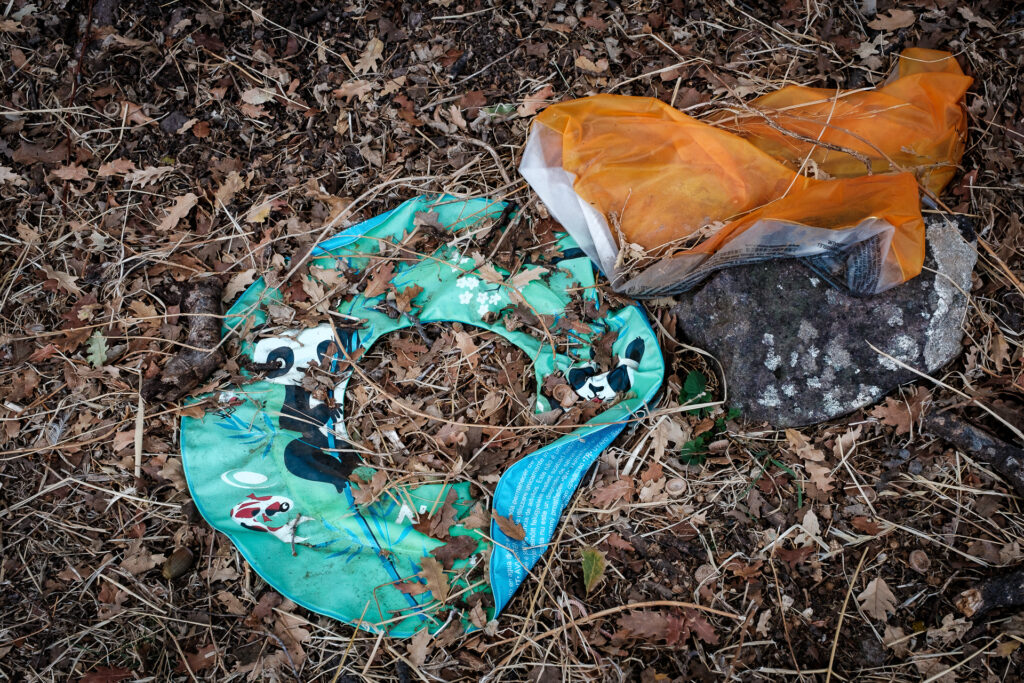
An abandoned inner tube near the Korakas Hut lighthouse, Lesvos, Greece, 2024. Used as an improvised flotation device when life jackets are no longer available.
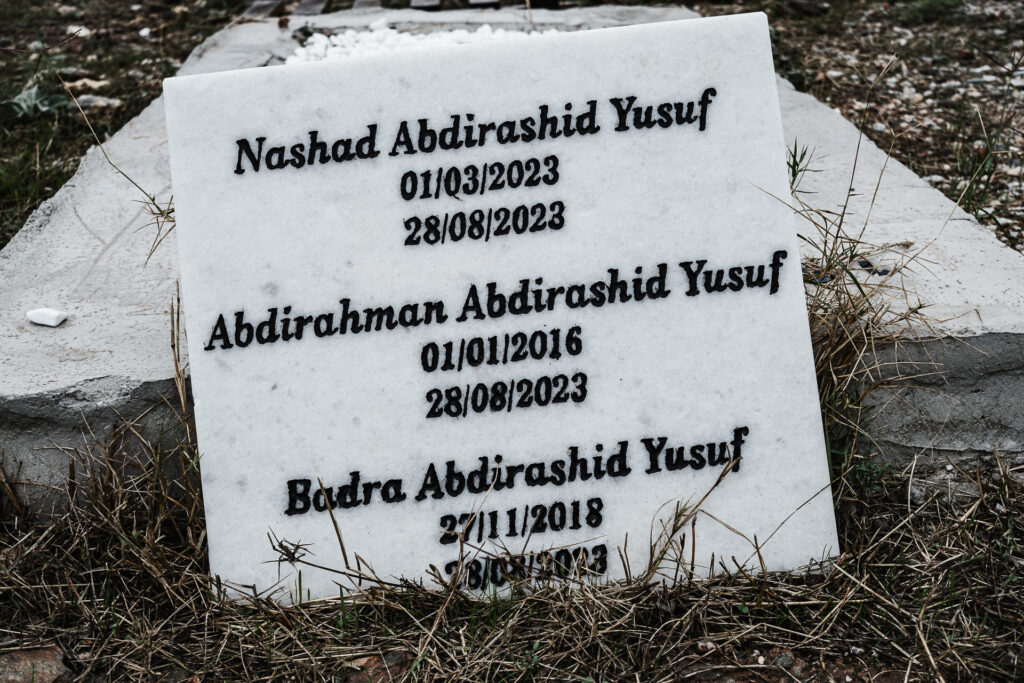
28/08/2023 – An inscription added to a grave previously marked as “unknown.” Of the 199 graves identified, most bear only the word “UNKNOWN.” Others, instead, carry names and fragmentary official records that dissolve within inaccessible local archives, while a few still preserve traces of entire stories of tragedy.
Detail of children’s life jackets abandoned along the road leading away from the Korakas Hut lighthouse, Lesvos, Greece, 2024. In 2024, this area was one of the main landing points for arrivals on the island.
Children march dressed as soldiers during the “Oxi Day” parade on Lesvos, Greece, 2024. On their backpacks it reads: grenades, shells, machine gun cartridges.
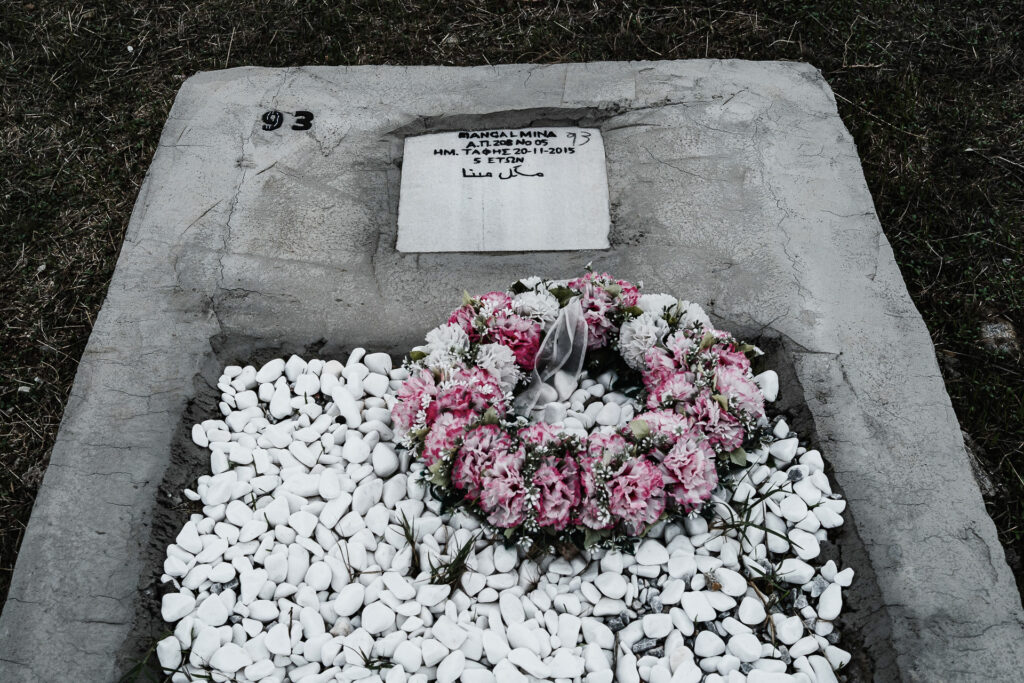
Malcamina (?) - Protocol No. 208 - N. 05 - Burial Date: 20/11/2015 - 5 Years Old. During my stay in Lesvos, no one knew how to retrieve the protocol information about burials.. These kind of lost cemetery are not only in Lesvos, but along the whole balcanic route.
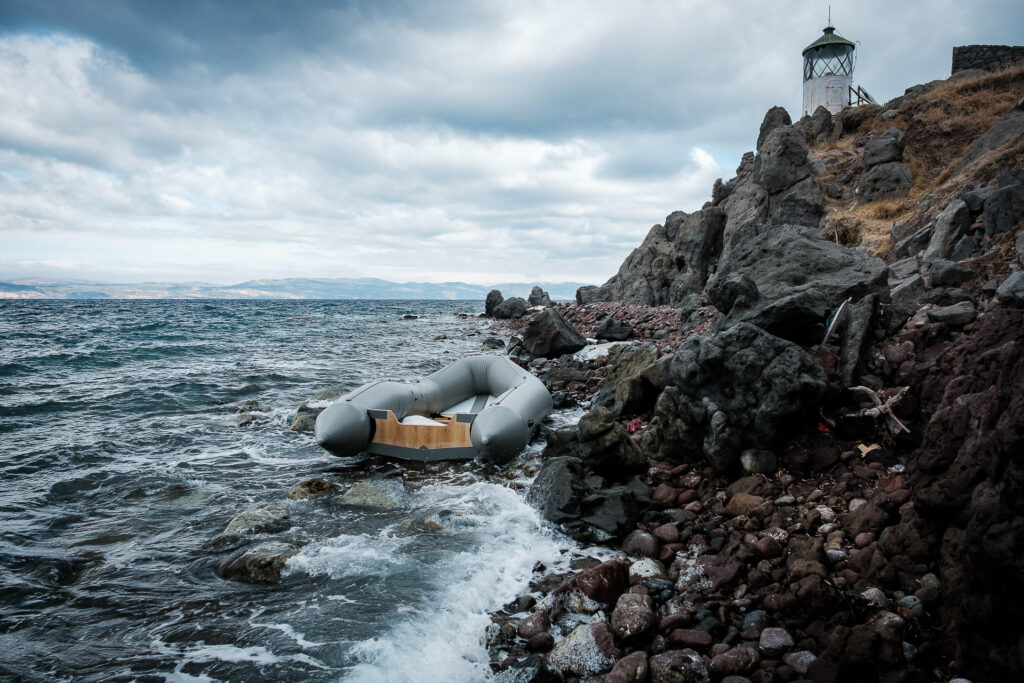
An abandoned inflatable boat near Korakas Hut, Lesvos, Greece, 2024. This part of the island lies only about 4 km from the Turkish coast at its closest point, making it one of the main landing areas for arrivals. Because of this short distance, it has been one of the most frequently used crossing routes in recent years.
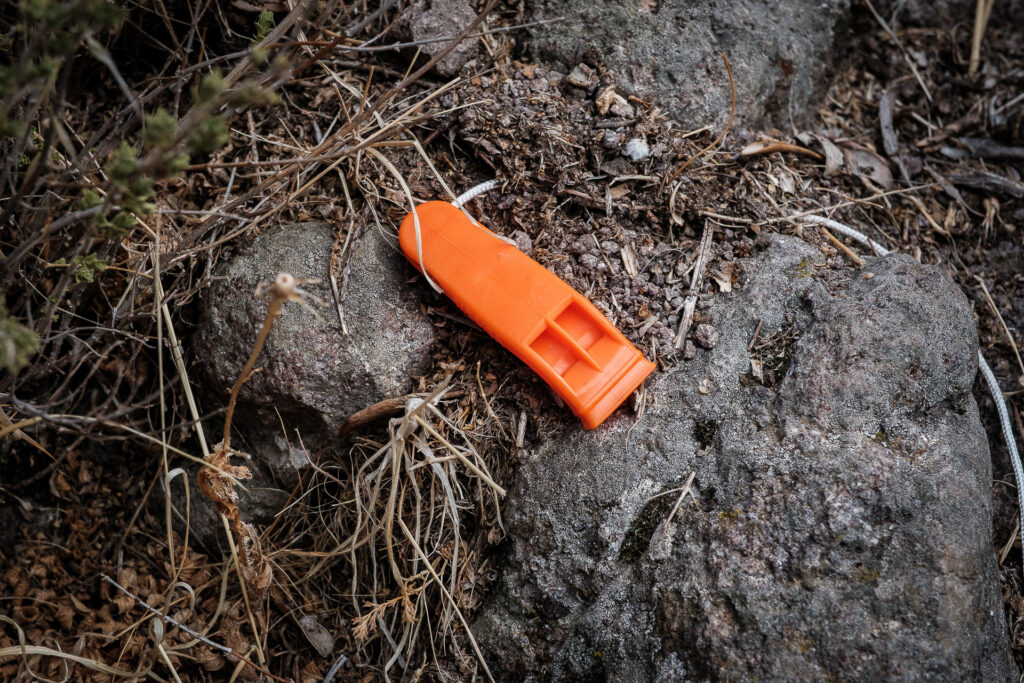
Close-up of a whistle from a life jacket, abandoned in the brush near Korakas Hut, Lesvos, Greece, 2024.
A detail from a tomb in the refugee's cemetery in Kato Tritos, Lesvos, Greece, 2024. !99 Unknown is part of the wider EU funded project "Solroutes, Arts against borders" promoted by the Visual Sociology Laboratory from the University of Genoa.
Events and news coverage