Genoa, 2020. At the end of the first two lockdowns, local administrations were forced to regulate the fragile balance between containing the spread of Covid-19 and reopening access to public space. In Liguria, and particularly in the metropolitan area of Genoa, life is deeply tied to the coastline: the sea is both infrastructure and social space.
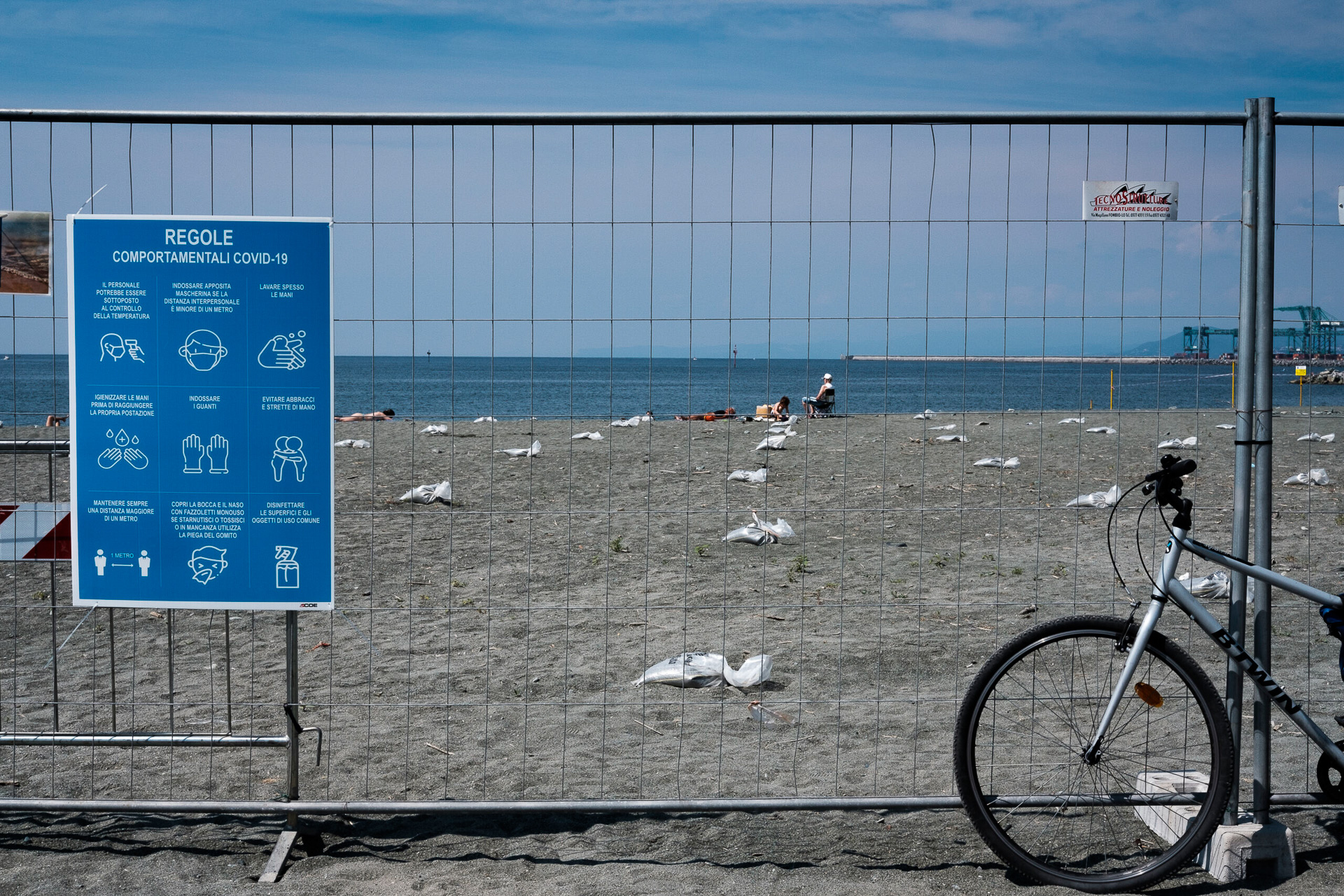
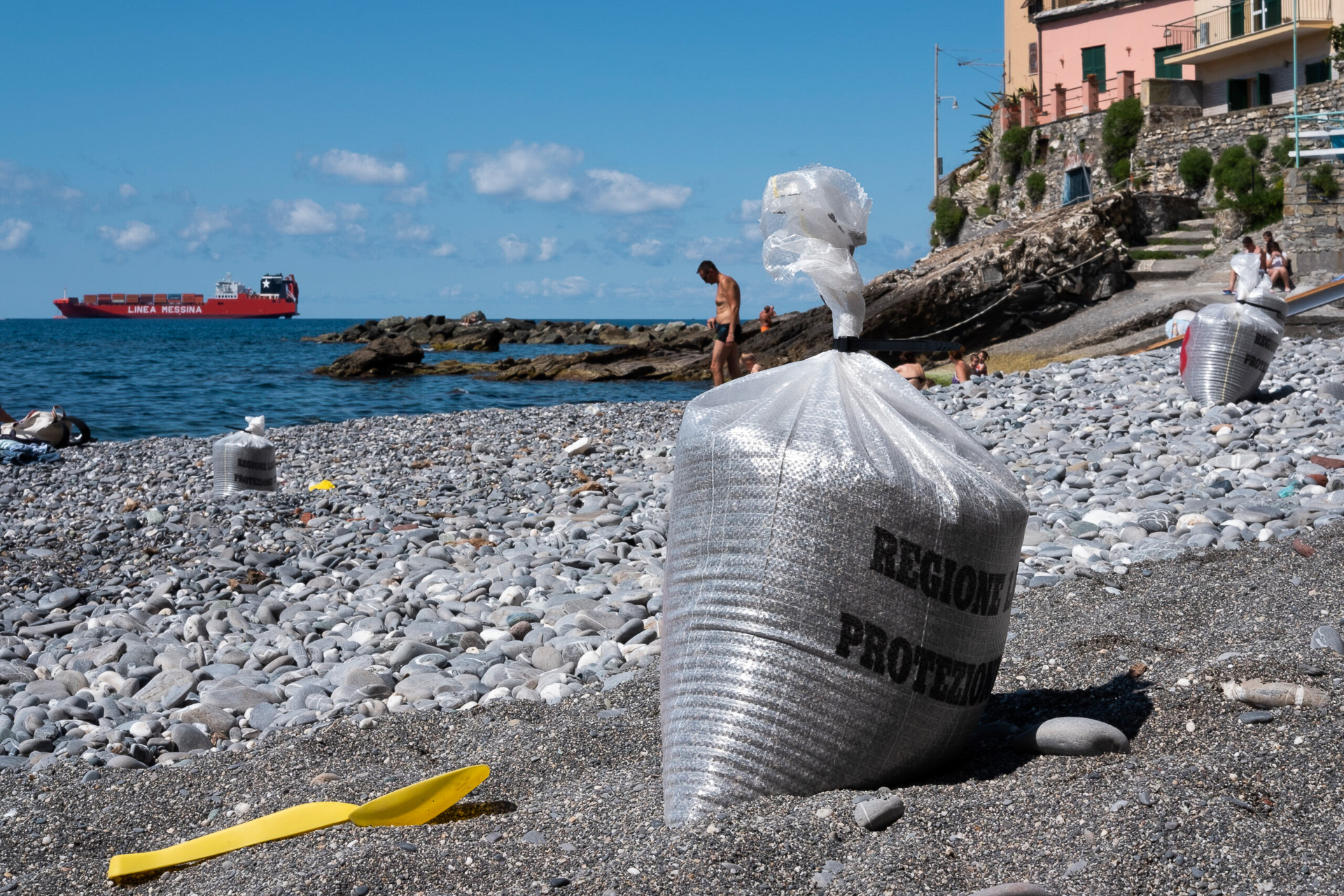
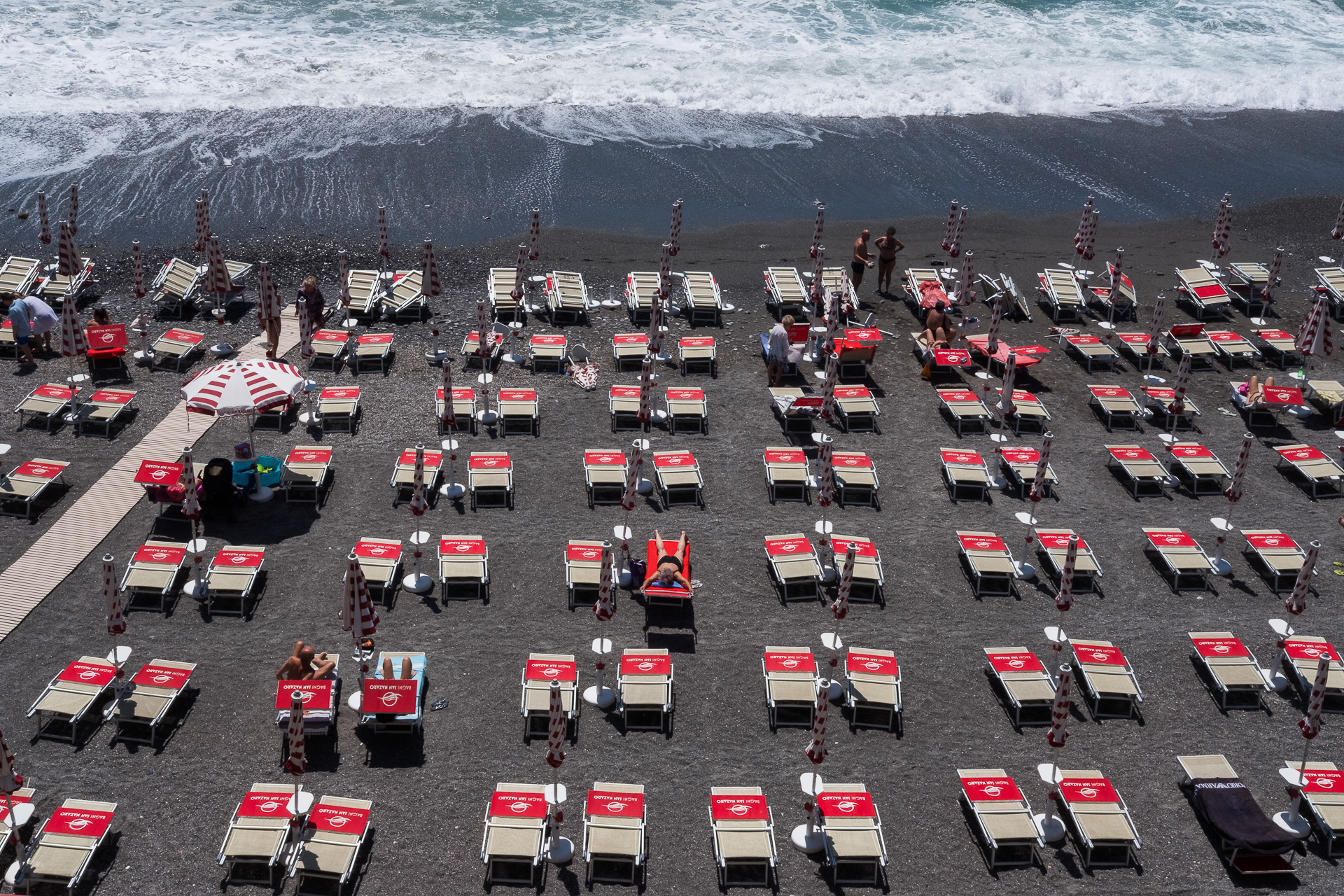
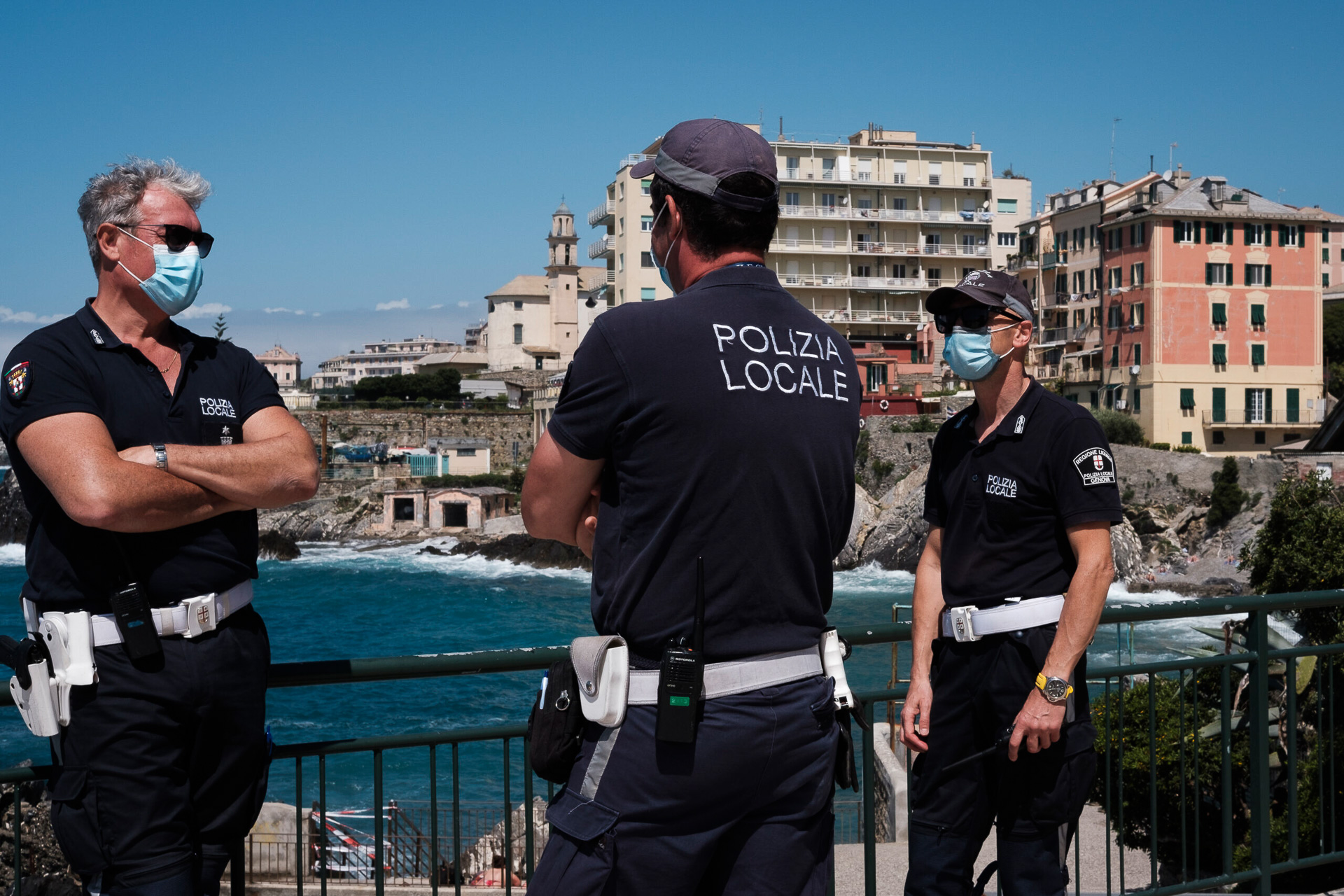
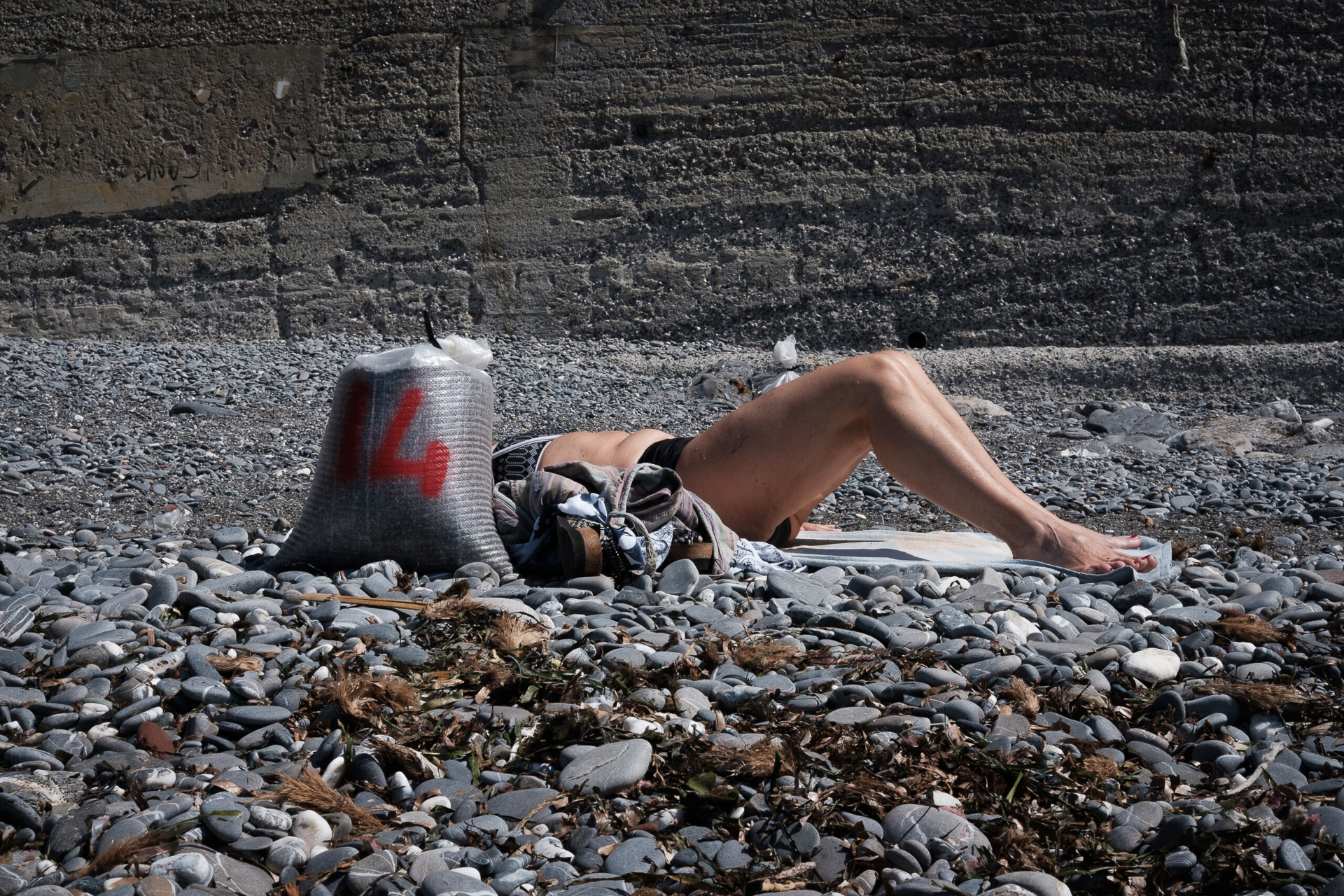
With the arrival of spring, it became clear that the few public beaches had been reorganised through a system of fragmentation and control. Access was monitored by Local Police, and social distancing measures were enforced through the physical restructuring of space. Beaches were divided into marked and separated zones, where bodies were assigned fixed positions under the sun. Plastic bags filled with sand and marked with red numbers appeared along the shoreline, turning proximity into a regulated condition. Alongside this, digital tools and reservation systems were introduced to manage access.
The pandemic did not invent these mechanisms, but intensified them, making visible a pre-existing logic of governance over public space.
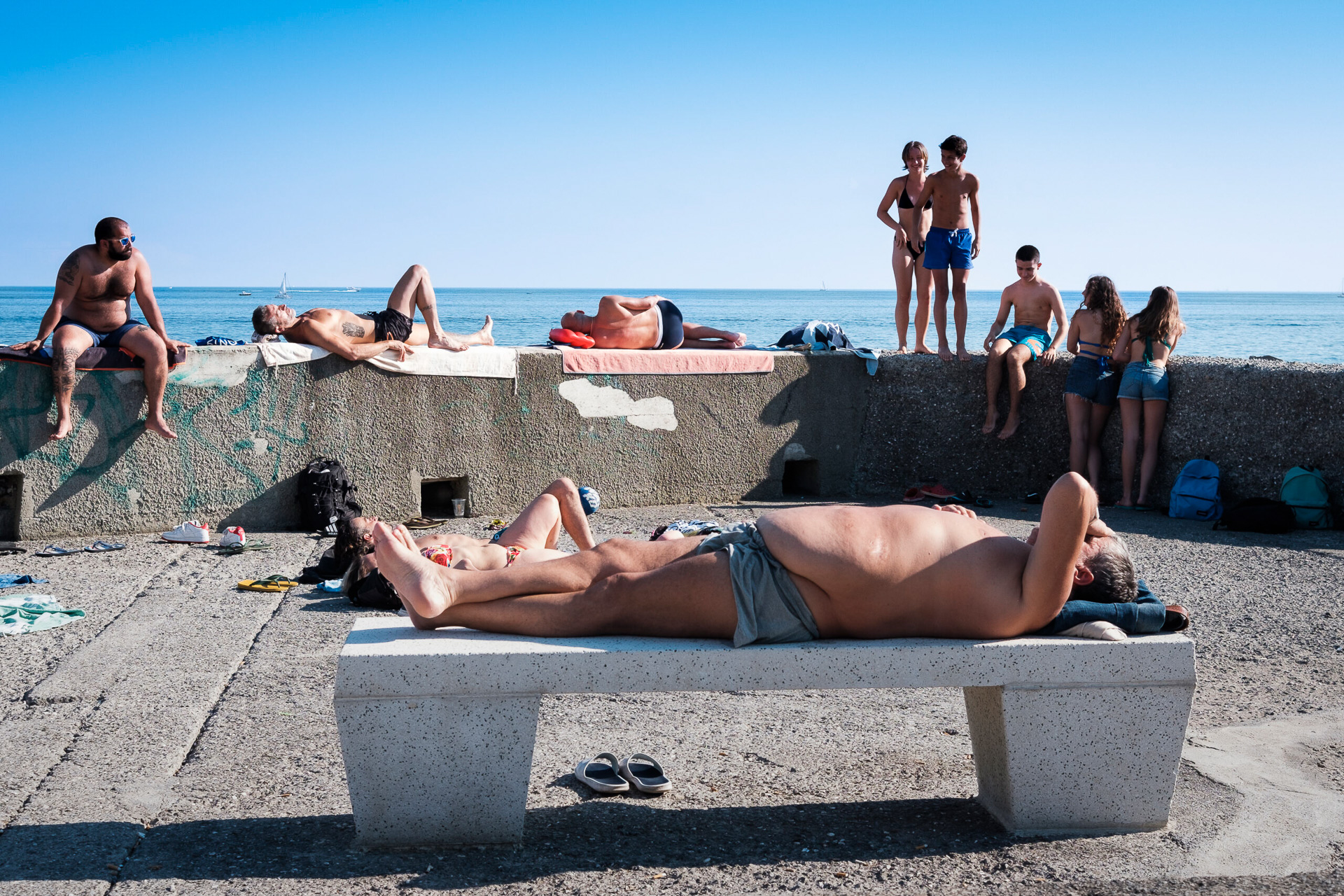
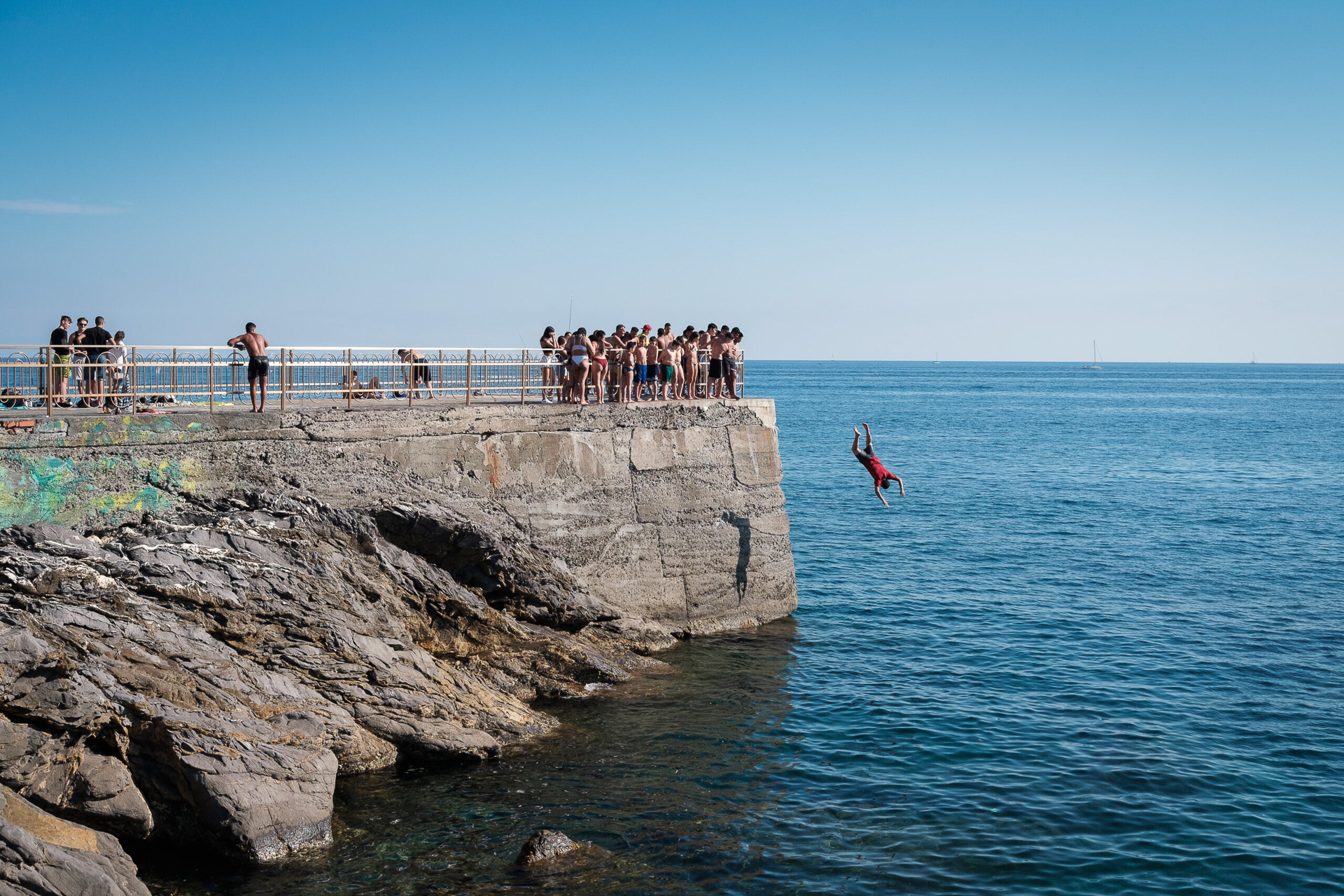
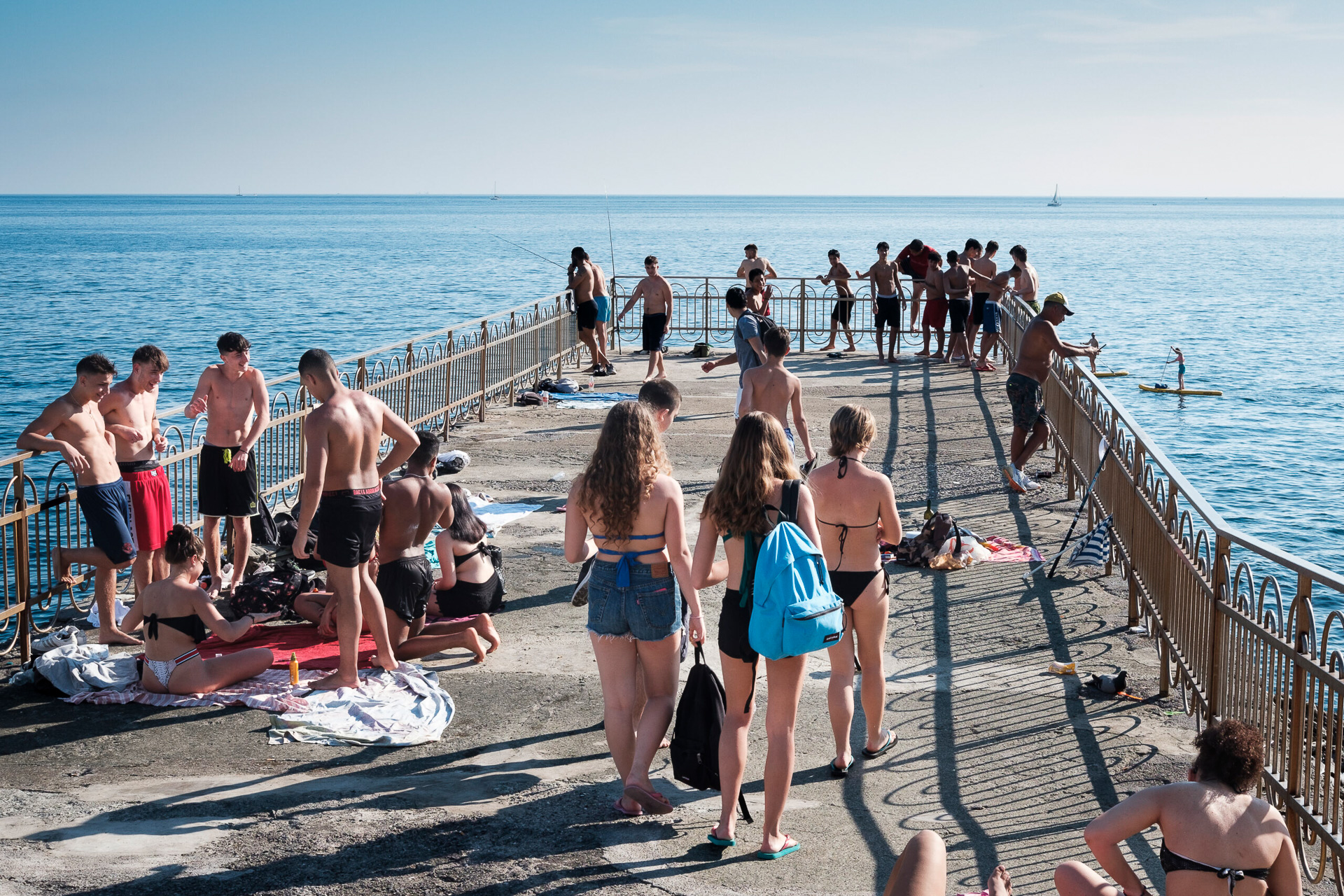
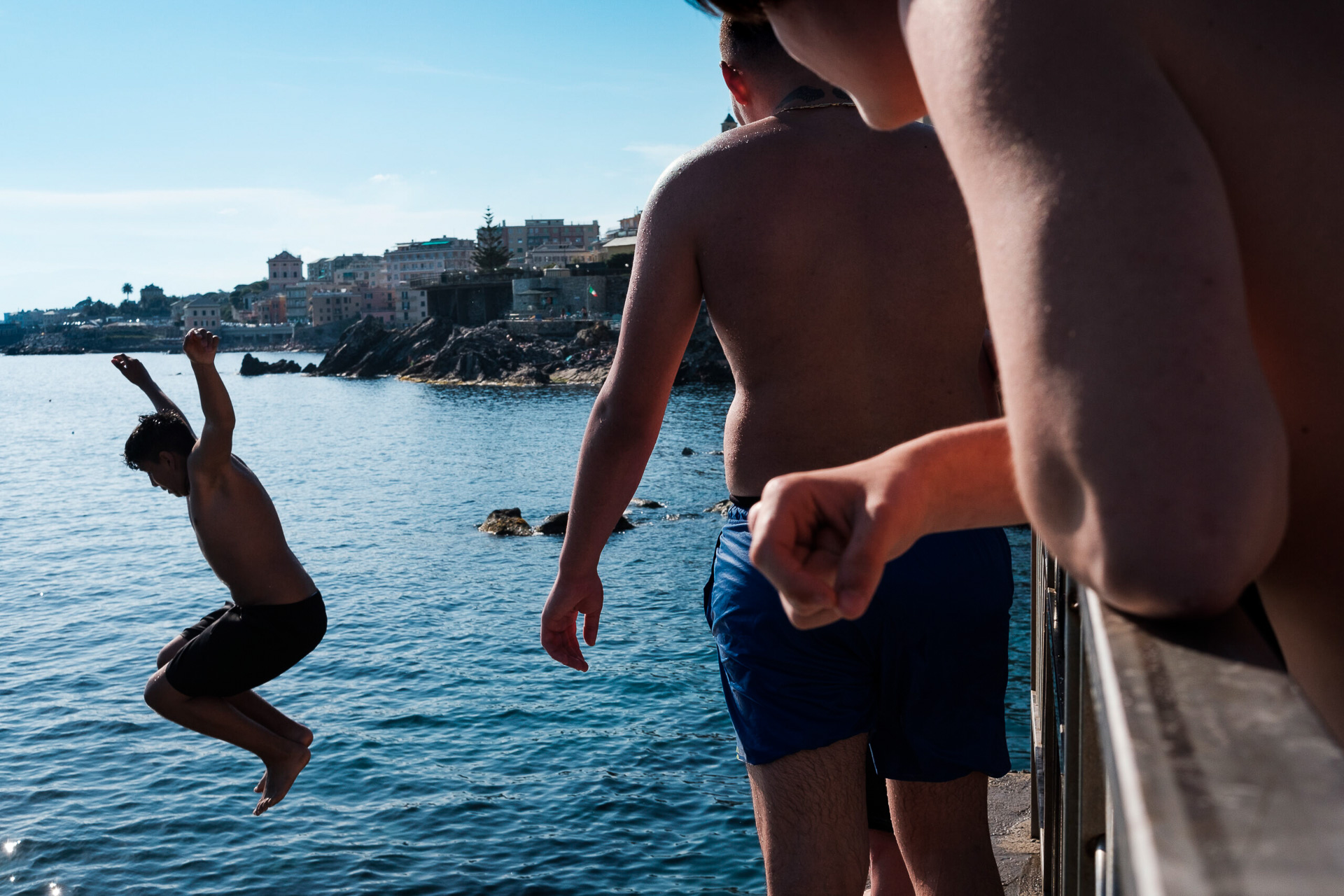
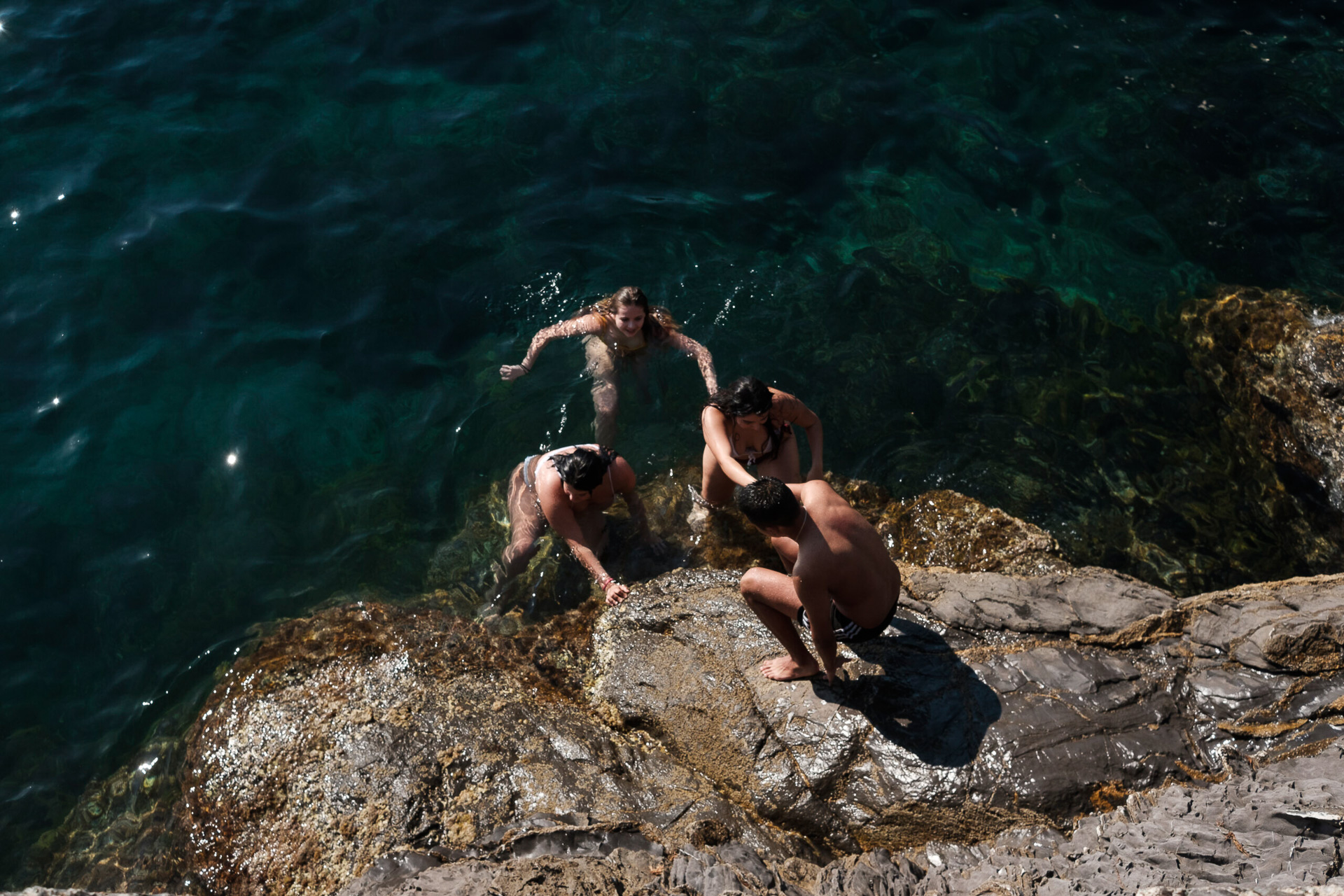
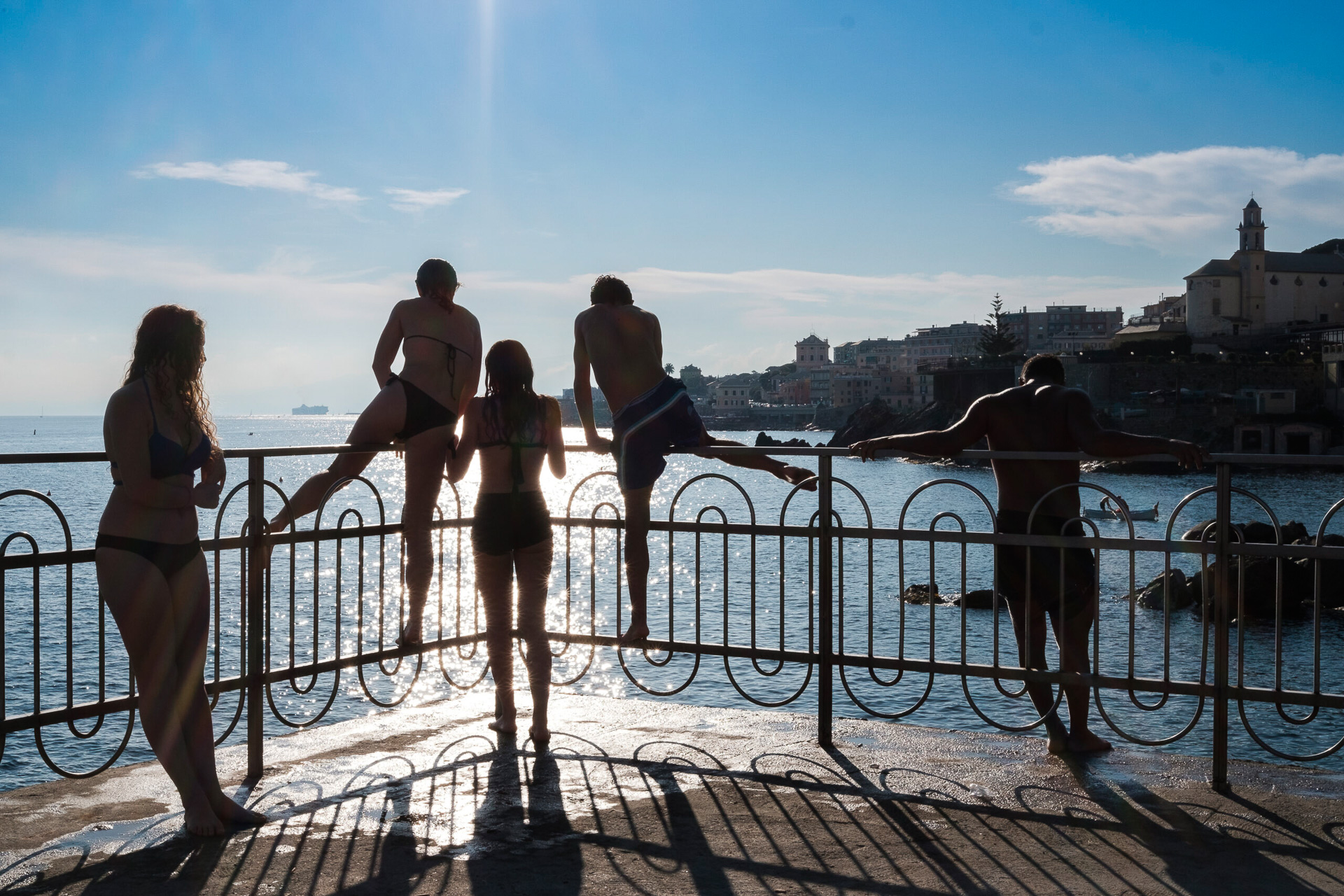
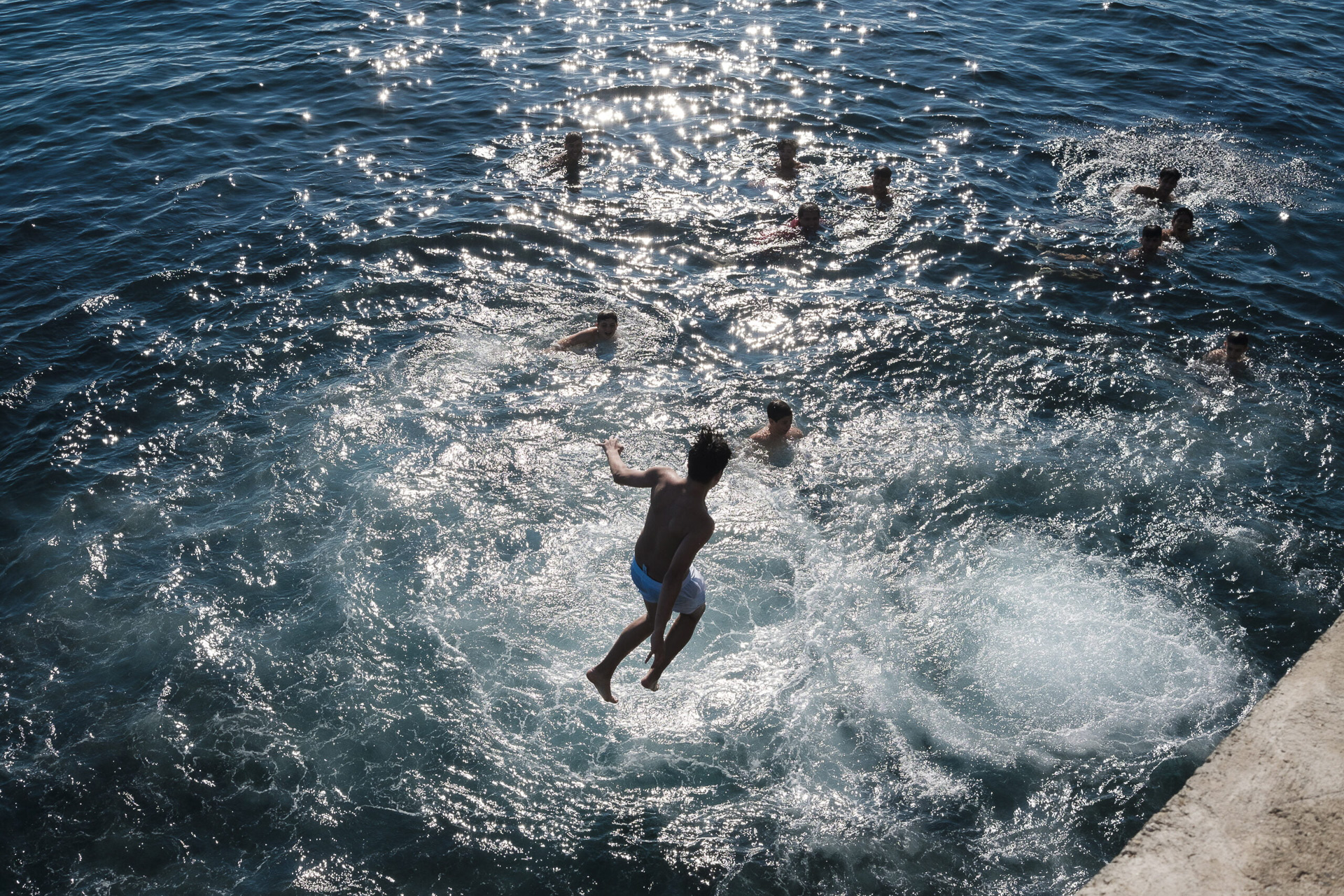
Yet within this system, the cliffs and rocky edges of the city were forgotten and remained unregulated. These liminal spaces became informal openings, used especially by younger generations as an escape from containment—a place where social life was spontaneously reclaimed under the powerless eyes – and sunglasses – of local police.