Emanuela Zampa

Antibodies

“Italy prohibits the export of weapons to countries involved in armed conflicts or responsible for serious human rights violations, in accordance with the Constitution and international obligations.” (Law no. 185, July 9, 1990)

From the docks of the Port of Genoa to the streets of major global capitals, a powerful wave of dissent rose during the last quarter of 2025 to demand justice for the Palestinian people. At the heart of this mobilisation is a small group of dockworkers who refuse to load weapons onto ships: the Autonomous Collective of Port Workers (CALP).

The Port of Genoa is a vital hub in Mediterranean trade, with millions of containers passing through its terminals each year. A significant portion of global military logistics also transits through the port. CALP reports that approximately 13,000 containers leave the region bound for Israel each year; it is within this broader flow of commercial trade that the collective seeks to identify and intercept the shipment of military supplies.

Since 2019, CALP’s efforts—ranging from awareness campaigns and boycotts to leaking photos and the direct refusal to handle weaponry—have become central to a broader resistance against “war logistics” at sea and on land.

Starting in the summer of 2025, CALP’s work intersected with the Global Sumud Flotilla campaign, bolstered by the participation of port worker José Nivoi, linking labour struggles with humanitarian solidarity. This synergy was driven by USB, the grassroots union to which CALP belongs, which organised national strikes throughout the autumn against the government’s “war budget” and the diversion of public resources from welfare toward rearmament. These efforts culminated in the national strike and demonstration on November 28, where dockworkers, unions, students, and civil society stood together. They were joined by a broad international delegation including Francesca Albanese, Thiago Ávila, and Greta Thunberg, among many others.

The collective commitment to halt logistics in response to an eventual interception of the Flotilla resonated in demonstrations worldwide, acting as a peaceful but firm refusal to adapt to the narrative of an inevitable expansion of the conflict.

This series was awarded with an IPA Honorable Mention in 2026

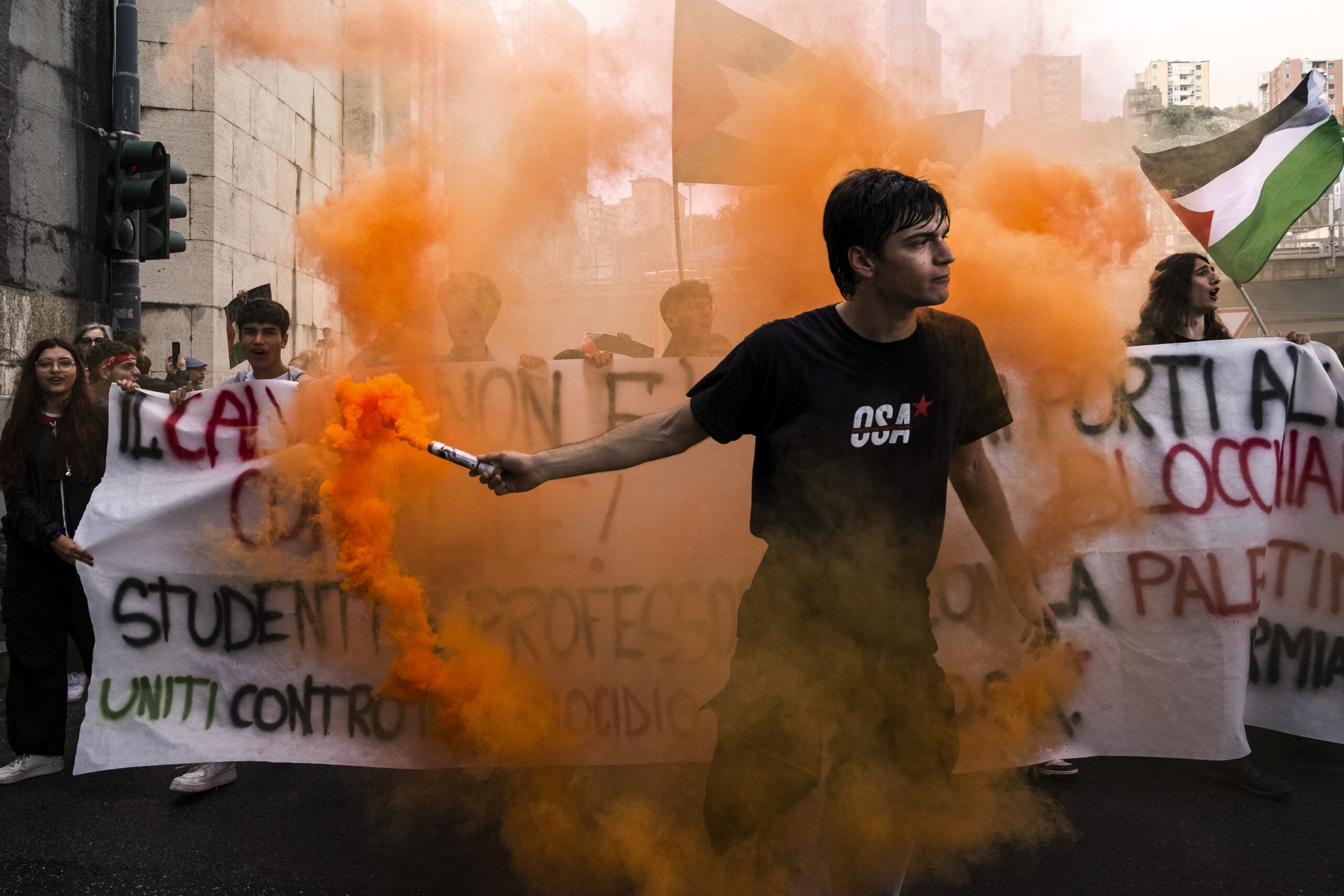
A young protester holds an orange flare as a student rally joins dockworkers and union members during a nationwide strike at the Port of Genoa on September 22, 2025. Organised by the Unione Sindacale di Base (USB), the mobilisation protested the increase in national military spending and the use of civilian ports for weaponry transit following reported drone attacks on the Global Sumud Flotilla vessels. The protest highlighted a growing alliance between labour and student movements, linking cuts in public education and welfare to the systemic rise in rearmament budgets across Europe.
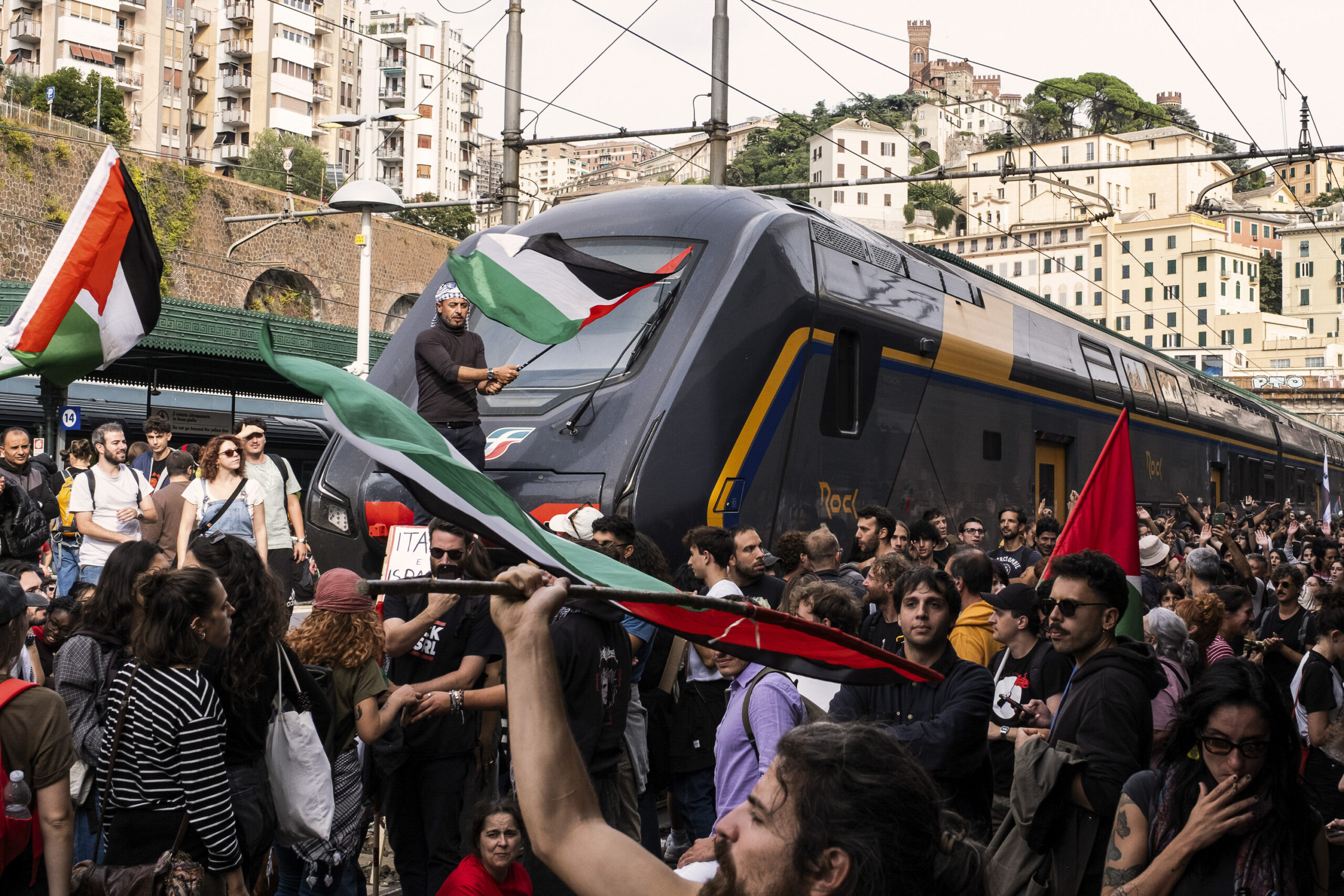
Protesters wave Palestinian flags while surrounding a train, stationary due to a nationwide strike, at Genoa Piazza Principe railway station on October 3, 2025. This occupation represented the symbolic climax of a day of fragmented but overwhelming mobilisations across the city and proceeded without clashes as law enforcement withdrew, allowing protesters to gather in the empty terminal. Following the interception of the Global Sumud Flotilla by Israeli naval forces, a national strike was called by a coalition of trade unions. Rallies were held in the main Italian cities, with solidarity protests occurring globally. The mobilisation took place despite the national strike commission declaring the labour action illegitimate due to the lack of proper notice.
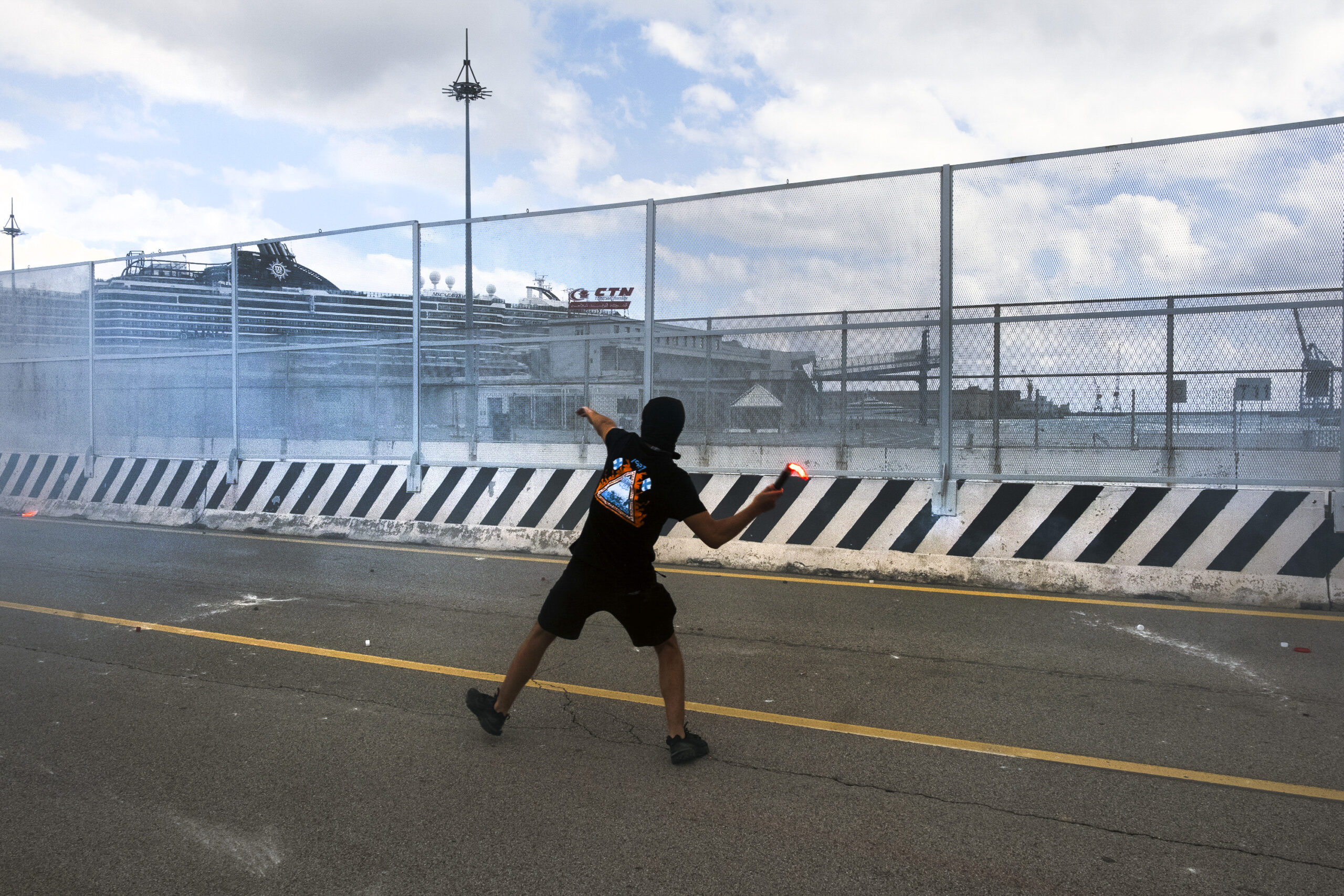
A masked protester hurls a smoke grenade during a port mobilisation in Genoa on September 22, 2025. While a cruise ship remained visible in the background, the demonstrator targeted police lines—positioned out of frame—that blocked the march's access to the cruise terminal after it had peacefully passed through the ferry area. The protest was part of a nationwide strike against rising military spending and in support of the Global Sumud Flotilla. Immediately following this gesture, members of the Autonomous Collective of Port Workers (CALP) intervened to restrain the individual and prevent a direct confrontation with law enforcement. The mobilisation occurred amid public warnings from dockworkers that an attack on the Flotilla would lead to a blockade of port operations.
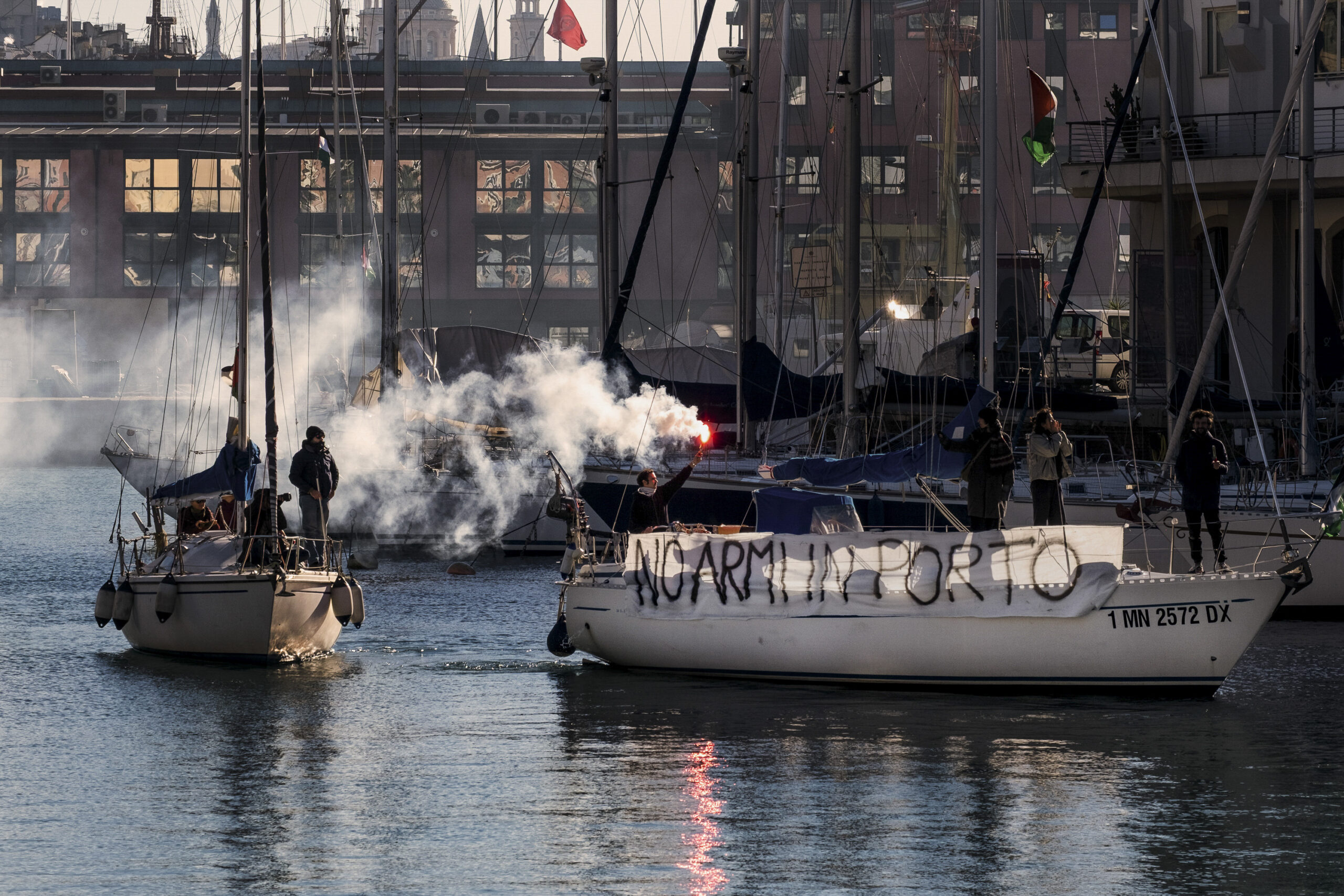
Activists aboard two sailboats with Palestinian flags ignite a red smoke flare in Genoa’s harbour on November 28, 2025. The vessels, carrying banners - one reading "No weapons in the ports” - symbolically represented the Freedom Flotilla and carried participants of the original mission. The action took place during a nationwide general strike against military spending, which saw Genoa become a focal point for international observers and activists gathered to support the local dockworkers' resistance. This mobilisation served as a prelude to a massive national demonstration in Rome the following day, which drew an estimated one million participants.
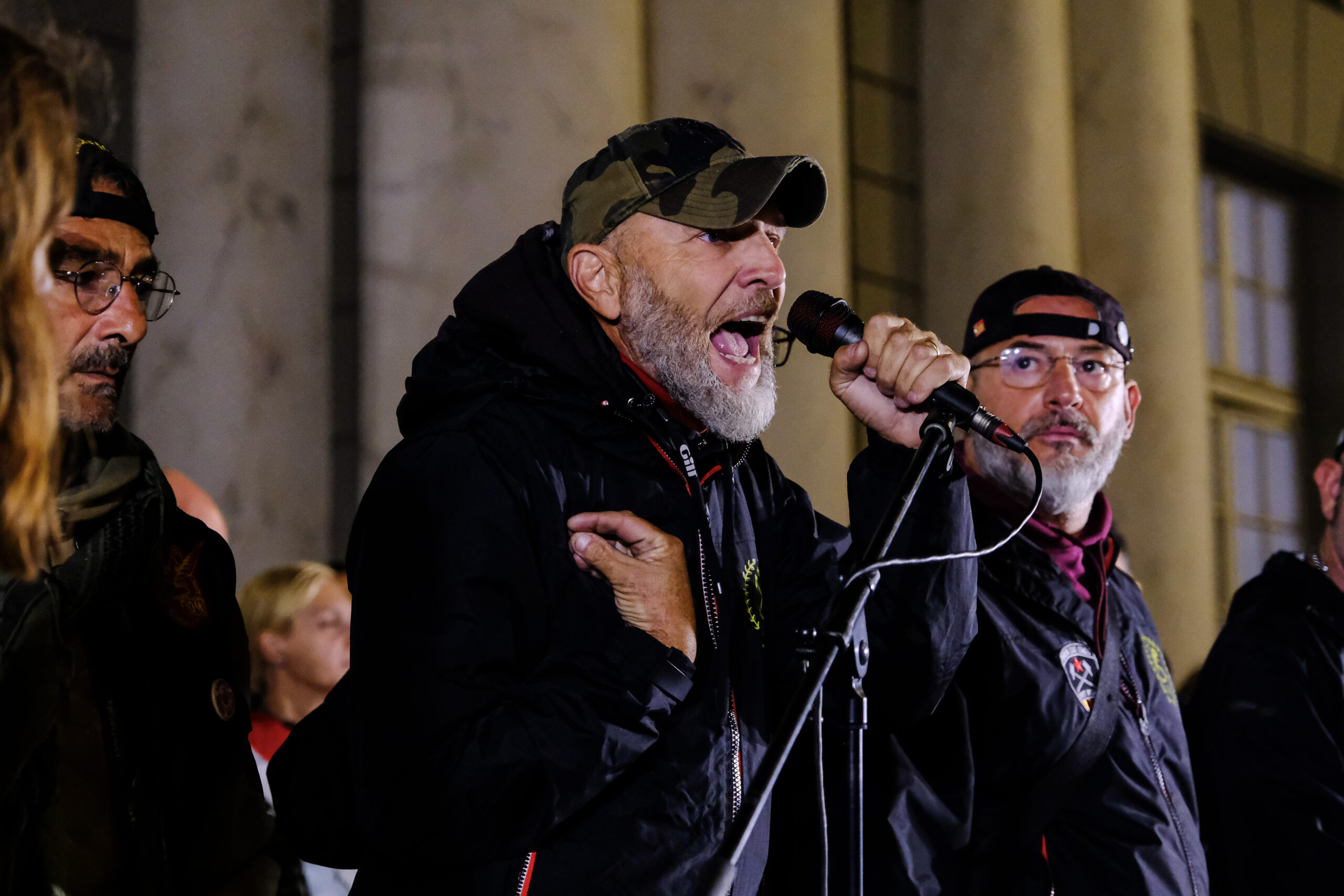
GENOA, ITALY - SEPTEMBER 27: Riccardo Rudino of CALP (Comitato Autonomi Lavoratori Portuali) addresses the crowd, as happened on August 30th, Rudini reaffirms the intention of Calp and all Sumud Flottilla Activists to "Block Everything" if the Flottilla gets intecepted by the IDF. The slogan quickly viralizes across Europe.
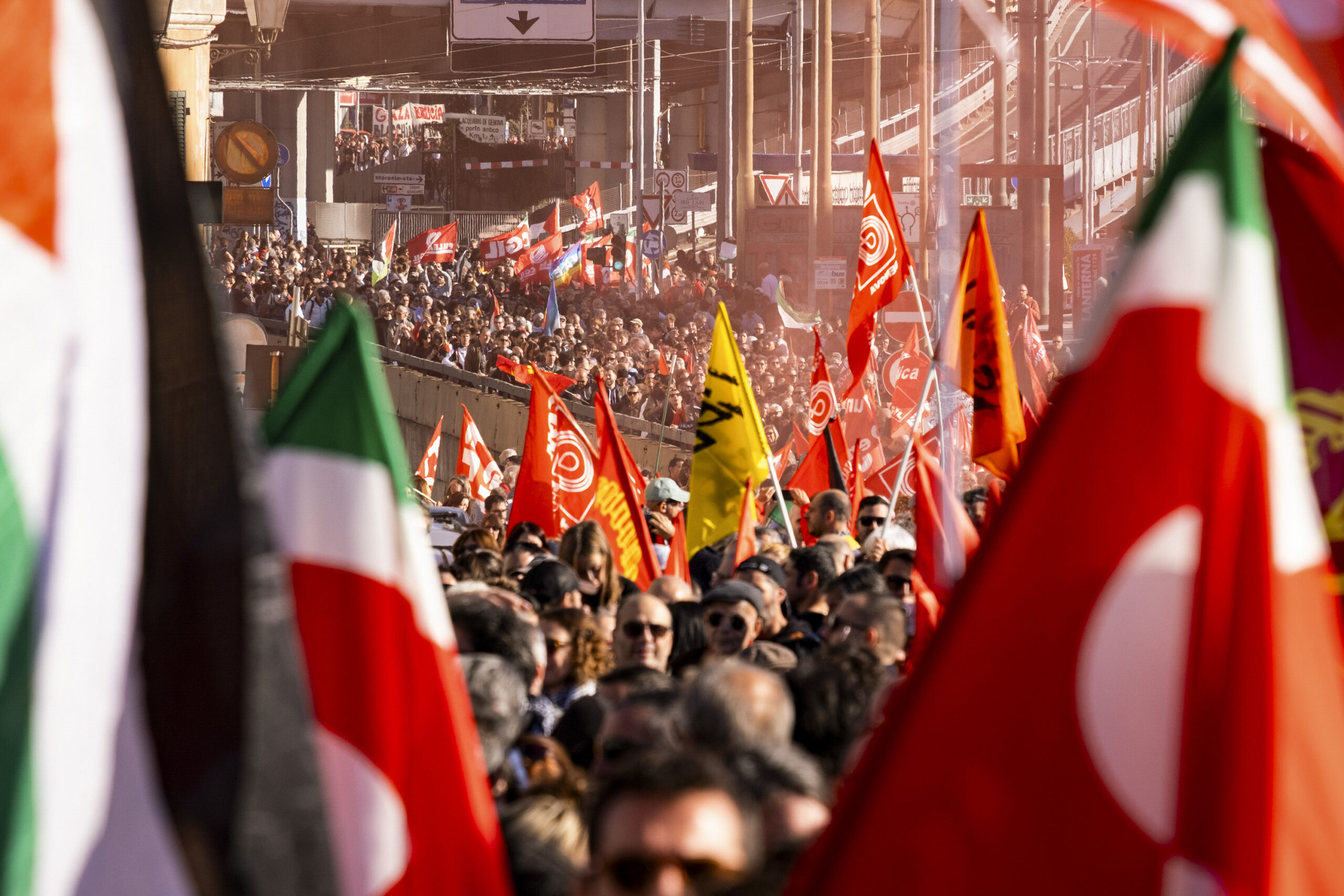
A monumental column of workers from various sectors marches from the Port of Genoa to the city on October 3, 2025, in a rally led by the CGIL union. Despite the national strike commission declaring the action illegitimate due to lack of proper notice, an estimated 15,000 to 20,000 people took to the streets in Genoa alone, with participation at the port terminal reaching 80%. This demonstration was part of a coordinated nationwide protest involving over 25 cities, triggered by the naval interception of the Global Sumud Flotilla. As the European epicentre of this logistics resistance, Genoa saw a total paralysis of strategic trade gates, with workers, students, and civil society uniting to protest military spending and the transit of armaments through civilian infrastructure.
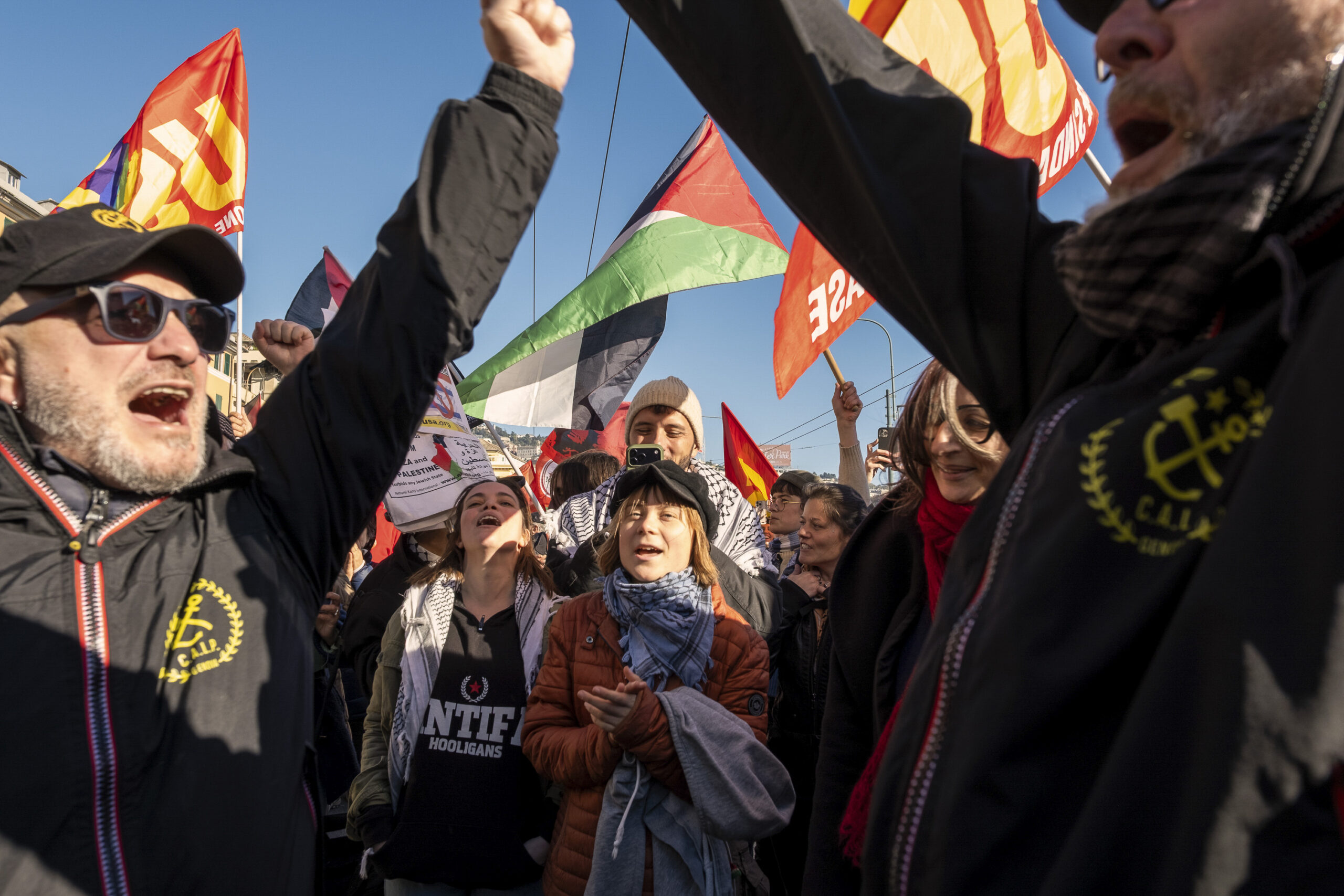
International activists Greta Thunberg, Thiago Ávila, and UN Special Rapporteur on the occupied Palestinian territories Francesca Albanese join Genoa dockworkers of CALP and protesters in singing "Bella Ciao" during a nationwide general strike against military spending rally on November 28, 2025. The Global Sumud Flotilla mission was designed as a coordinated effort between "sea crews" (on the vessels) and "land crews" (at the ports) to maximise international visibility and challenge the naval blockade of Gaza. This symbolic reunion in Genoa, during the national strike called by the USB union, emphasised how street mobilisations were integral to the mission’s goal of drawing global attention to the conflict. The march, a prelude to a massive demonstration of nearly one million people in Rome the following day, celebrated Genoa’s role as the epicentre of the movement.
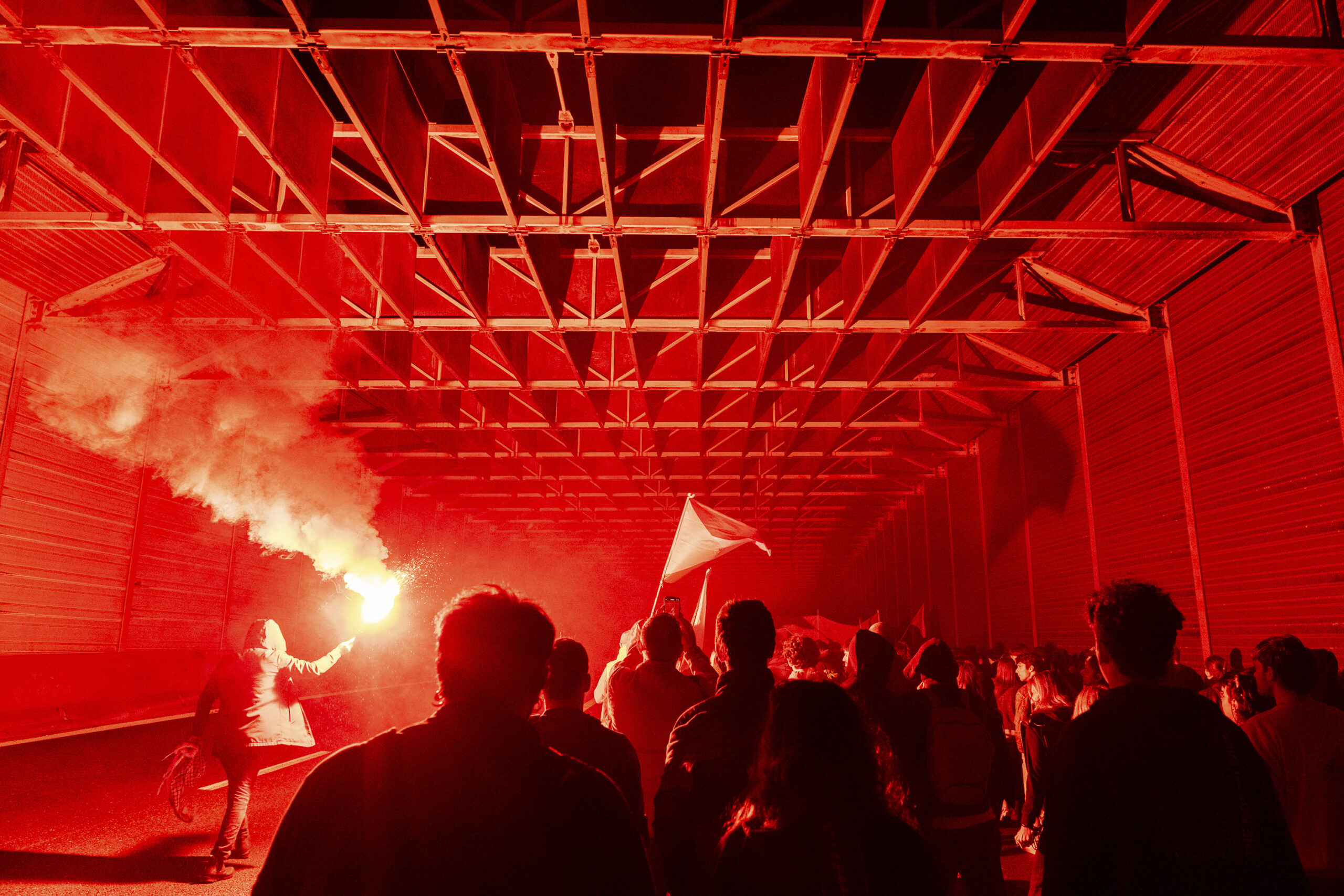
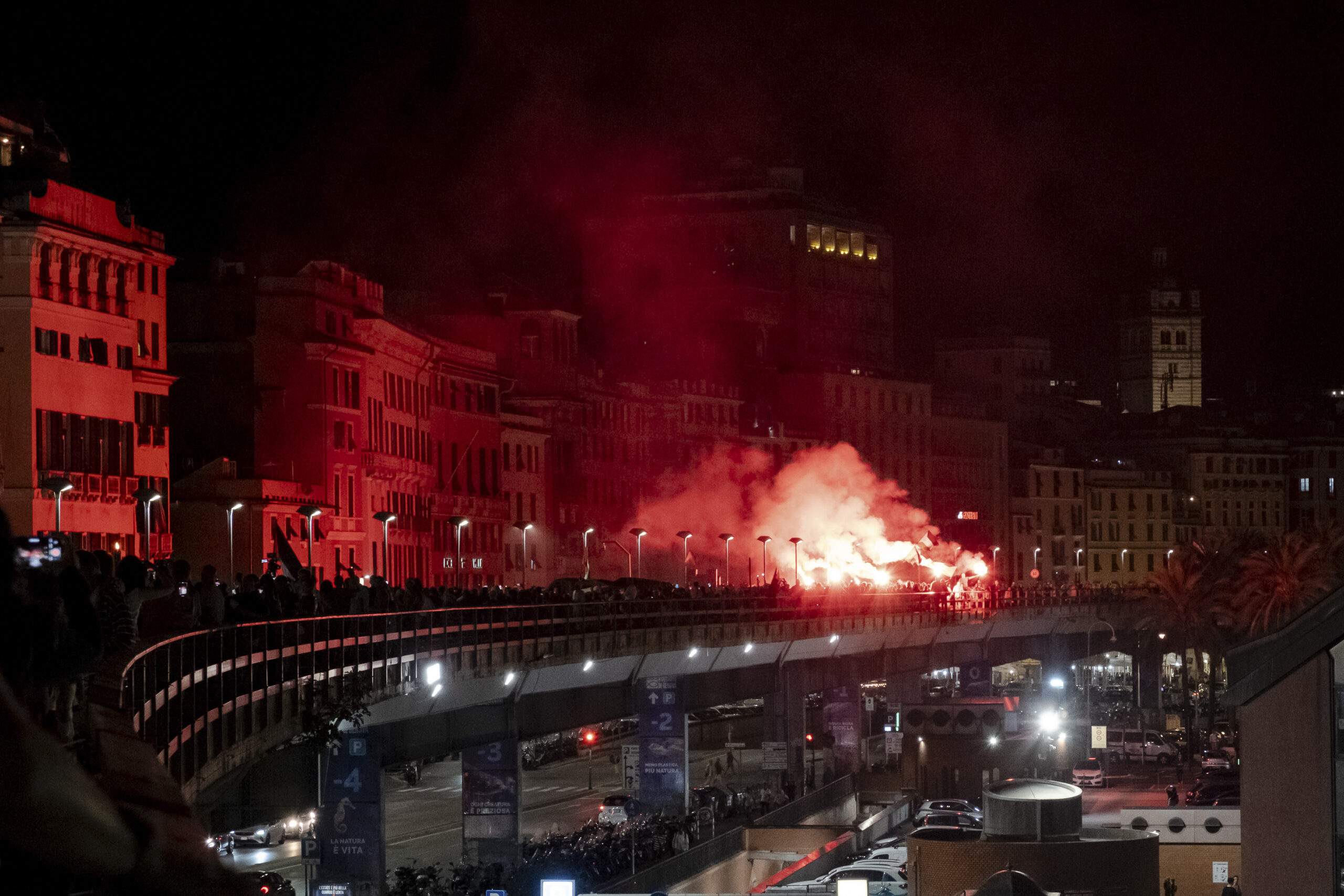
The red flare illuminates the city and leads the crowd on Genoa’s Sopraelevata highway during the night of August 30, 2025. The unexpected mass participation of thousands of residents turned the departure of the flotilla into a major political event, providing the international visibility necessary to challenge the Gaza blockade. As the vessels prepared to sail the following morning, CALP Port worker Riccardo Rudino pronounced the speech, “If they touch the flotilla, we will block everything”, which went immediately viral and became the slogan of the whole movement.
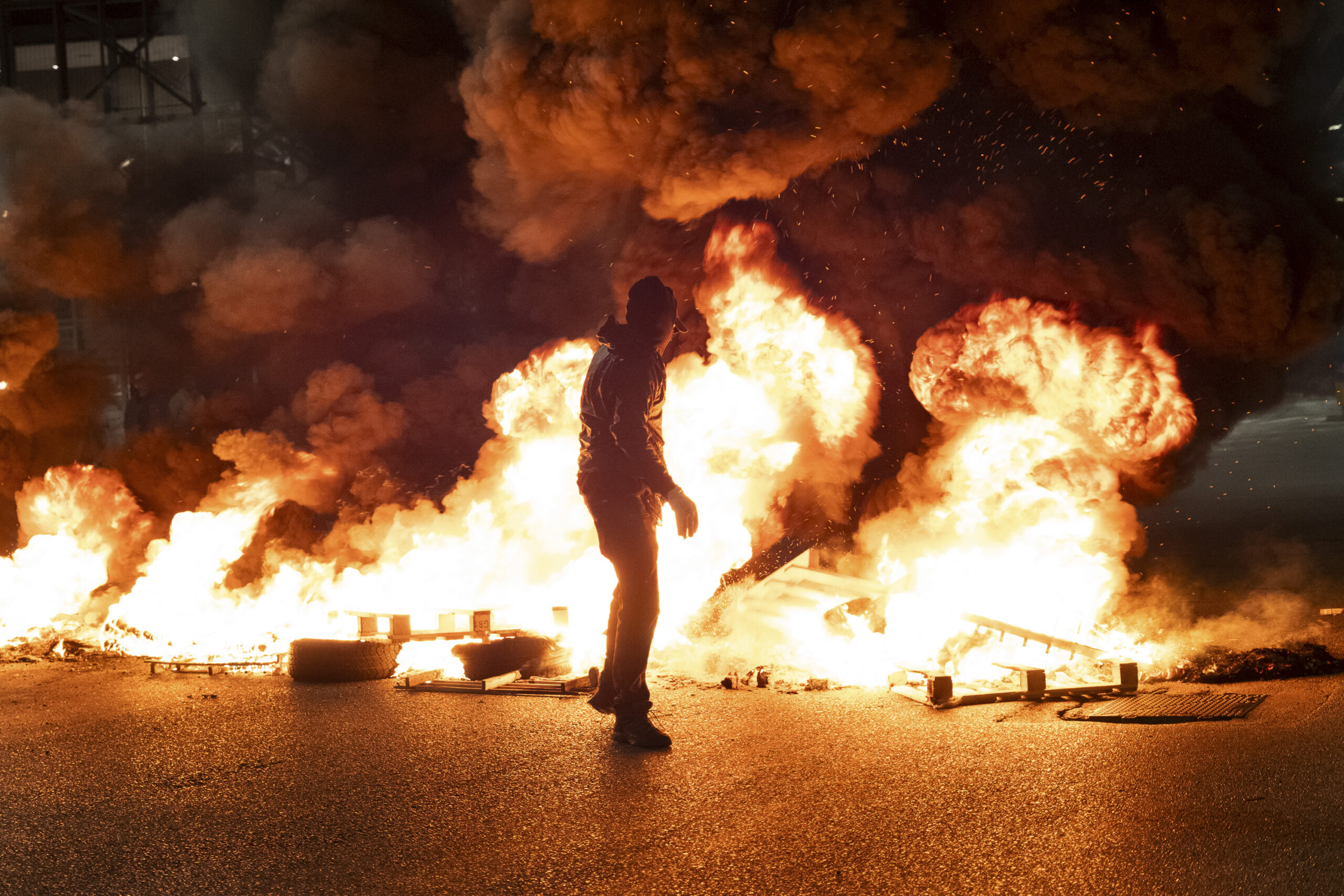
A symbolic bonfire burns at a key intersection connecting the Port of Genoa to the city and highway on October 1, 2025. As announced during previous demonstrations, dockworkers and protesters responded to the interception of the Global Sumud Flotilla by blocking one of the main connections between the port and the city, as well as the highway. The fire, which caused no structural damage to the infrastructure, remained lit for three days as a focal point for a continuous sit-in. In Genoa, the total blockade of the port gates is estimated to result in a daily loss of 20 to 30 million euros, highlighting the city's crucial role in Mediterranean military and commercial transit. The mobilisation, organised by the Autonomous Collective of Port Workers (CALP) and major trade unions, aimed to draw public attention to the humanitarian mission and Italy's involvement in military logistics.
Events and news coverage