The XXMiles Hotel

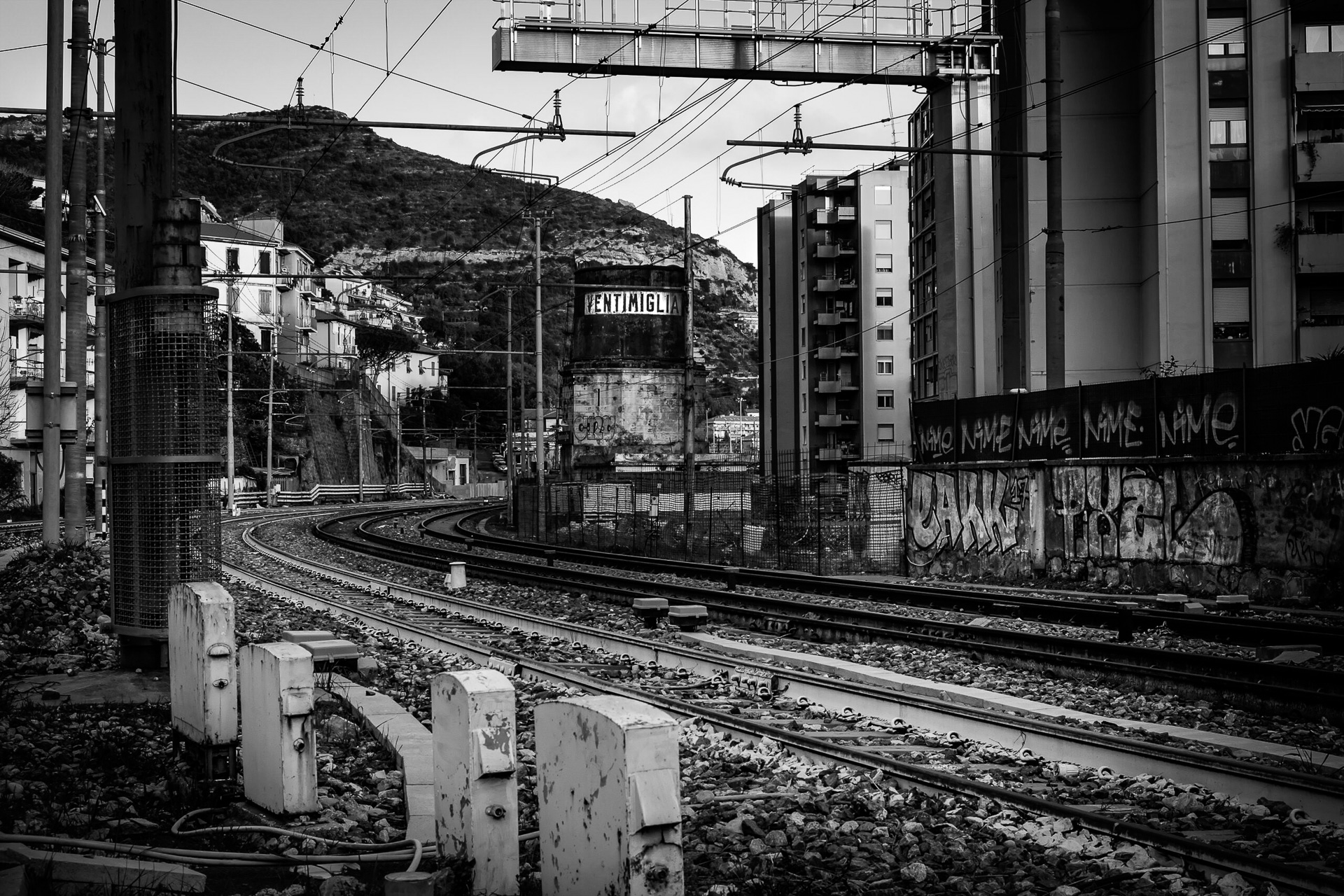
“The XX Miles Hotel” è un progetto a lungo termine nato come forma di attivismo per sostenere i collettivi di volontari attivi al confine italo-francese. Esplora la realtà dei migranti bloccati a Ventimiglia, offrendo uno sguardo critico sulla vita di chi attende di attraversare un confine interno all’Europa, chiuso nel 2015.

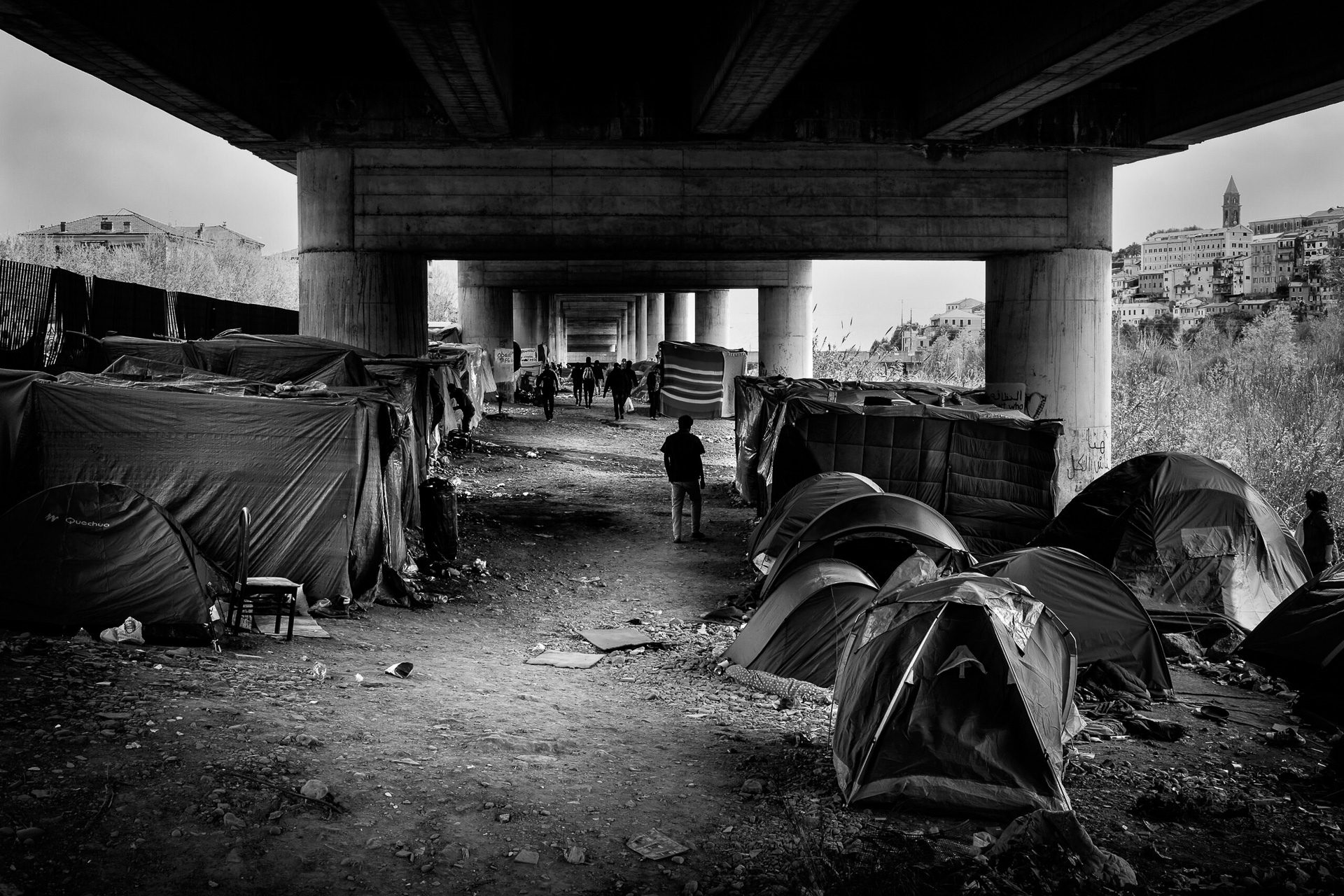
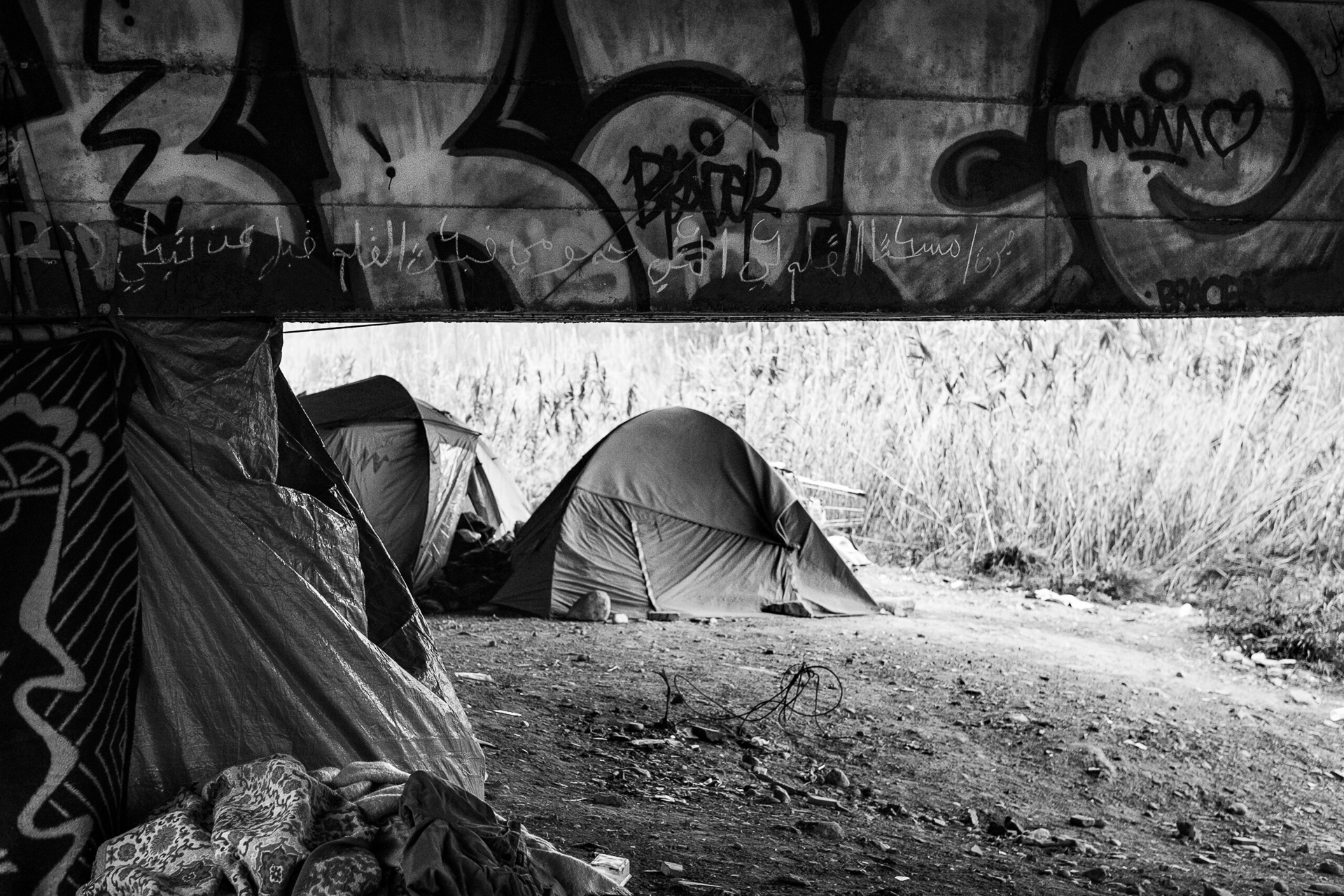
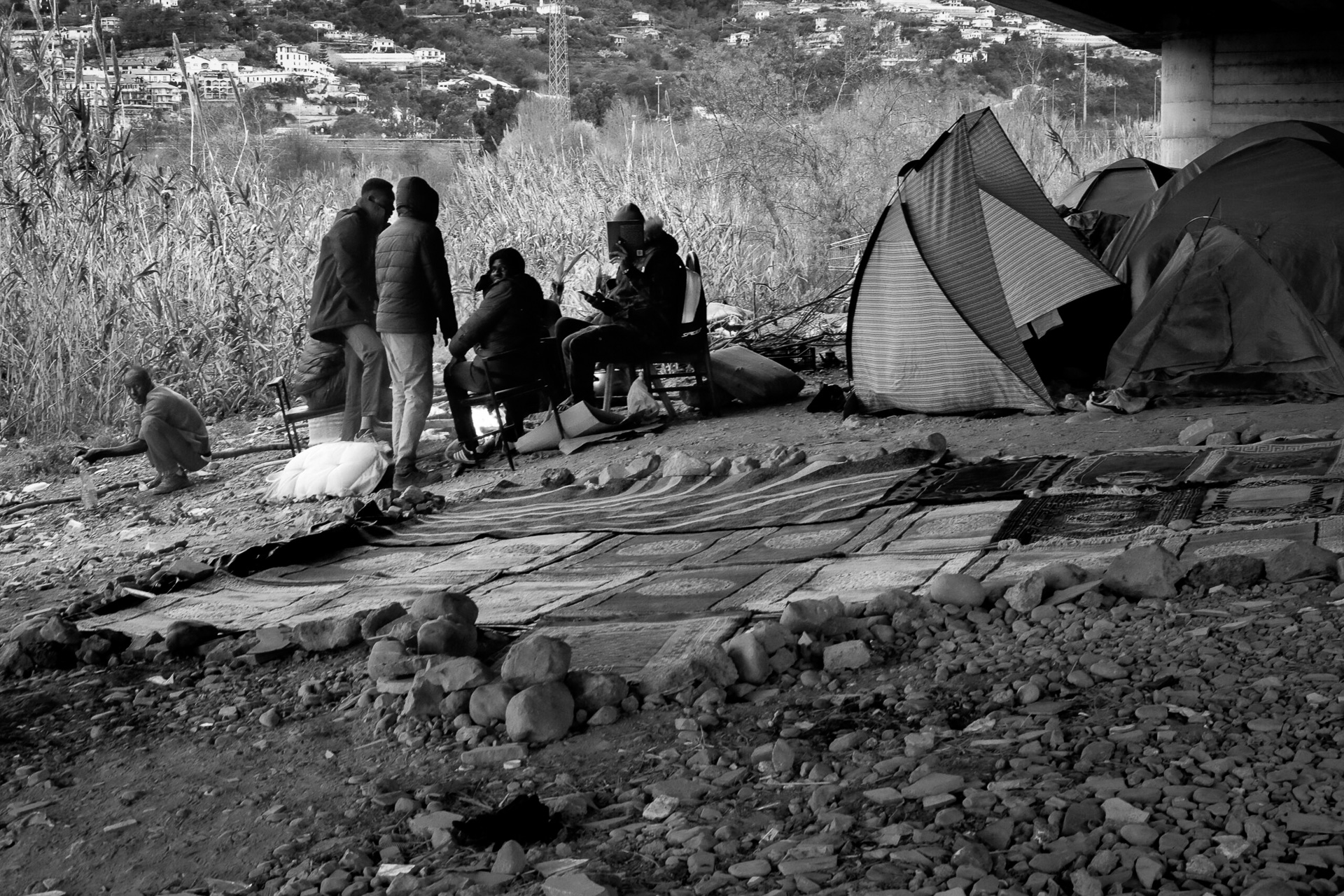
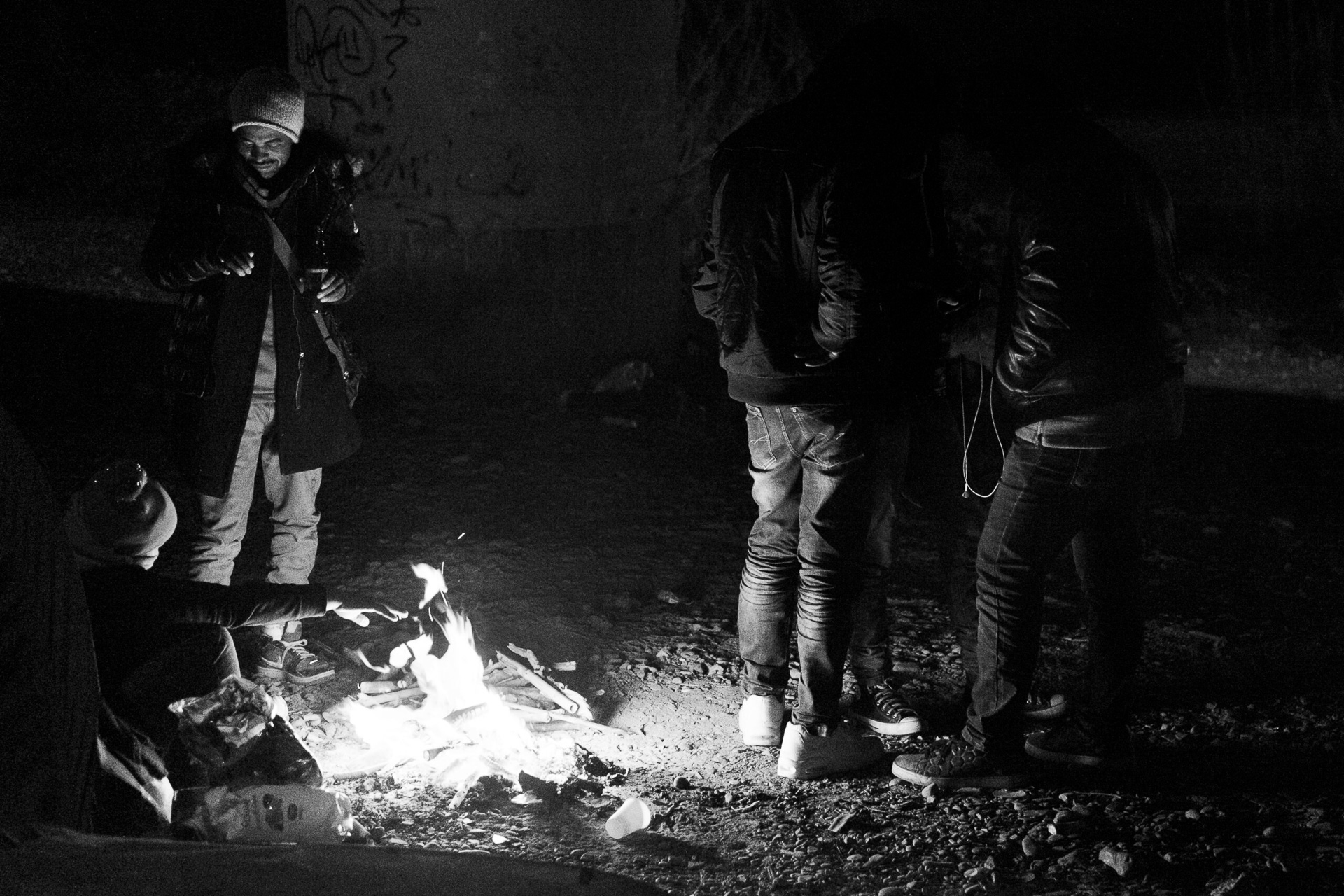
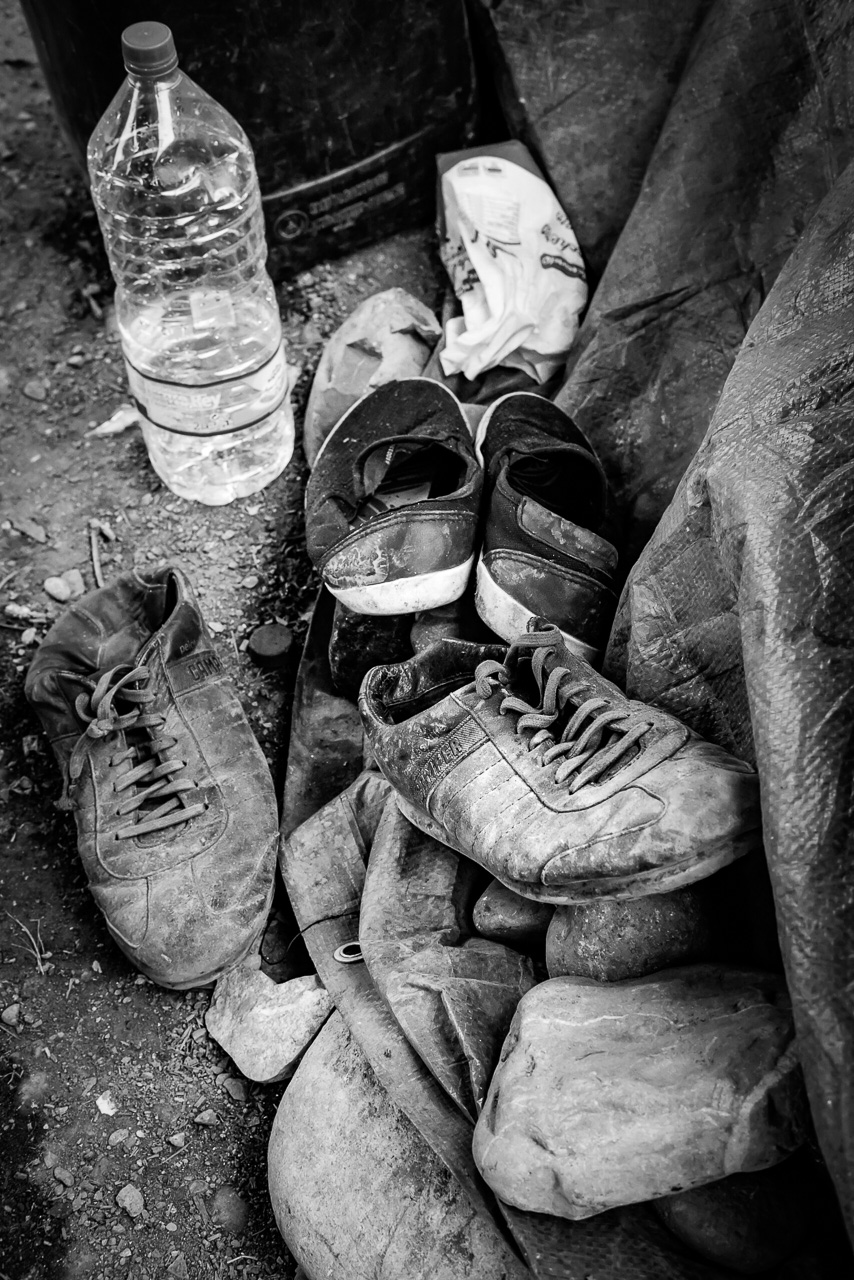
Il progetto copre il periodo dal 2018 al 2020, quando molte persone in transito sceglievano di rifiutare l’accoglienza ufficiale della Croce Rossa per vivere in un campo autogestito sulle rive del fiume Roja. Qui, sotto un viadotto autostradale, alcuni volontari e ONG offrivano servizi essenziali come acqua potabile, cibo, vestiti e ricarica dei telefoni, spesso l’unico contatto con la propria casa e con gli affetti.

Nonostante le condizioni difficili, il campo rappresentava per molti la possibilità di mantenere una forma di autonomia nel proseguire il viaggio e di prendere decisioni sulla propria vita.

L’accoglienza diventa così una pratica concreta di resistenza e umanità in un contesto segnato da esclusione e controllo.

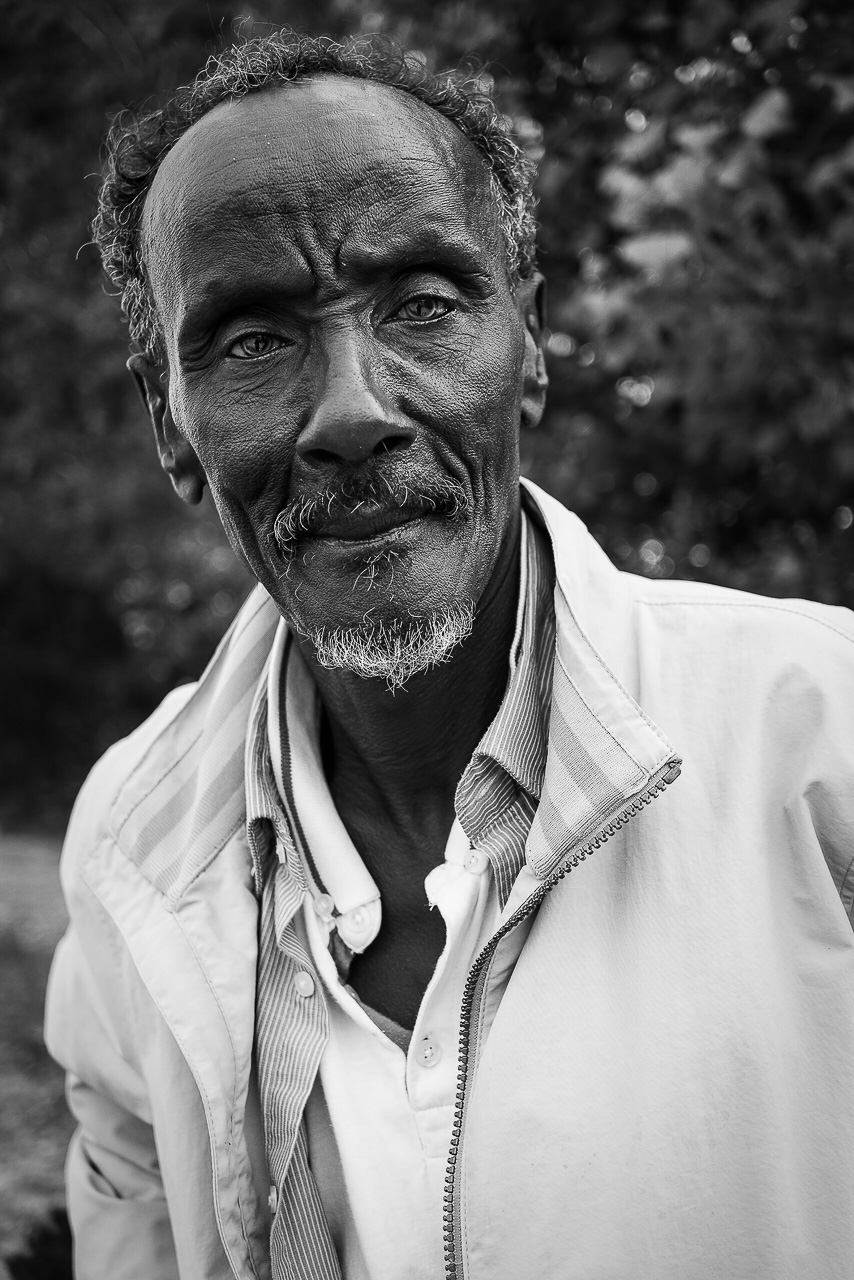
He is 80 years old, from Sudan, and no longer has a single tooth. He lives on the beach. “But at least here there is peace.” Emanuela Zampa Documentary photography, phtotojournalism, Genoa.
He is 80 years old, from Sudan, and no longer has a single tooth. He lives on the beach. “But at least here there is peace.”
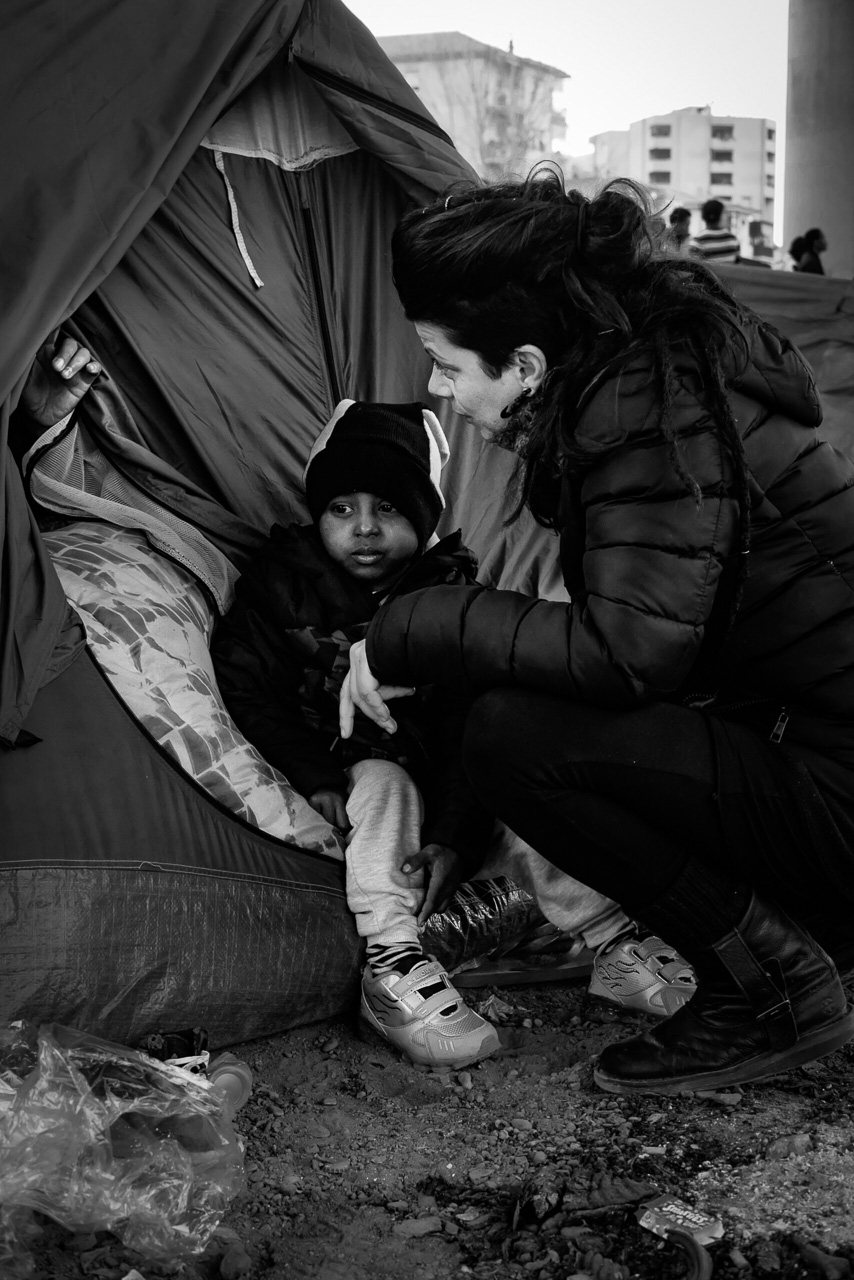
A volunteer speaks with a woman and her child, urging them to move to the Red Cross camp after a snow alert. Fear of fingerprint identification prevents them from going. Ventimiglia, February 2018.
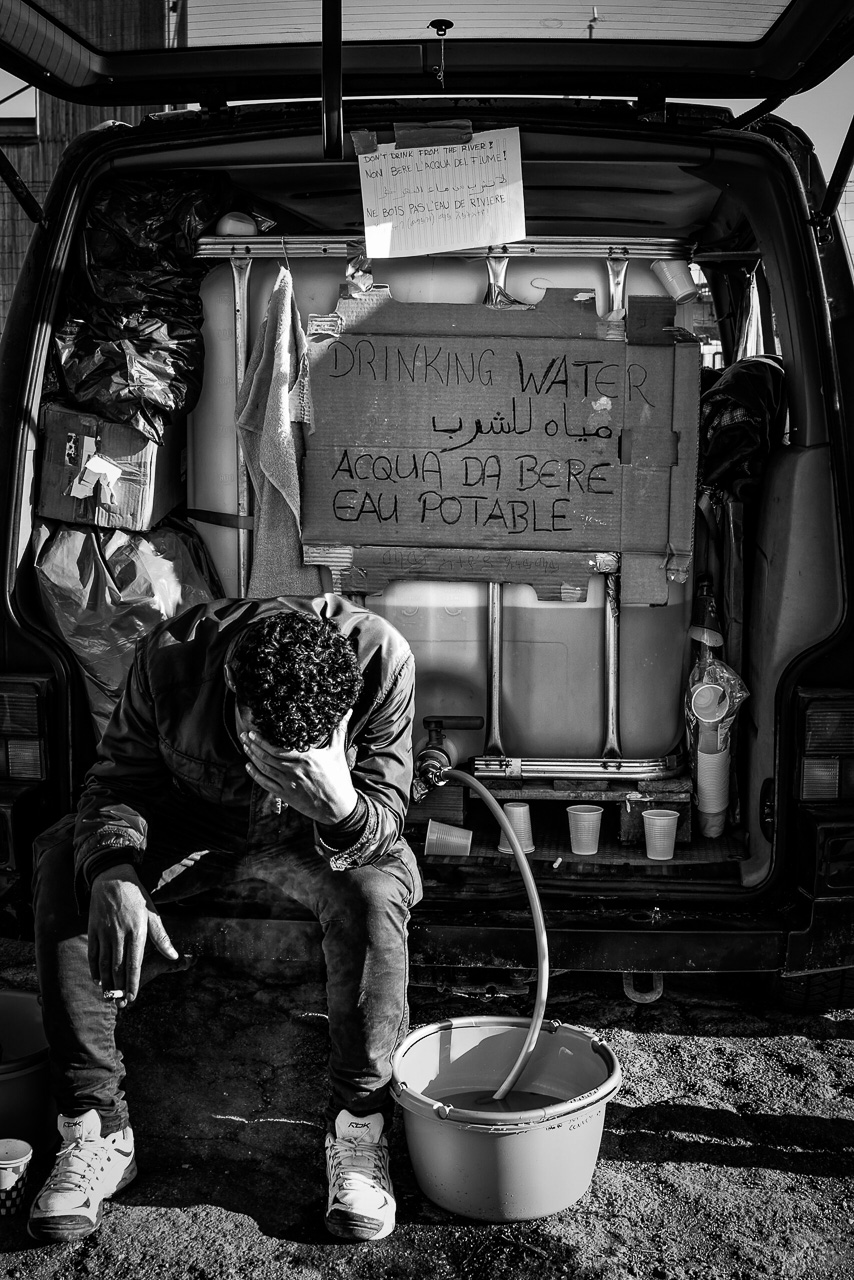
In 2015, a mayoral ordinance in Ventimiglia cut off drinking water access to push migrants toward the Red Cross camp. The parish and volunteers provided water to prevent them from drinking from the Roja River. Ventimiglia, 2018.
In 2015, a mayoral ordinance in Ventimiglia cut off drinking water access to push migrants toward the Red Cross camp. The parish and volunteers provided water to prevent them from drinking from the Roja River. Ventimiglia, 2018
Each time I return, the camp under the highway viaduct on the banks of the Roja River is different.
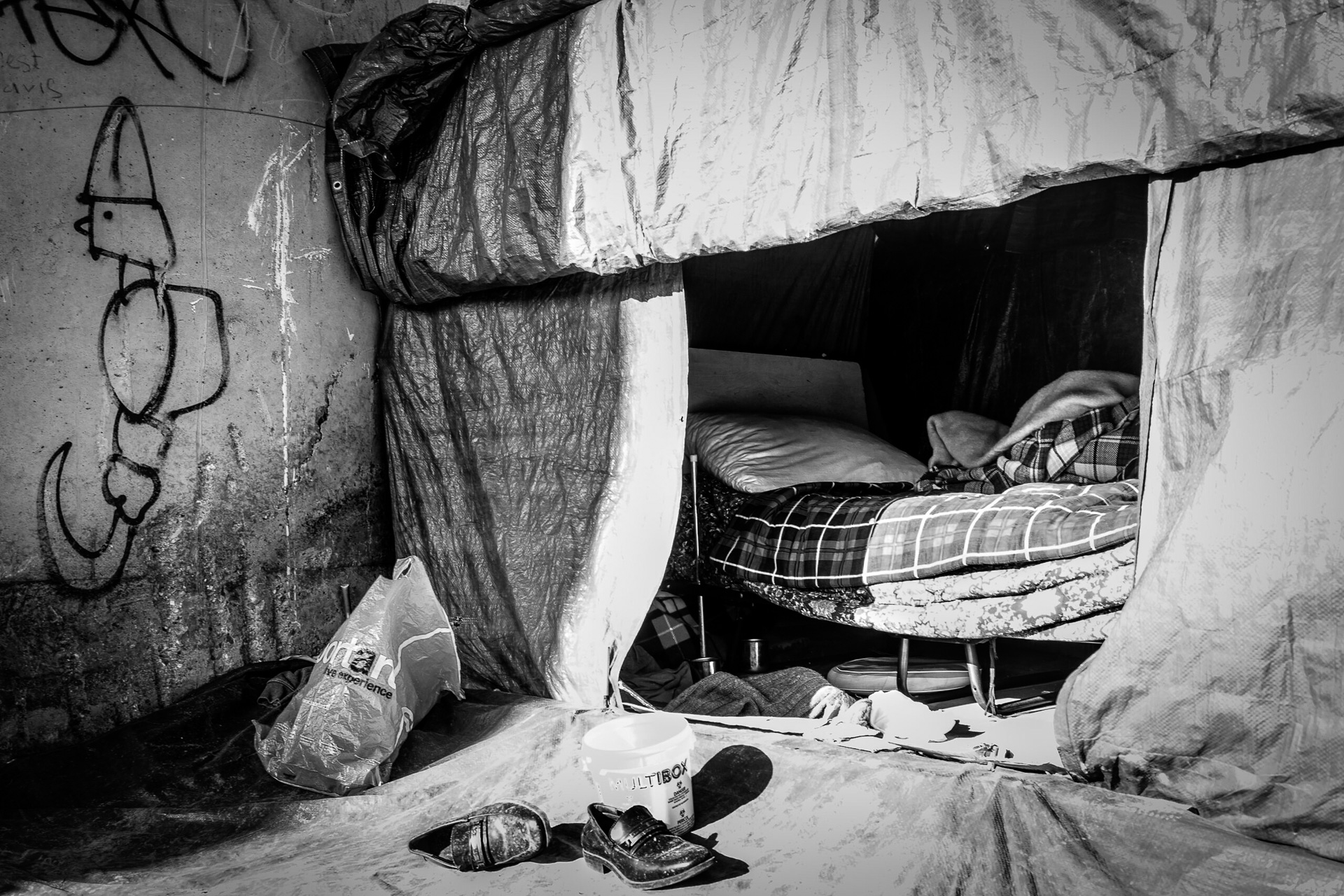
A series of tents and makeshift beds are permanent: they are built and rented by those who have run out of money and must wait and find an income to continue.
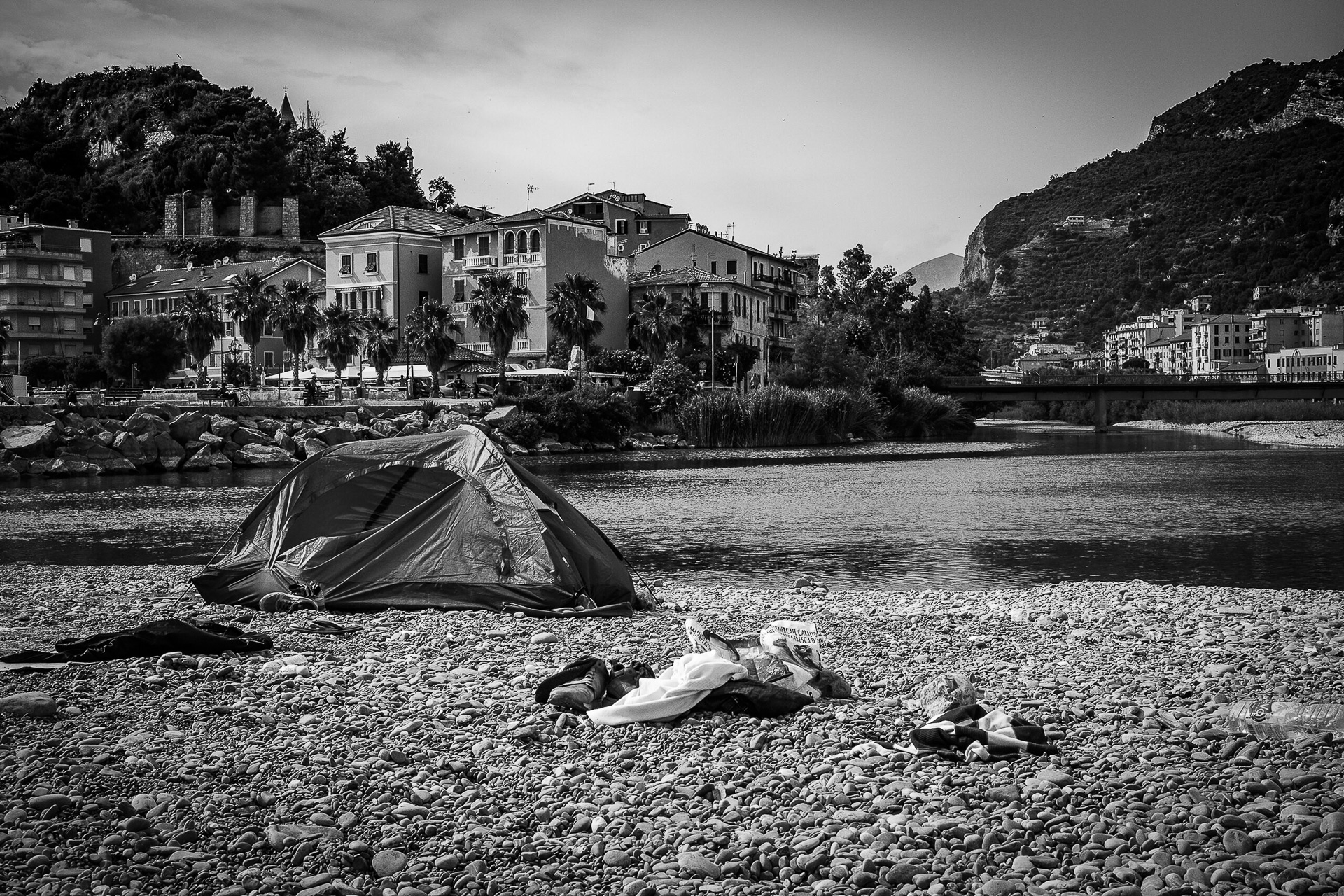
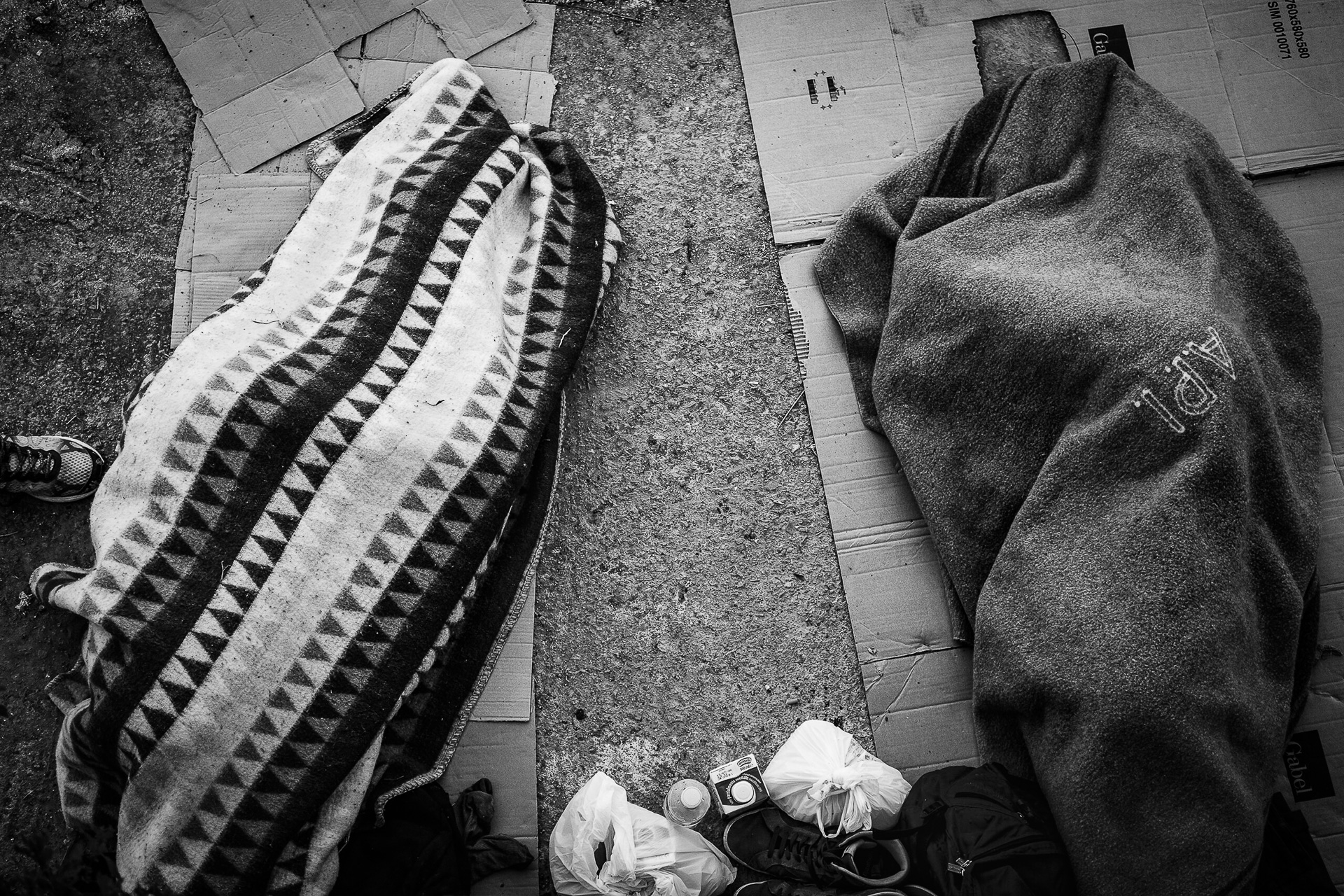
Each time the informal camp is cleared, migrants in transit move to other parts of the city, in summer often to the beach.
The camp is a place of both despair and hope, violence and solidarity, embodying the ambivalence of the migration issue.
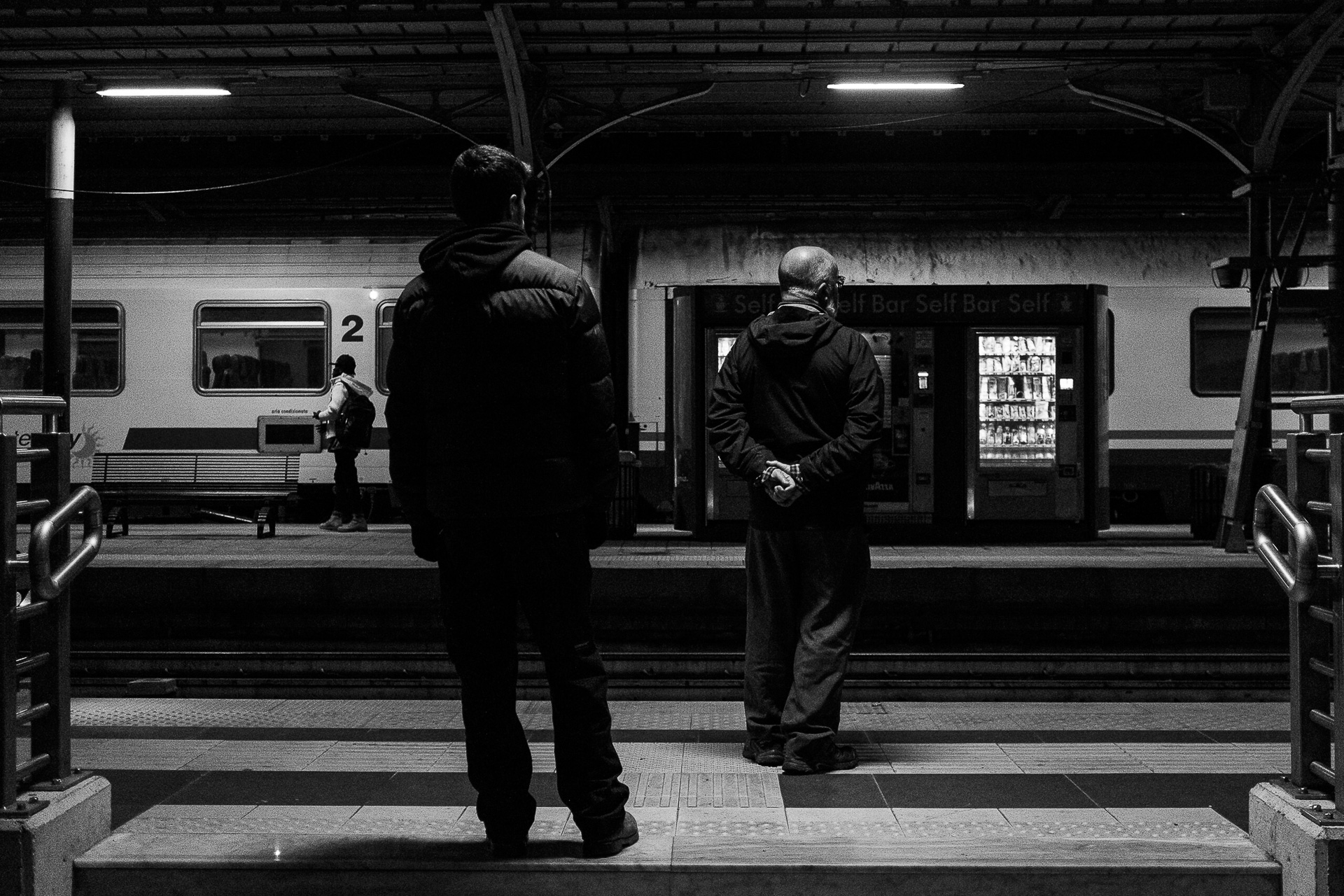
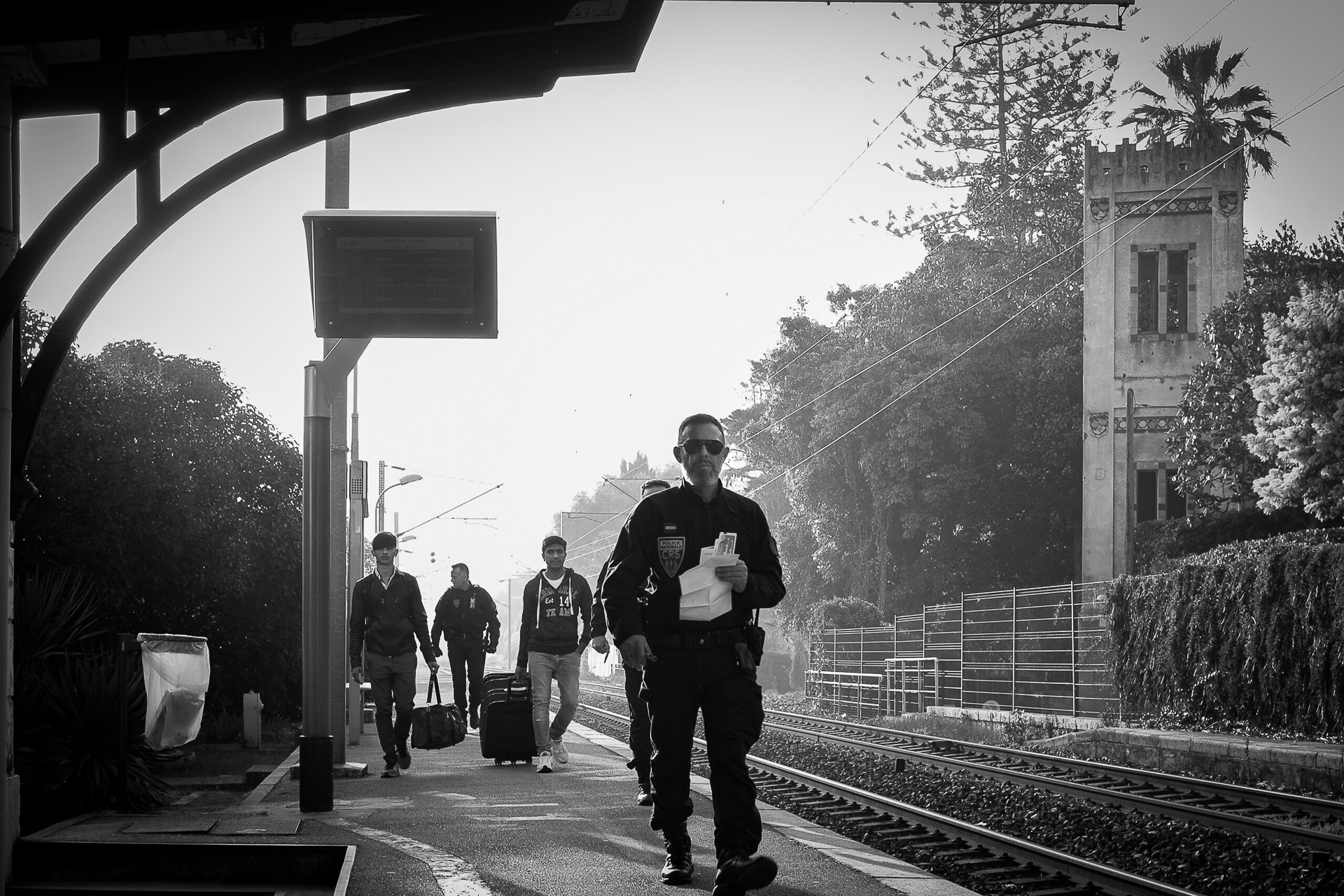
Opposed by institutions and law enforcement, international solidarity groups self-organize to support migrants arriving in Ventimiglia, meeting them on the last train to reach them before those who may exploit their vulnerability.
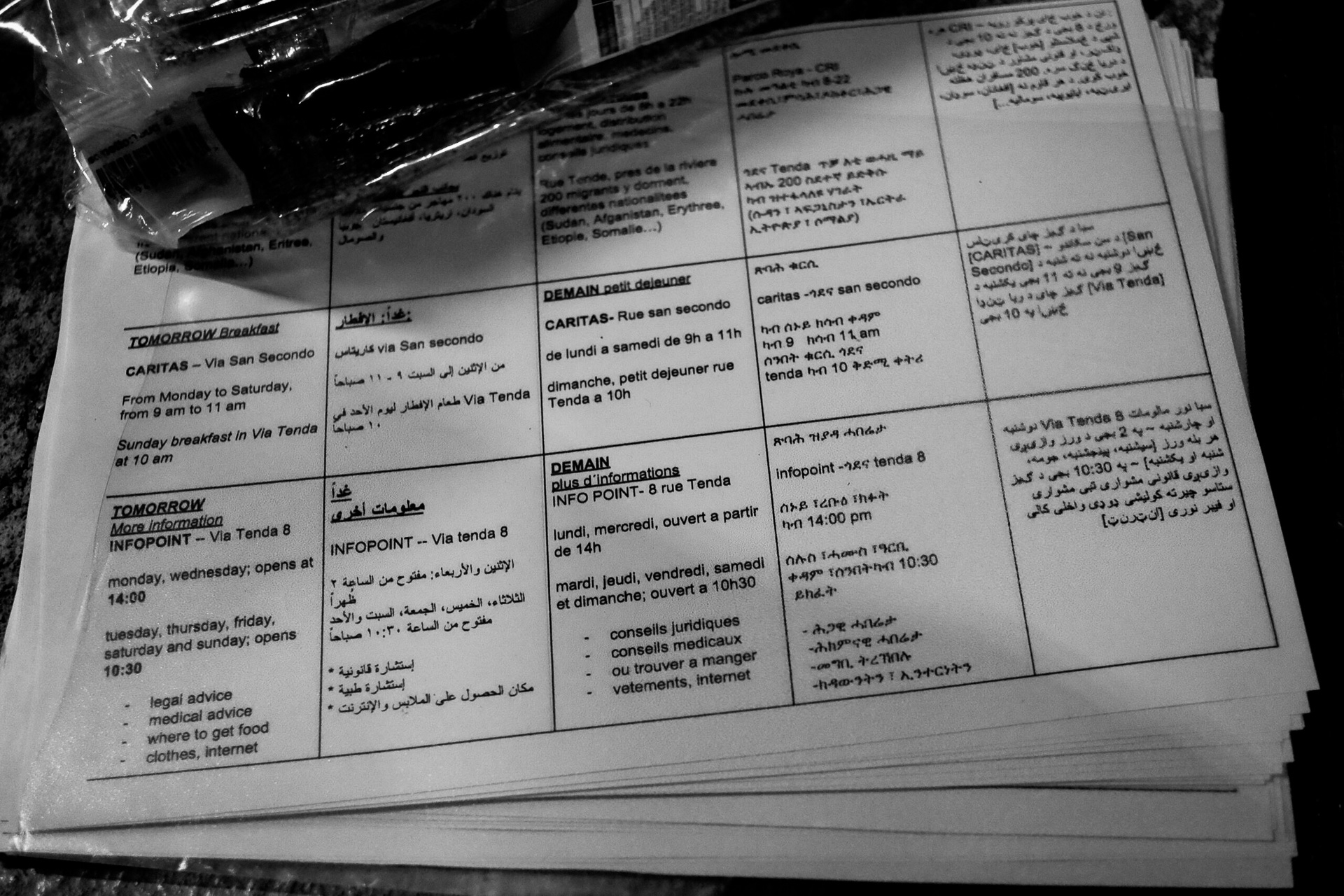
Translated into several languages, a handbook prepared by volunteers provides basic information for migrants newly arrived at the station.
A mobile phone charging station at the info point, opened and run by solidarity volunteers.
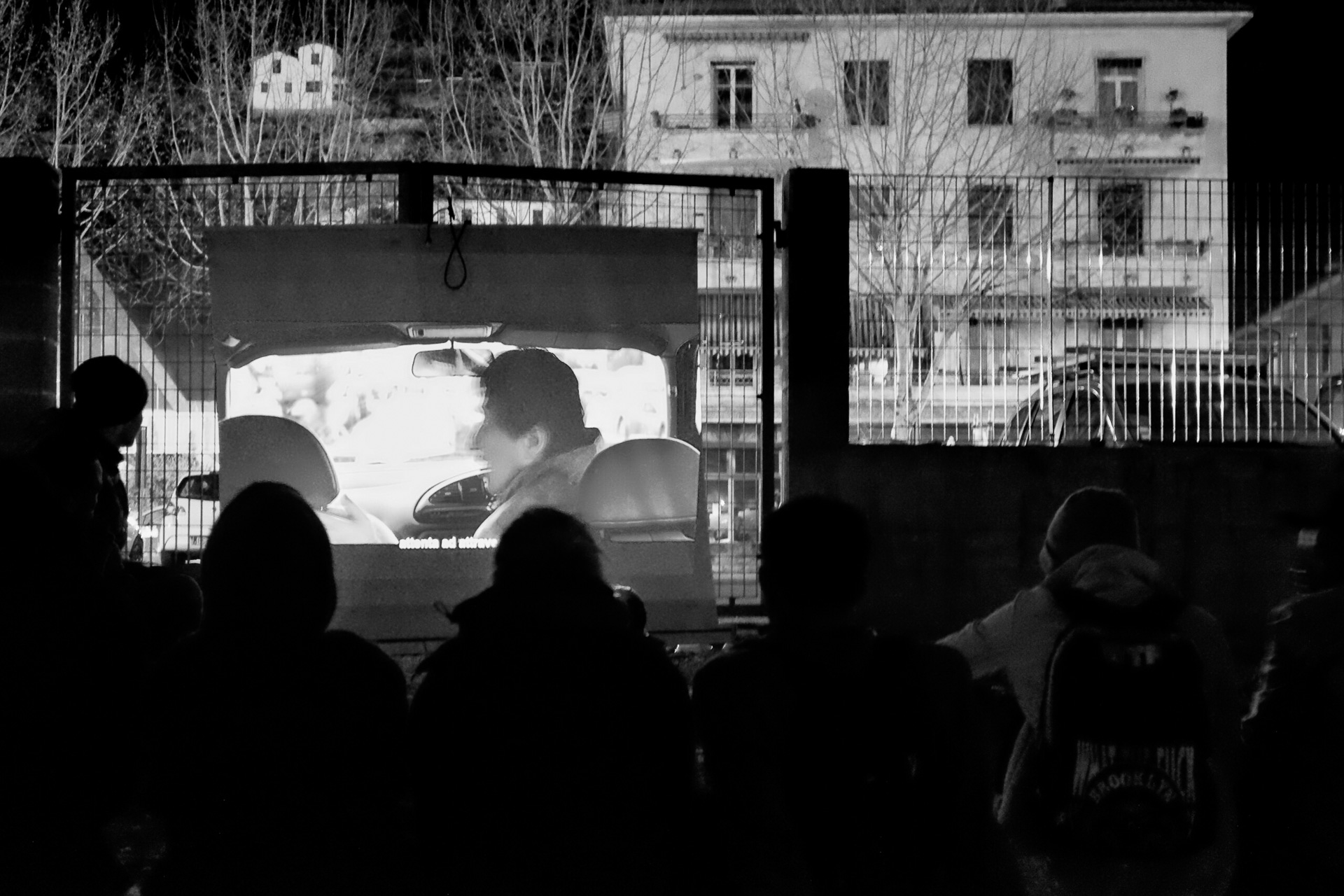
Maintaining a sense of normality becomes essential in precarious conditions; for this reason, some volunteers brave the night in the camp to organize film screening evenings.
The self-organized mosque in the informal camp along the Roja River. 2018.
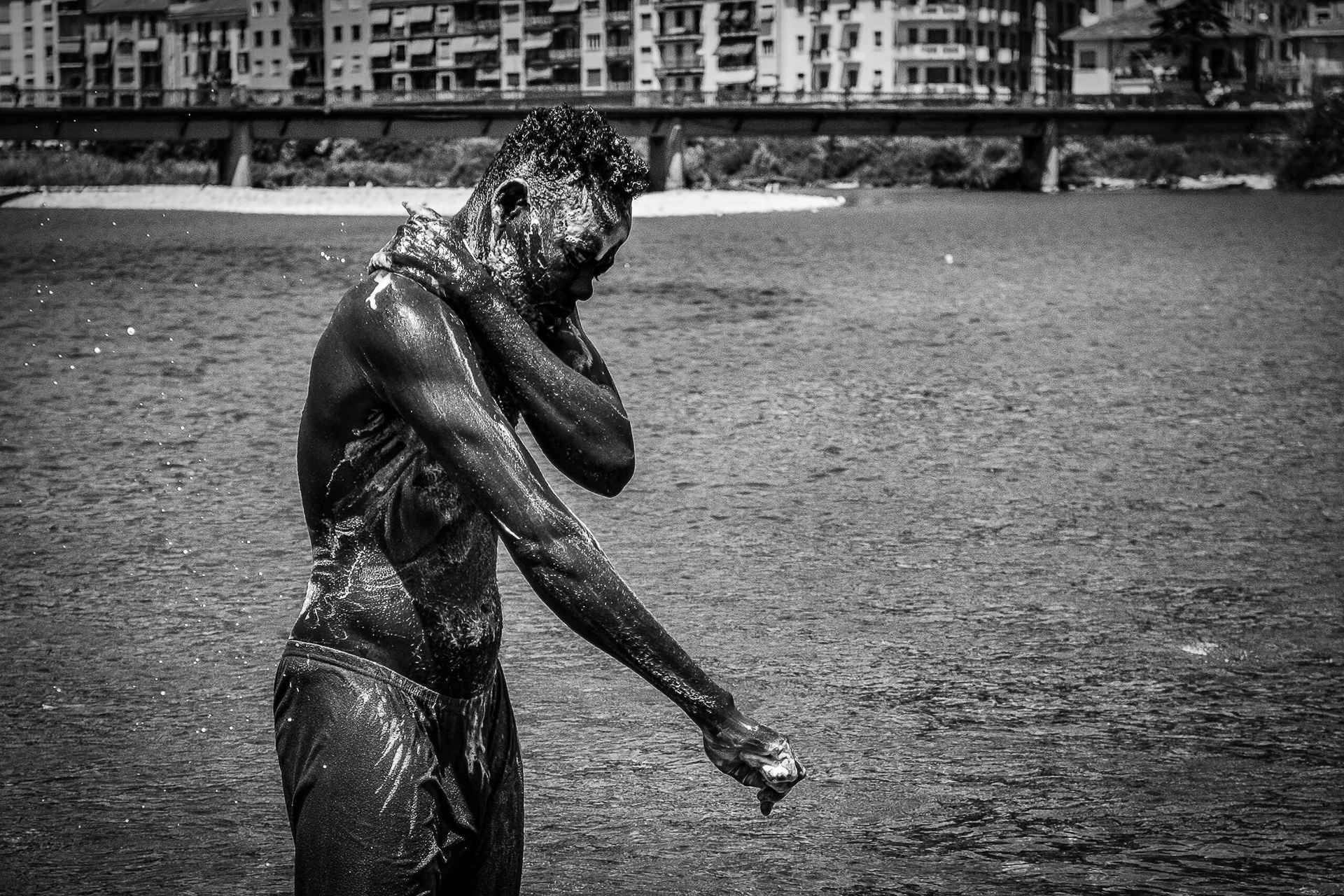
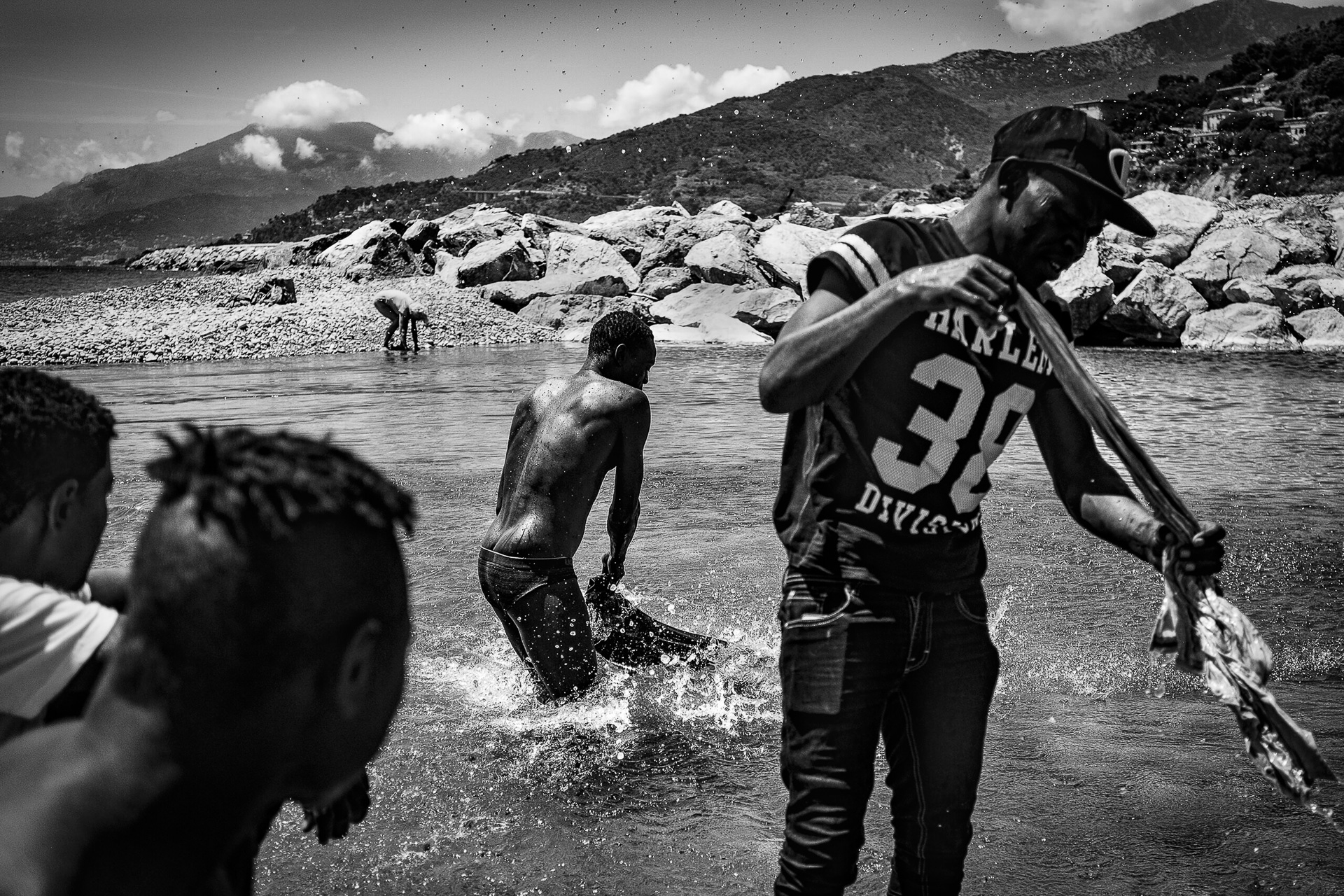
A Sudanese boy washes himself at the mouth of the Roja River. Ventimiglia, 2020.
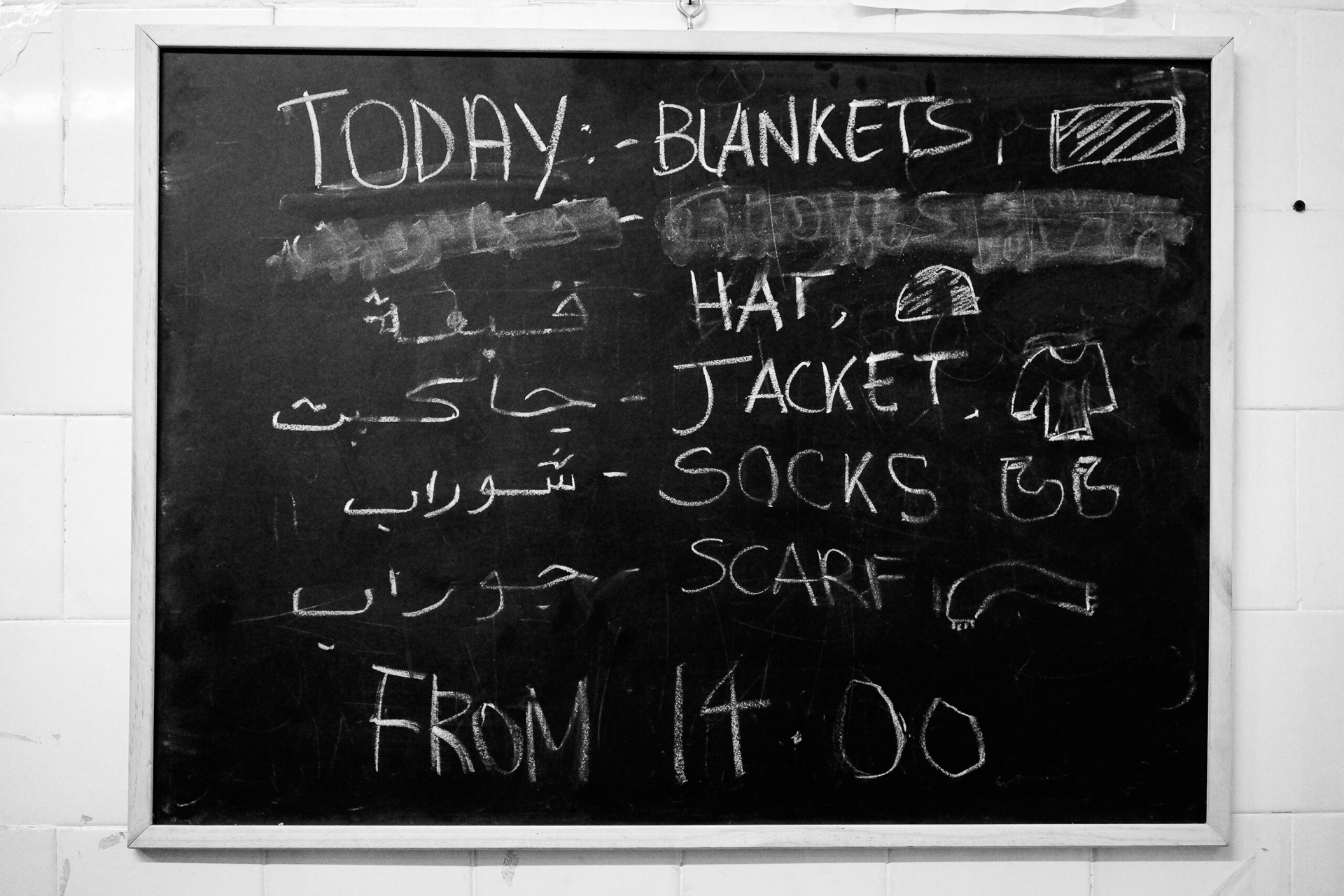
The daily menu at the volunteers’ info point.
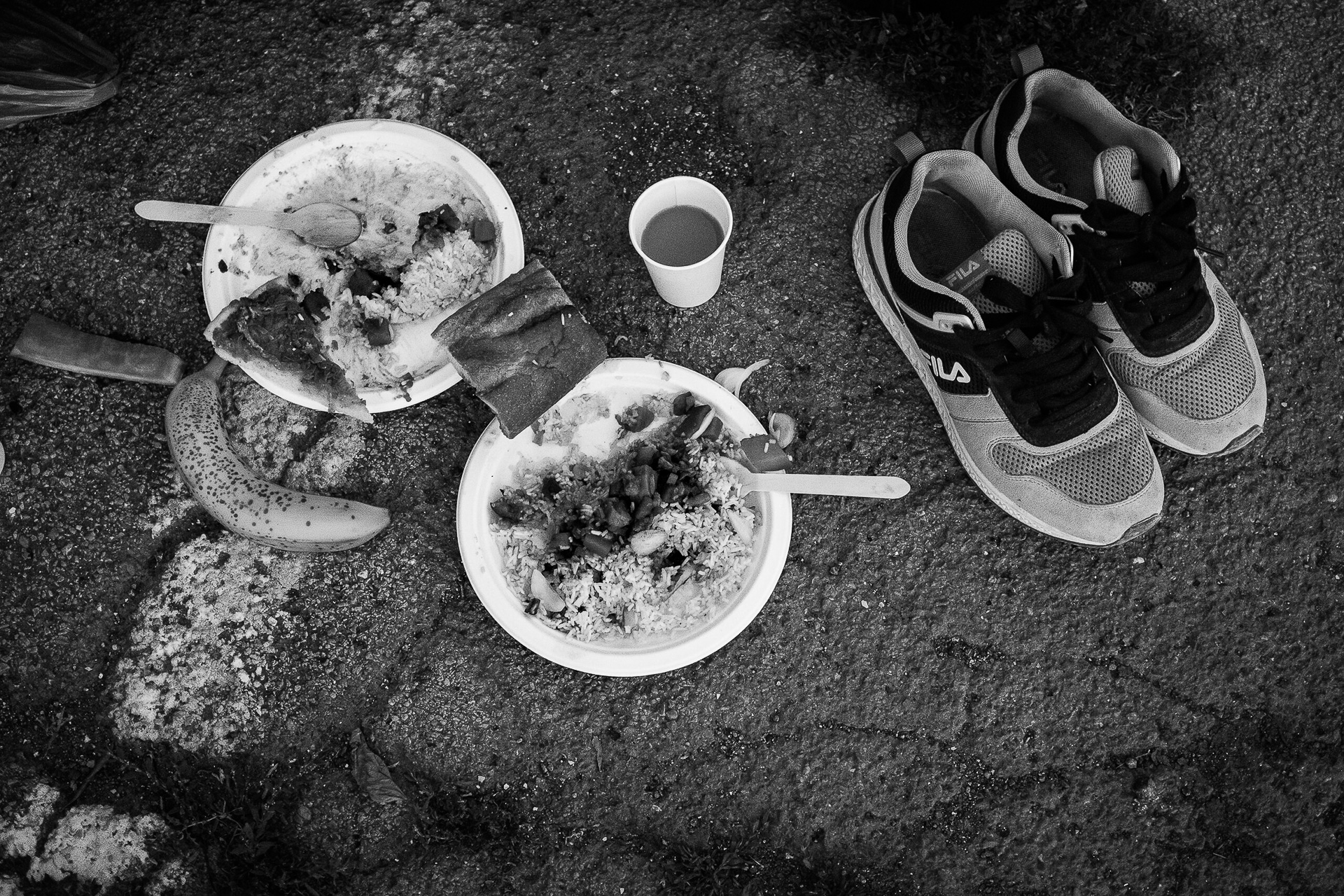
Groups of international and French volunteers provide a meal every evening.
Who is leaving tonight? Will they make it? If daylight reveals the human, creative, and solidaristic side of the informal camp, nightfall brings a sense of oppression shaped by the site’s intrinsic violence.
Sudanese boys wash their only clothes at the mouth of the Roja River, in front of beachgoers. After COVID-19, the Italian Red Cross camp in Ventimiglia was closed, leaving migrants without official support. 2020.
Ventimiglia, summer of 2028.
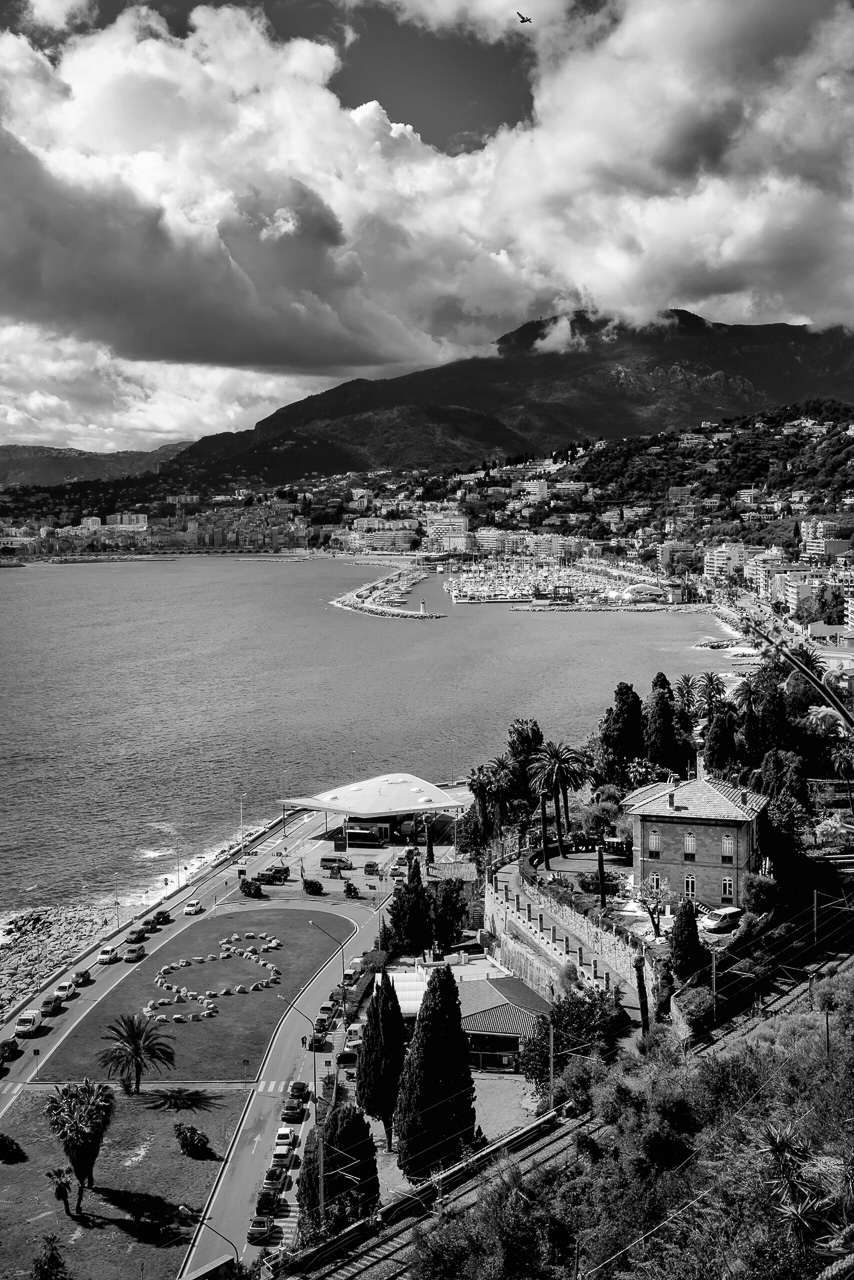
Ventimiglia, the lower border crossing and Menton. April 2018.
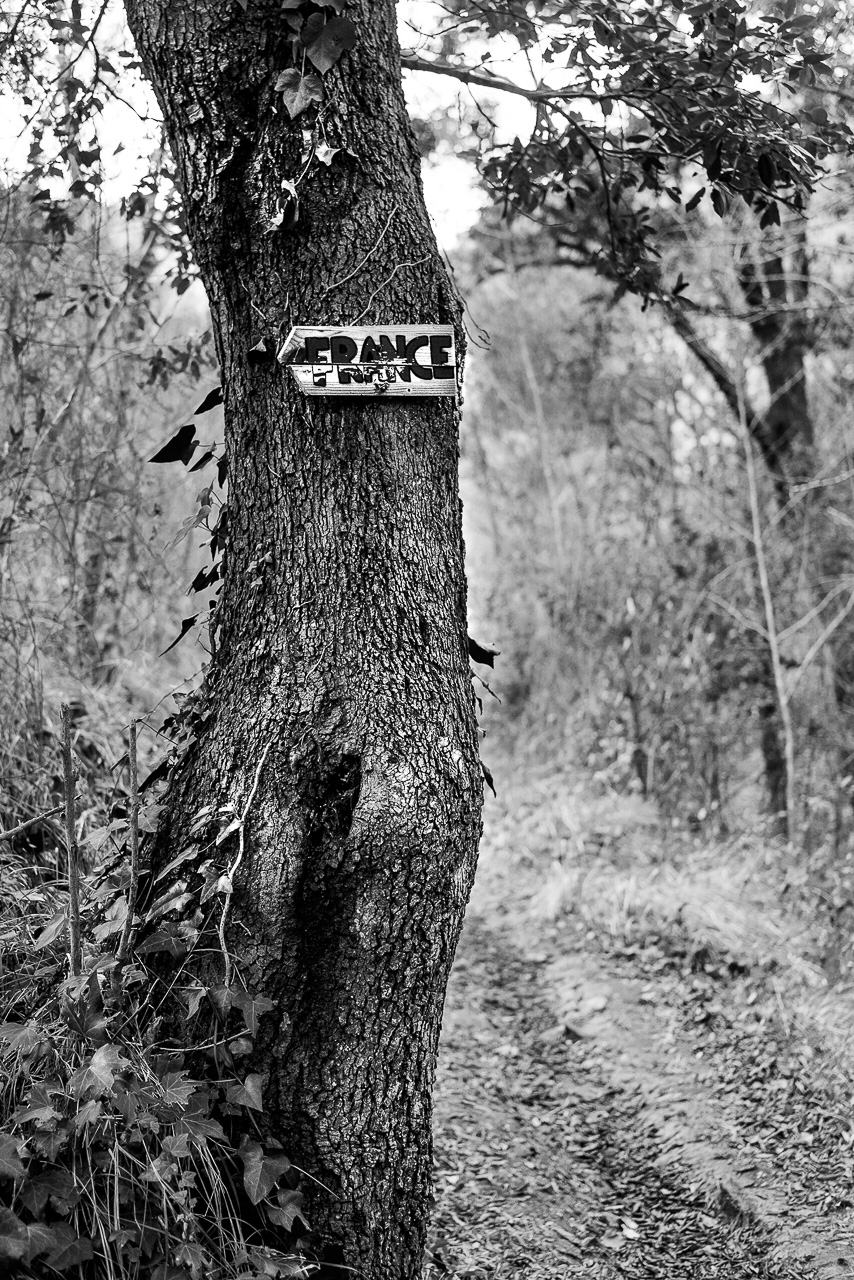
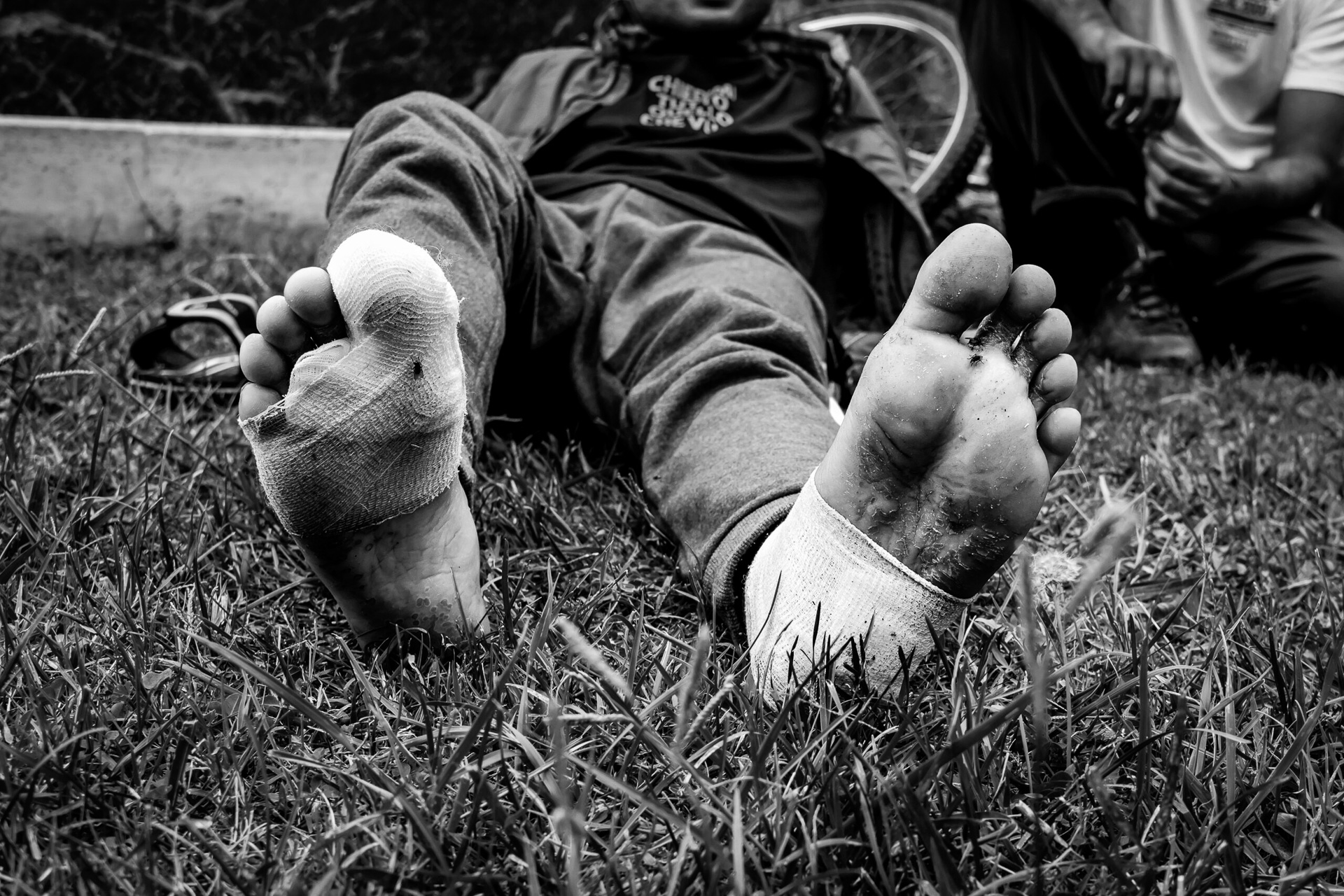
One of the routes most commonly used to cross the border illegally between Italy and France is known as the “Path of Death,” a trail already used during World War II by Jews fleeing racial persecution.
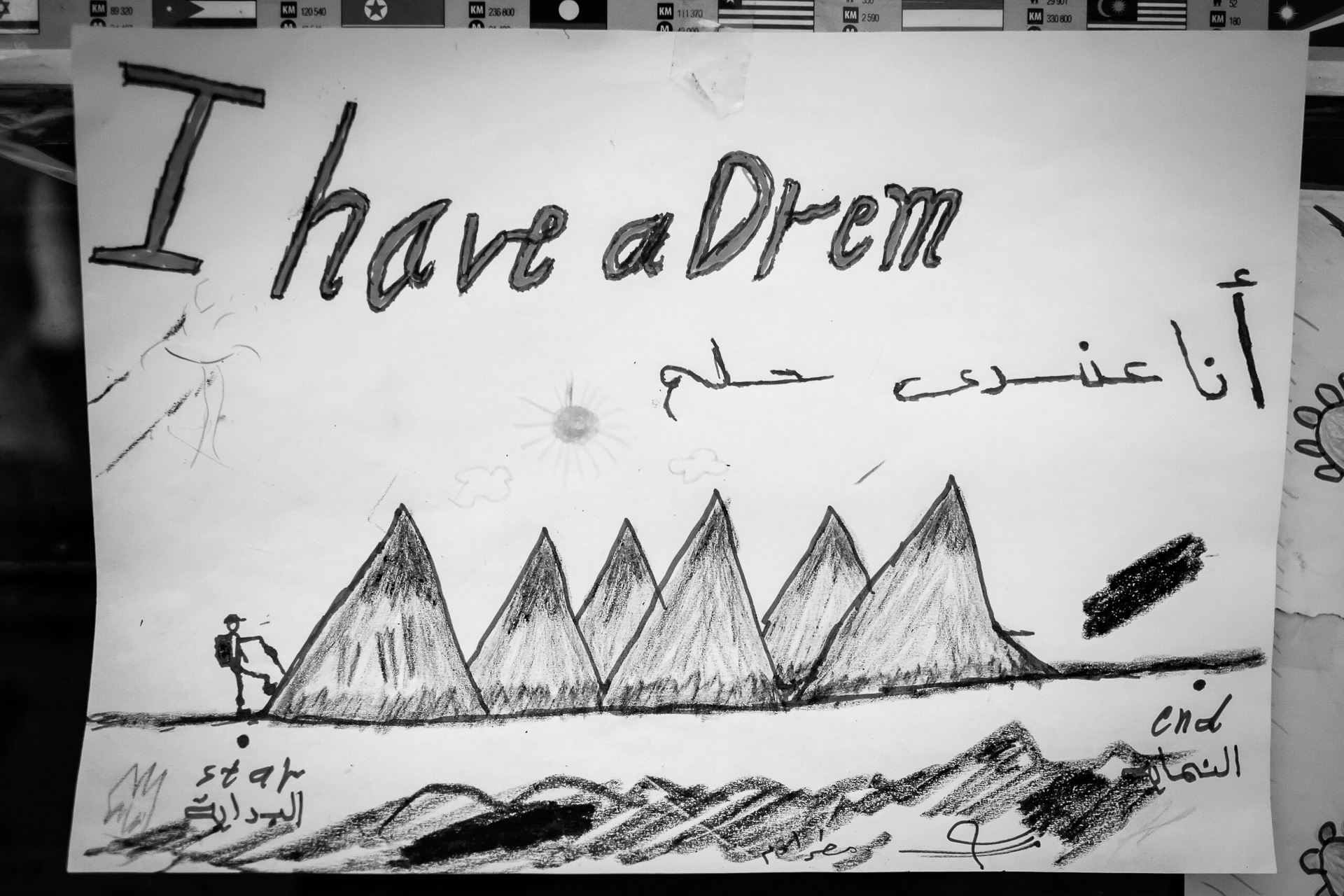
One of hundreds of drawings left by migrants at Infopoint Eufemia, a space created and run by independent solidarity activists active between 2016 and 2024. Ventimiglia, 2018.
In Ventimiglia, migrants arriving by sea from Libya and by land through the Balkan route converge at the French border. Few intend to remain in Italy. Ventimiglia, October 2019.
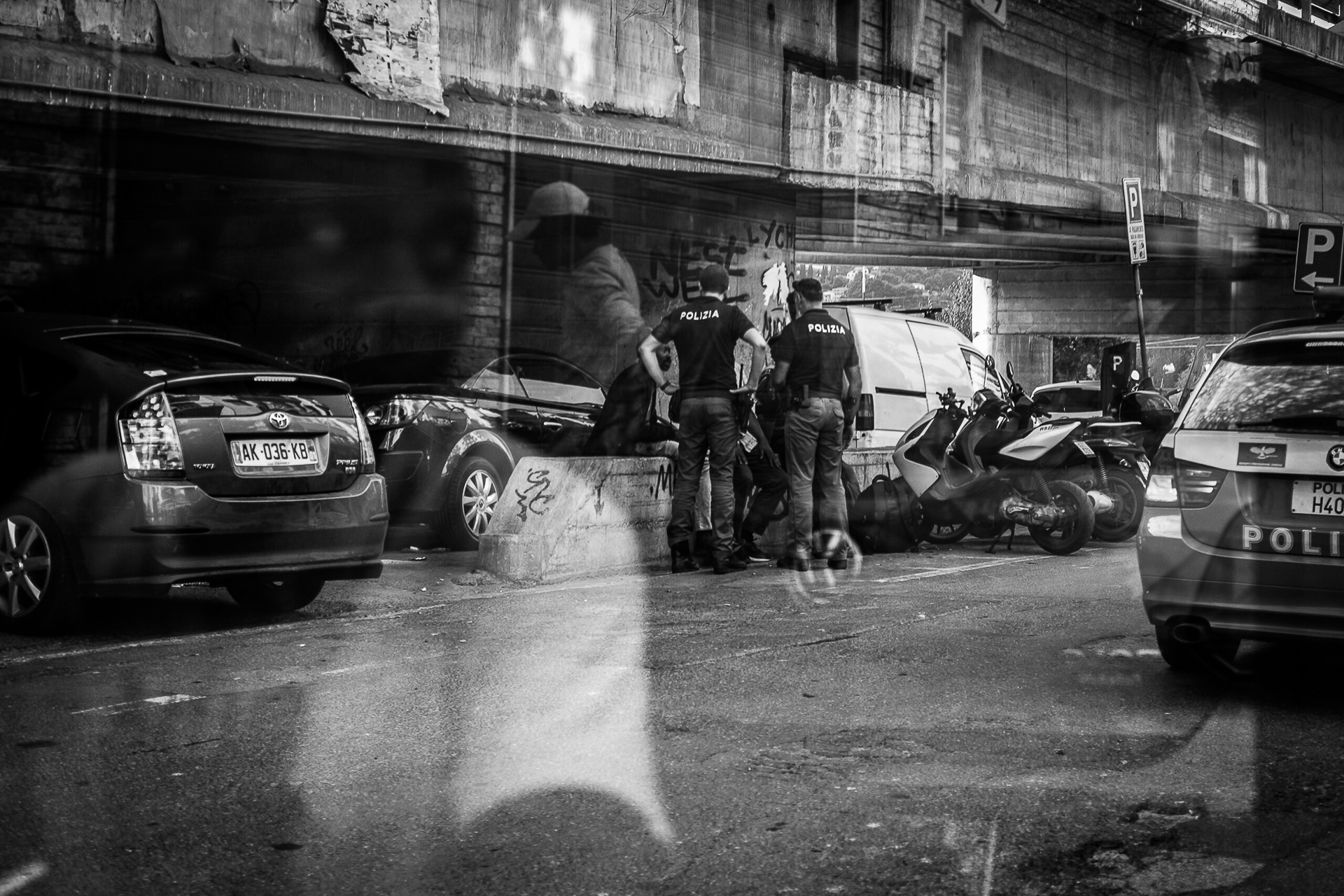
In the town of Ventimiglia, people with darker skin tones are routinely stopped and identified by police after a certain hour in the evening. Ventimiglia, 2019.
Menton train station is the first stop on French territory. Here, French gendarmes board all trains arriving from Italy and carry out identity checks targeting people considered suspicious, a practice widely criticized for racial profiling. Menton, 2019.
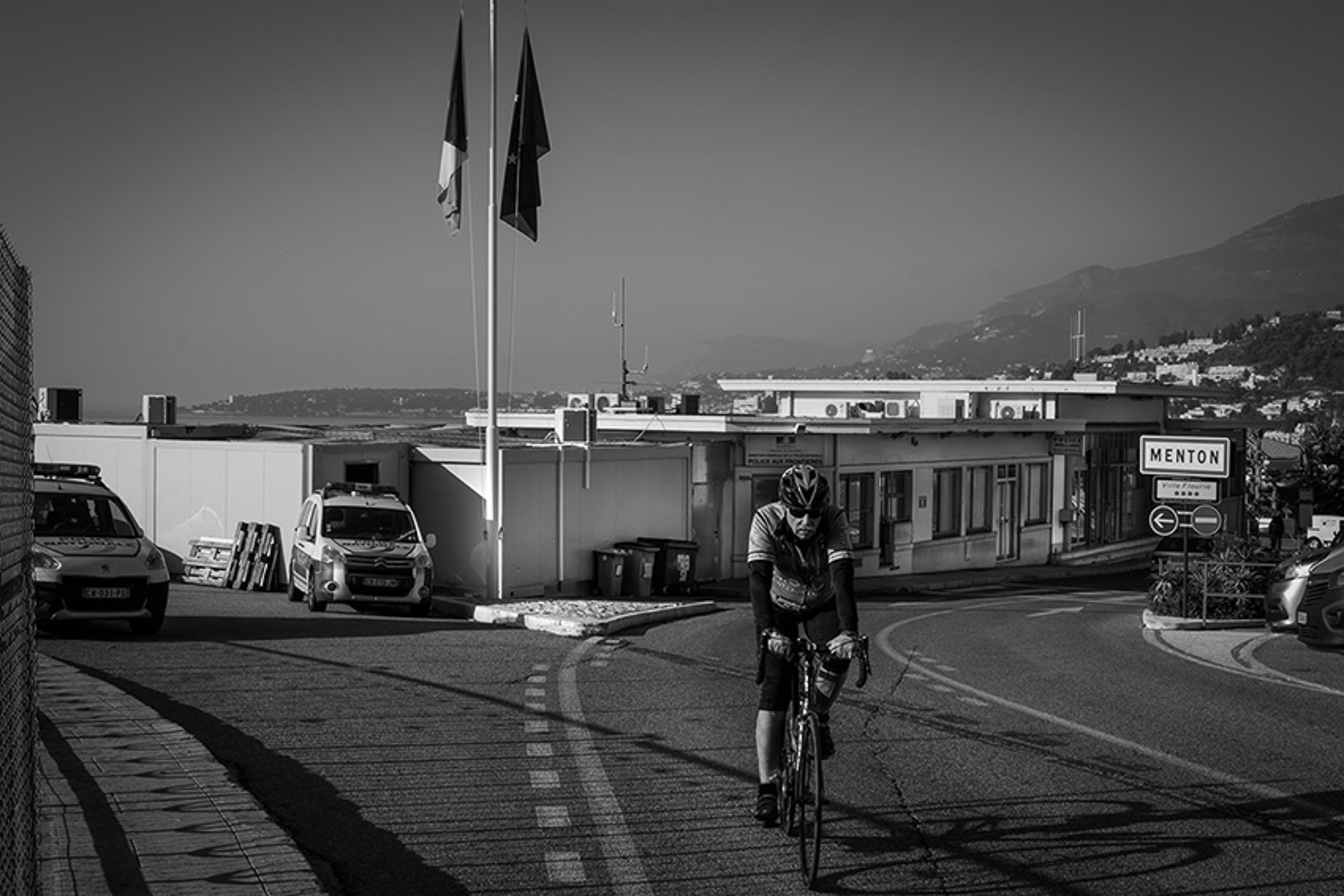
An unaware cyclist crosses the border in front of the containers used by the PAF (Police aux Frontières) to detain migrants before their return to Italy. Since 2015, reports by organisations have documented cases of violence and abuse at the border.
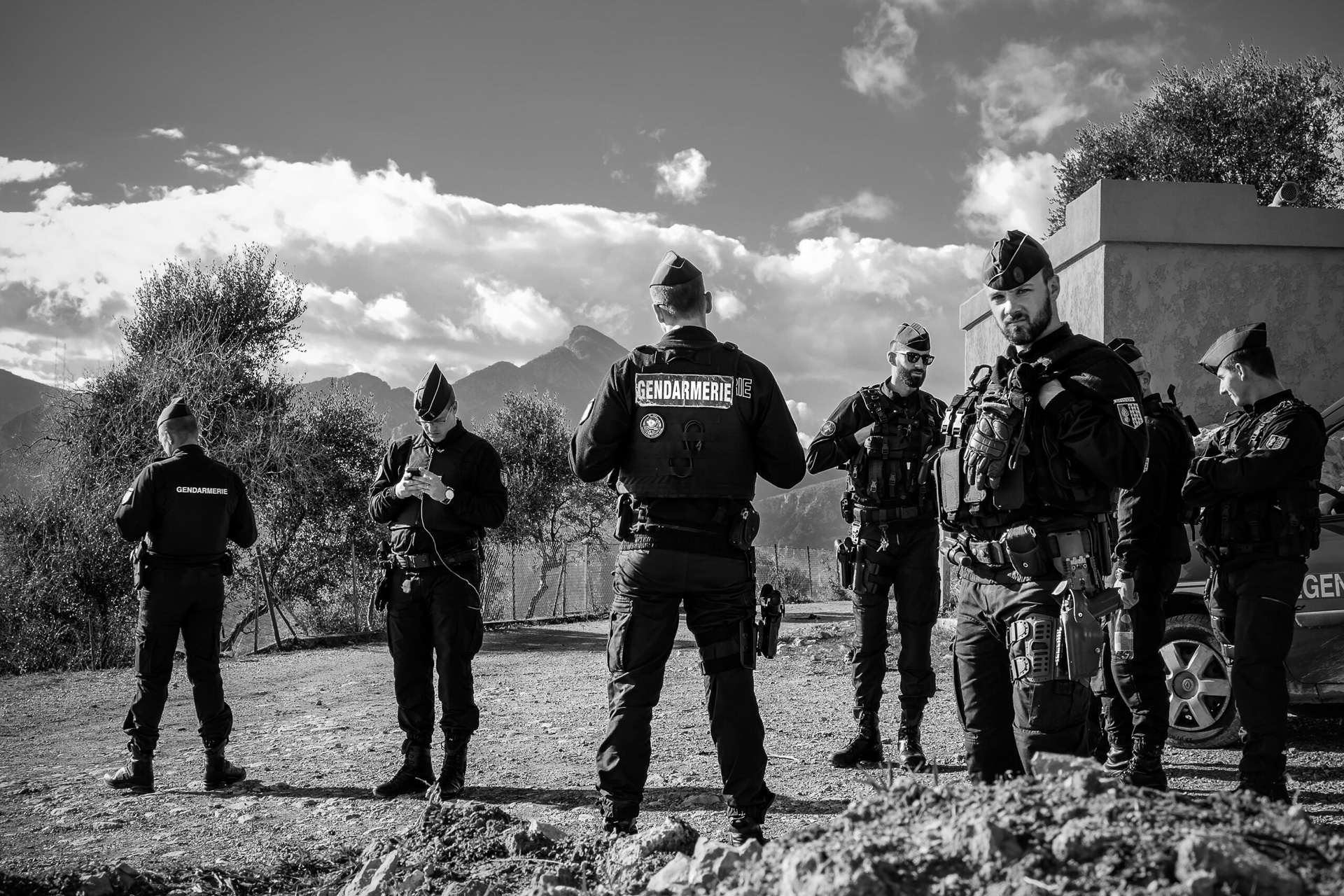
Italian-French border. French gendarmes confront a group of activists symbolically marching beyond the border crossing. Ventimiglia, 2018.
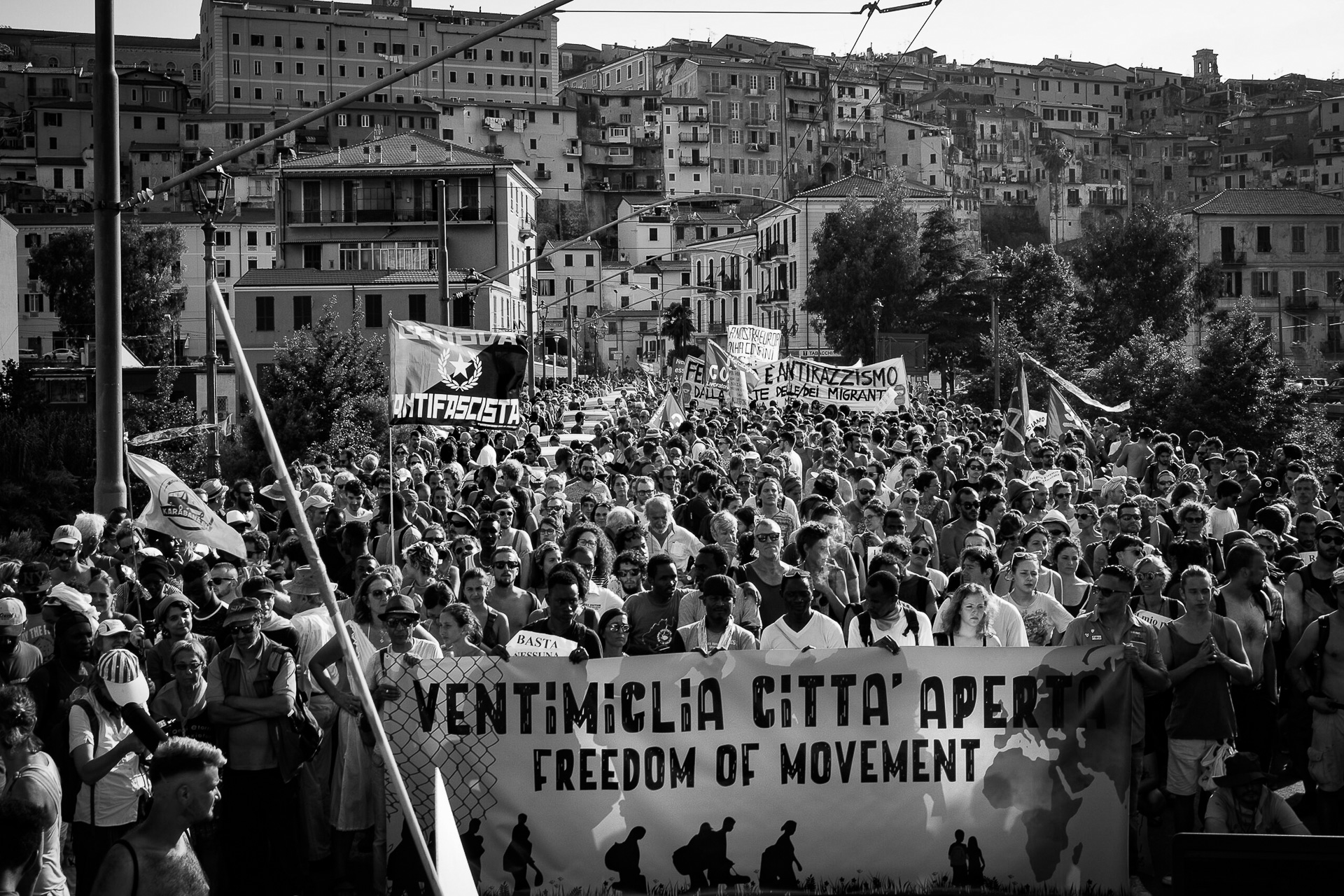
Demonstration for freedom of movement, Ventimiglia, July 14, 2018.
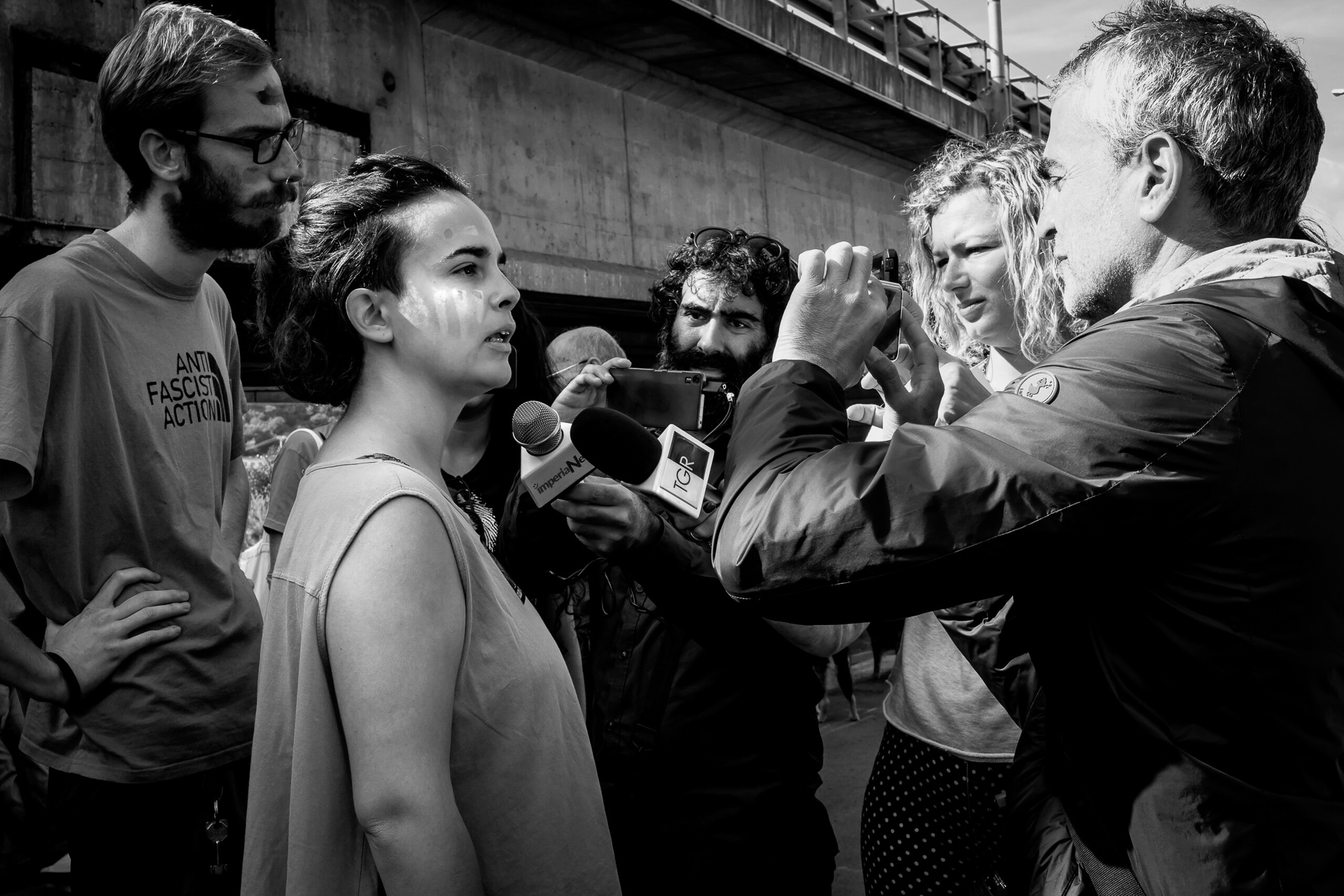
Activists speak to the press during the “Parade of Borderless Acrobats” in Ventimiglia, 2018.
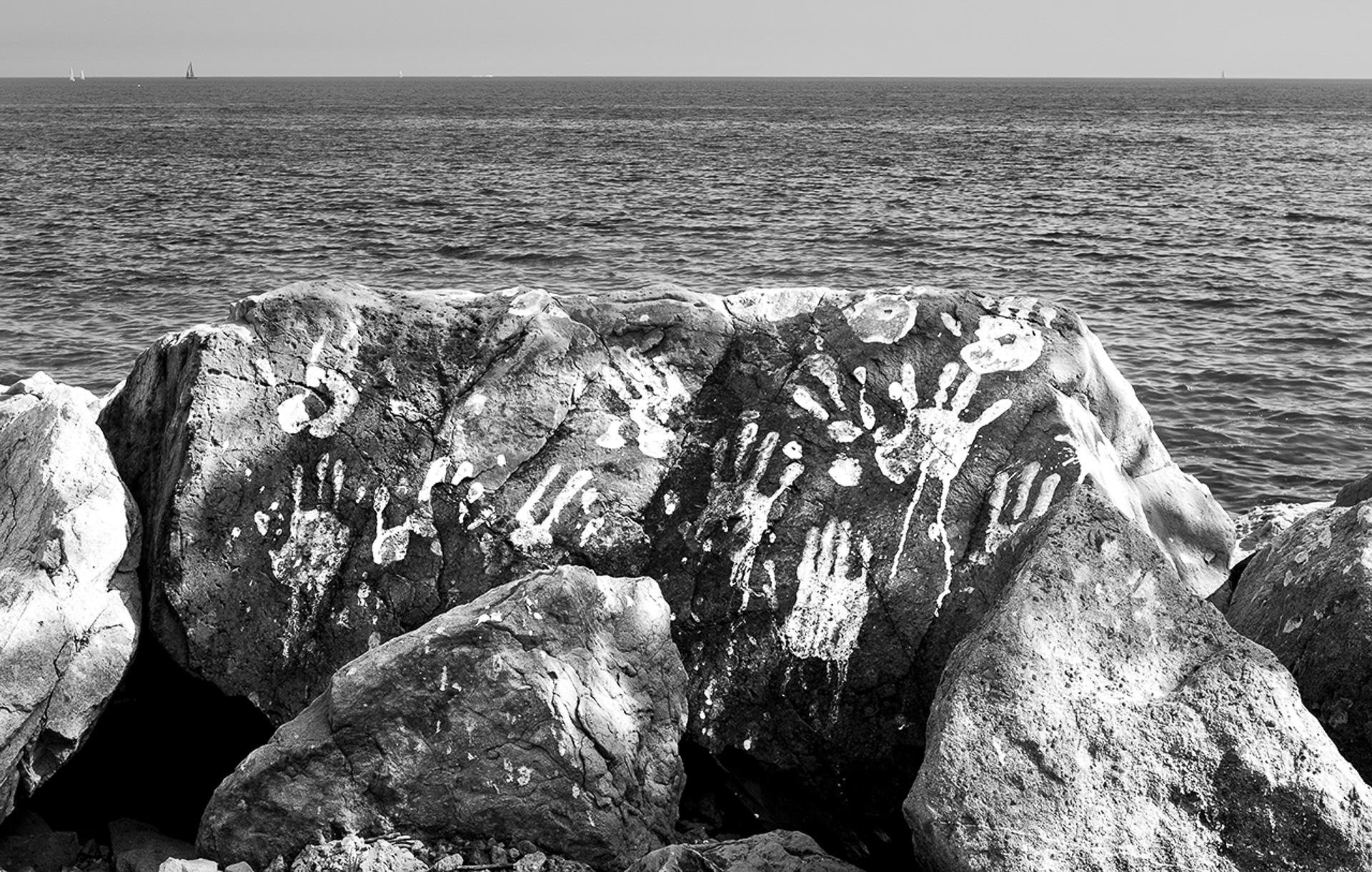
The handprints of activists and migrants remain marked on the cliffs of Balzi Rossi, near the Ponte San Ludovico border crossing, where in 2015 — following the closure of the border by French authorities — hundreds of people sought shelter.

Other Projects

Home

Entertainment