Emanuela Zampa

Bosnia with Blood

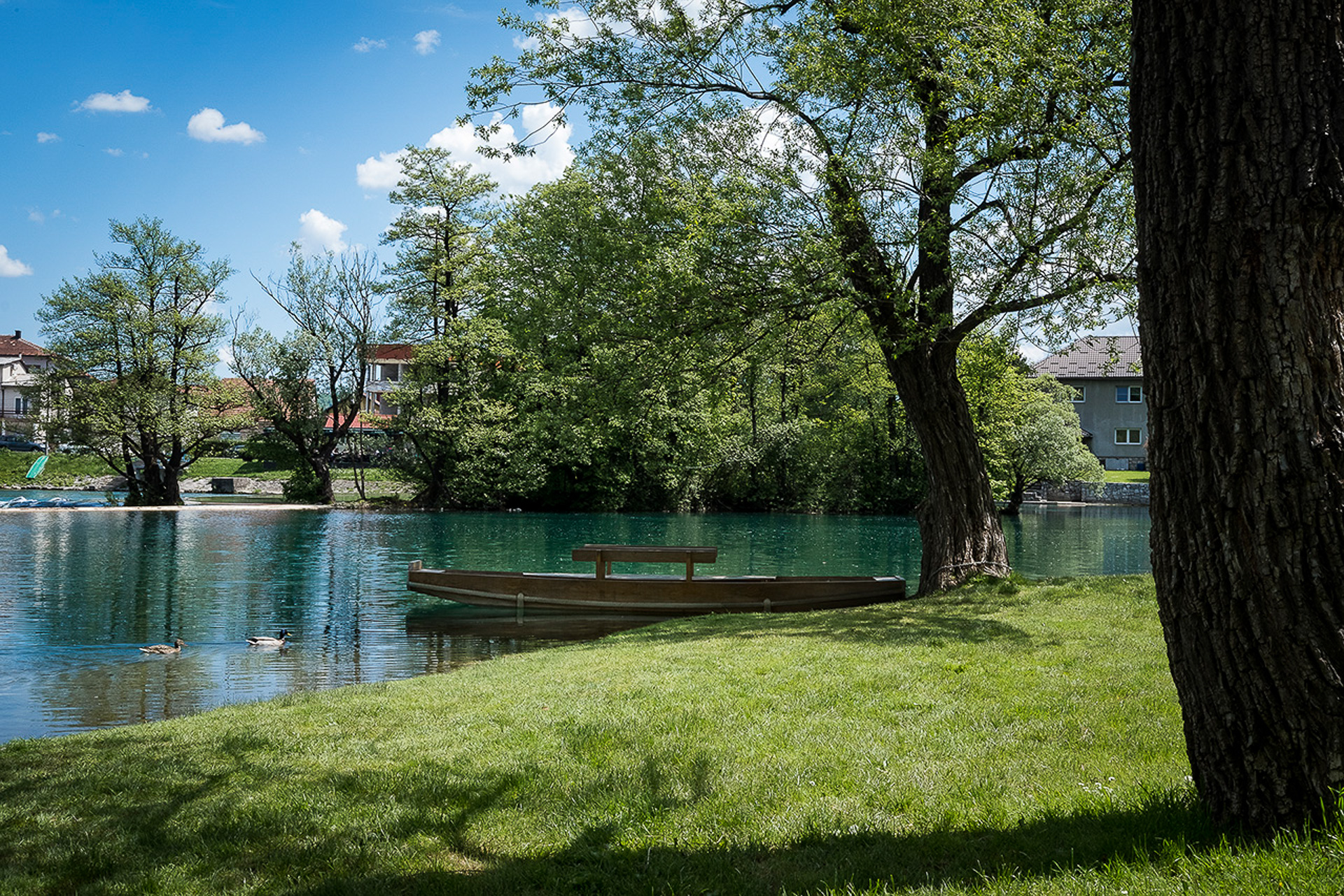
Bihać, on the northern border between Bosnia and Croatia, lies along the clear and powerful waters of the Una River. Here, the IOM recorded 1,500 people in 2017 and almost 24,000 in 2018. They are mainly Pakistanis, Iranians, Syrians, Afghans and Iraqis, but also North Africans and Sub-Saharan migrants. Bihać, Bosnia and Herzegovina, 2019.

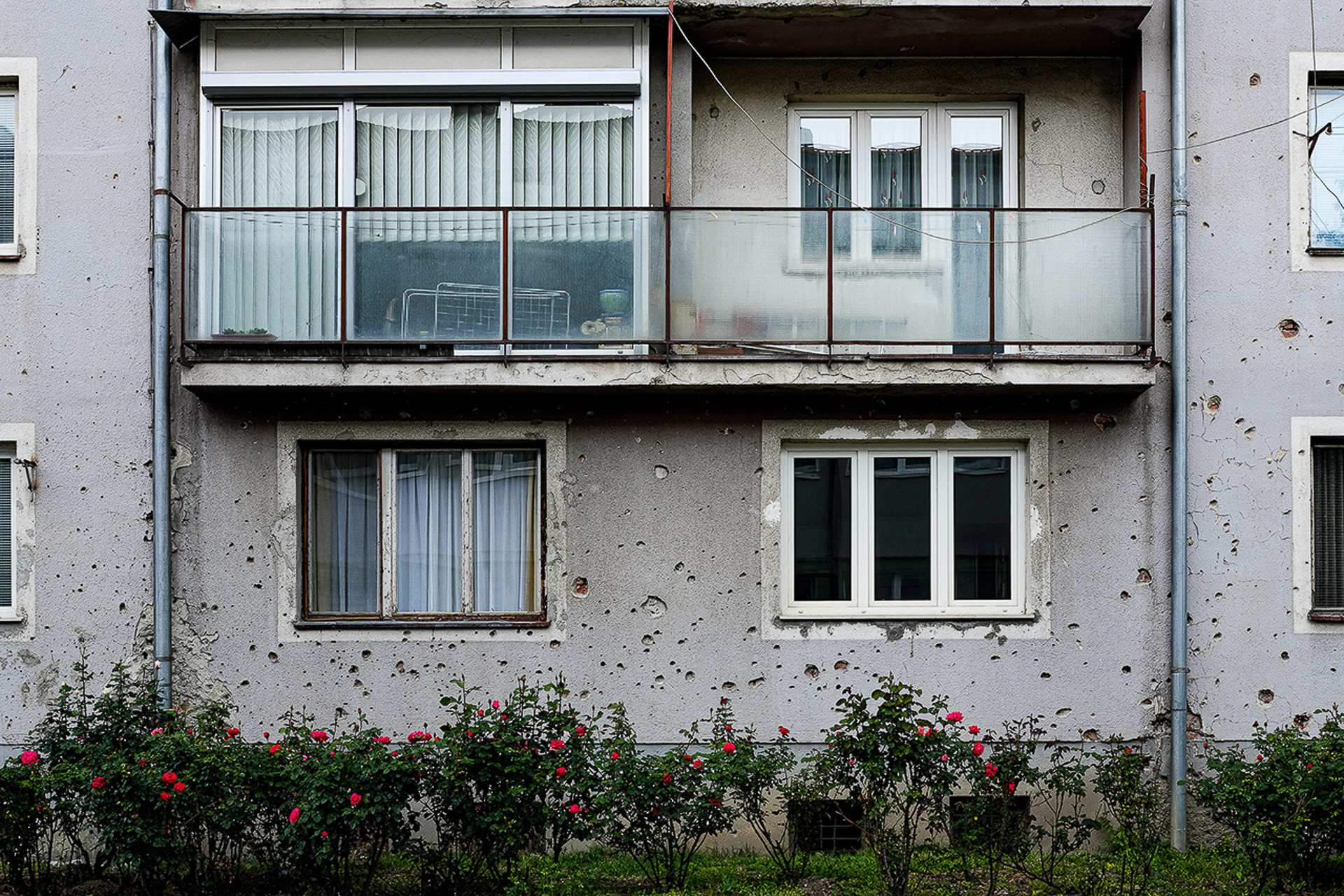
Bihać and Velika Kladuša, Bosnia and Herzegovina, Una-Sana Canton. A breathtaking, green and seemingly perfect landscape, with forests and the clear blue of untouched skies and rivers. Yet a closer look reveals the memory of a recent war, a past marked by violence and daily silenced. Today, these two border towns lie at the centre of a new form of violence: that between the EU and migrants.

Since Orbán built his border walls in Hungary and the EU–Turkey deal was signed in 2016, Bosnia has become a mandatory stop for thousands of people fleeing on foot from the Middle East, South Asia and North Africa in an attempt to reach Europe and seek asylum. The Bosnian government and the International Organization for Migration (IOM) estimate that in 2019 over 29,000 migrants entered Bosnia irregularly, compared to only 1,500 in 2017.

They call it “The Game.” An illegal, and at times lethal, crossing of the border: 60 km of Croatian forests between the Bosnian frontier and the Slovenian Schengen area, 240 km to reach the Italian border town of Trieste. At least ten days of walking through mined forests, inhabited by bears and wolves, and patrolled by Croatian, Slovenian and Italian police forces. In a divided country still marked by war, where many dream of the same Europe sought by migrants, social tensions have risen rapidly, feeding hostility. In camps, on roads, in mountains: migrant bodies are out of place. They do not integrate into the landscape; they are not welcome. They occupy space and remain visible. Bodies that want to move but are forced into immobility. Wounded, exhausted bodies, deprived of light, slowly turning into shadows. They are Pakistanis, Iranians, Syrians, Afghans, Iraqis, North Africans. All report being pushed back, beaten and robbed by Croatian police; of violence, humiliation and corruption in IOM-run camps. They attempt “The Game” dozens of times, living in a desperate limbo that drives them toward breakdown. Out-of-place bodies, shadows, no longer fully recognised as persons: unable to go back, yet denied any legal means to move forward or possibility to remain.

This portfolio is one of the outcomes of the research project “Mobility of Memory, Memory of Mobility: Western Mediterranean Crossings in the 20th and 21st Centuries,” directed by Gabriele Proglio and funded by the Fundação para a Ciência e a Tecnologia (2017–2023), based at the Centre for Social Studies of the University of Coimbra. The project investigates human mobility and its memories in the Mediterranean across the 20th and 21st centuries, analysing multiple trajectories: North–South, colonial and postcolonial, Europe–Africa relations, and transnational and diasporic movements.

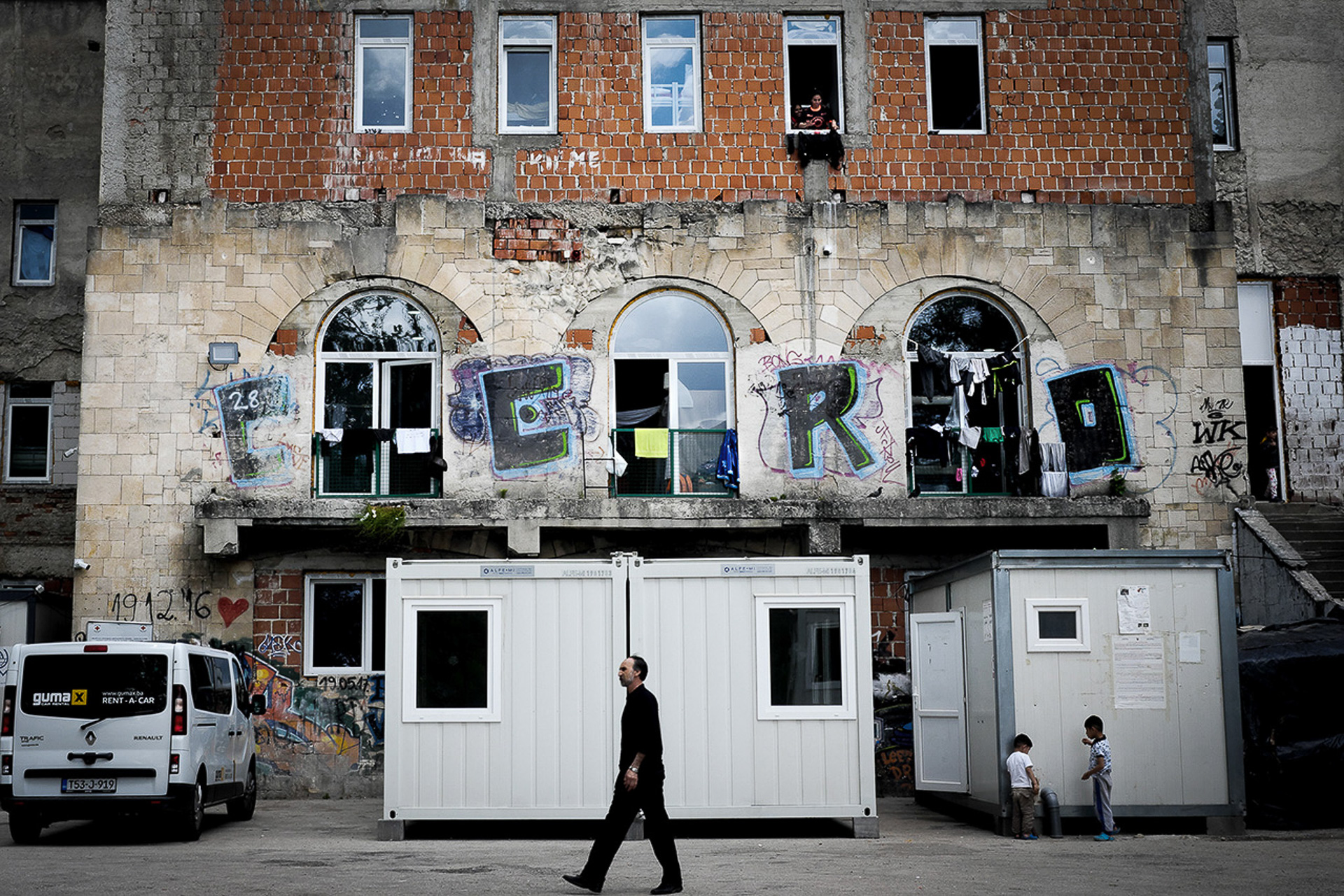
In a land already marked by war and its lingering memory, the effort to understand the refugee exists in potential, yet crumbles under the constant feeling of abandonment by the authorities. Bihać, Bosnia and Herzegovina, 2019.
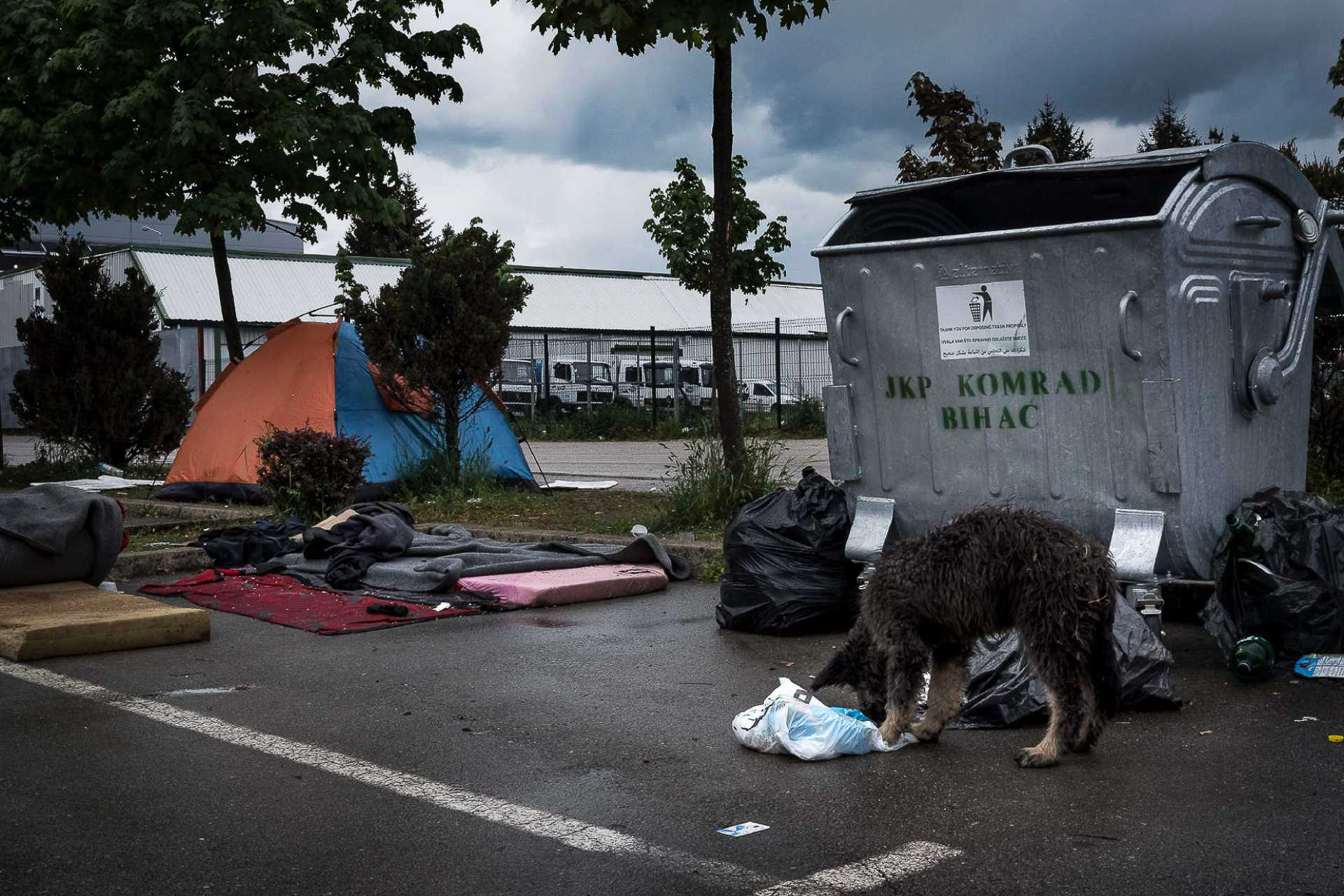
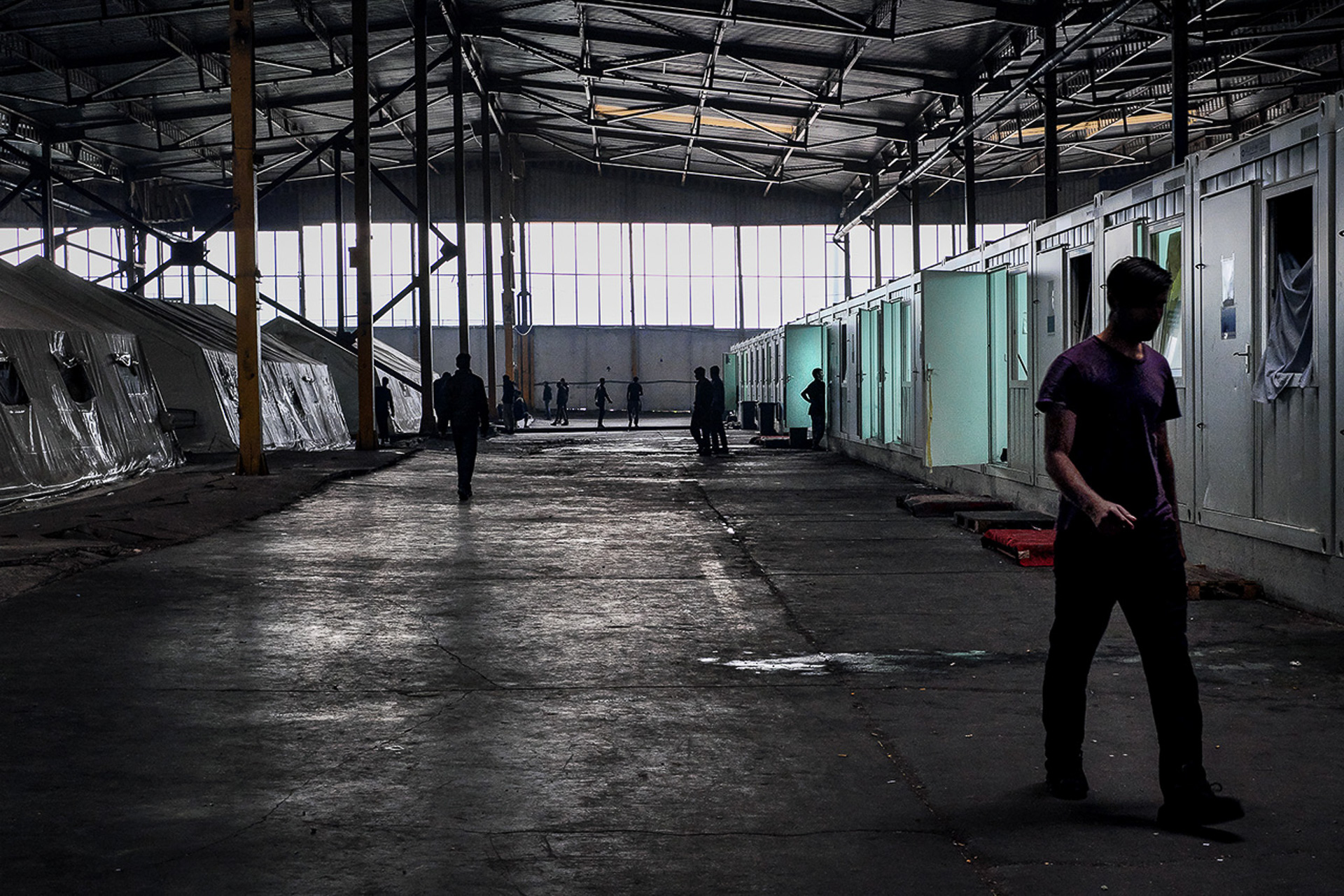
The IOM camp of Bira is located inside an abandoned refrigerator factory and has a capacity of around 2,000 people. Outside, a small informal camp has formed. According to testimonies collected on site, those arriving in Bihać without money and unable to pay security guards are left outside. Bihać, Bosnia and Herzegovina, 2019.
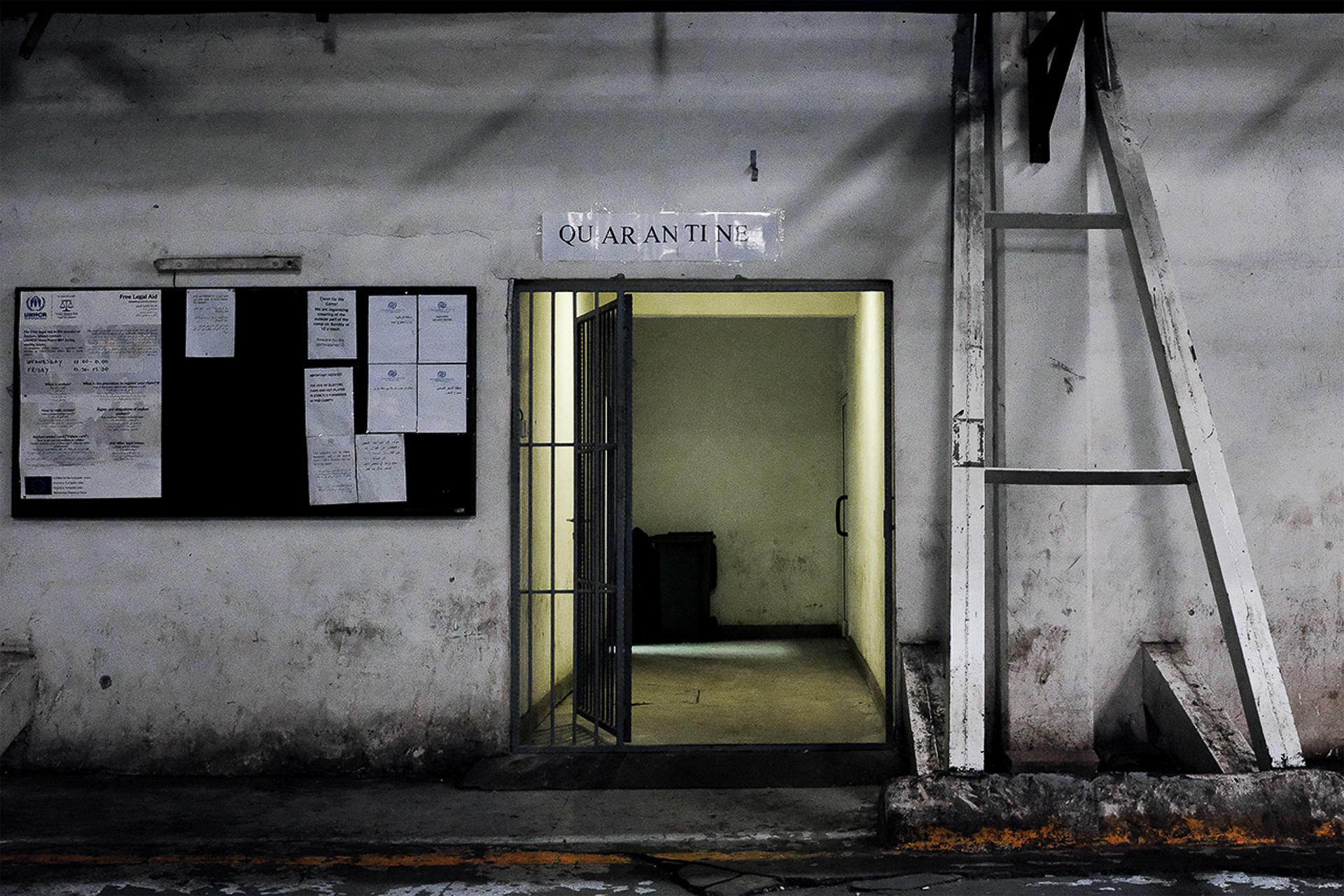
At the entrance of the camp, IOM staff hand me latex gloves and a mask — it is unclear for whose protection — before escorting me on a guided tour where photographing people, tents, the canteen, containers and the family section is forbidden. They do not allow me to stay for more than two hours. Bira refugees camp, Bihac, Bosnia Herzegovina, 2019
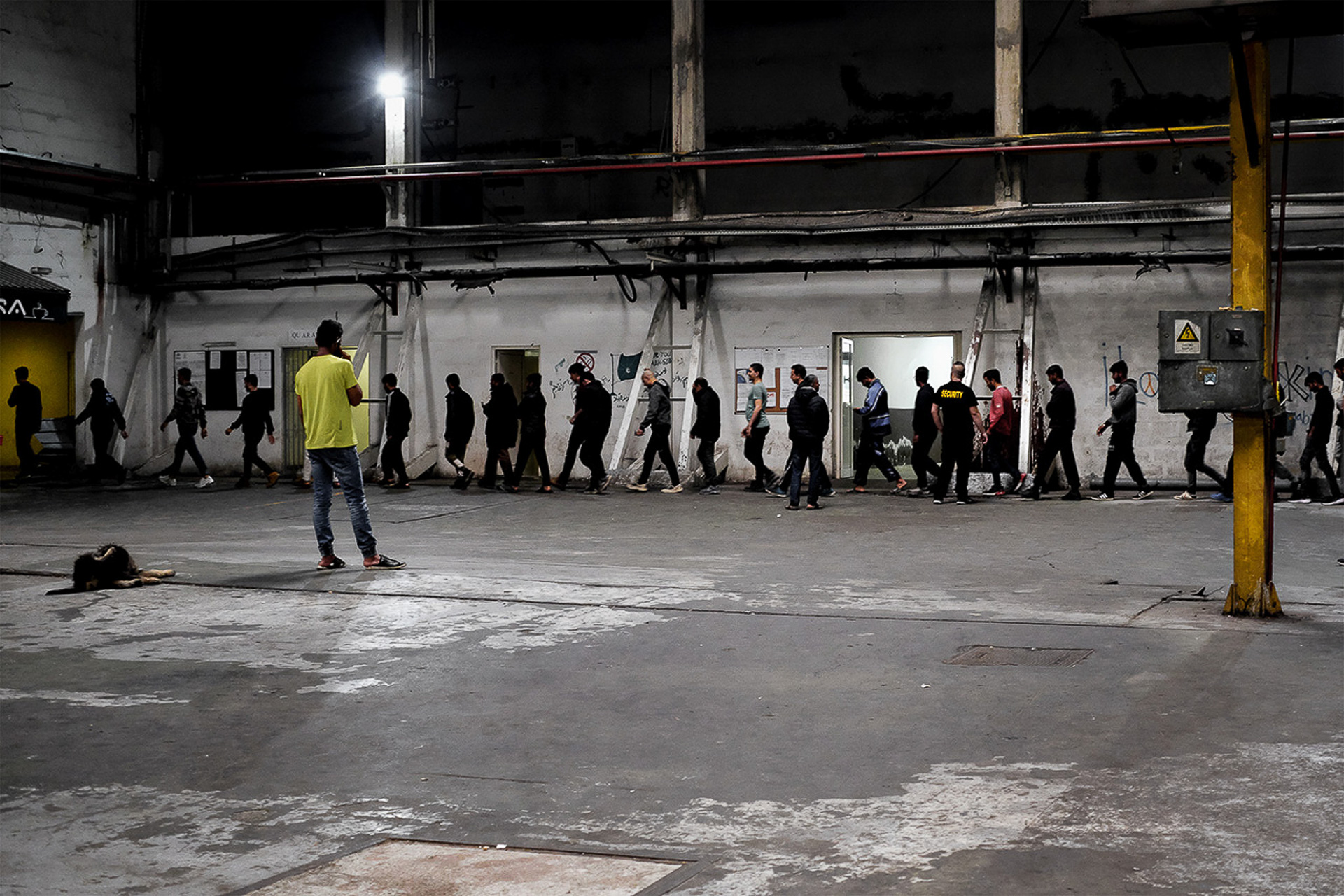
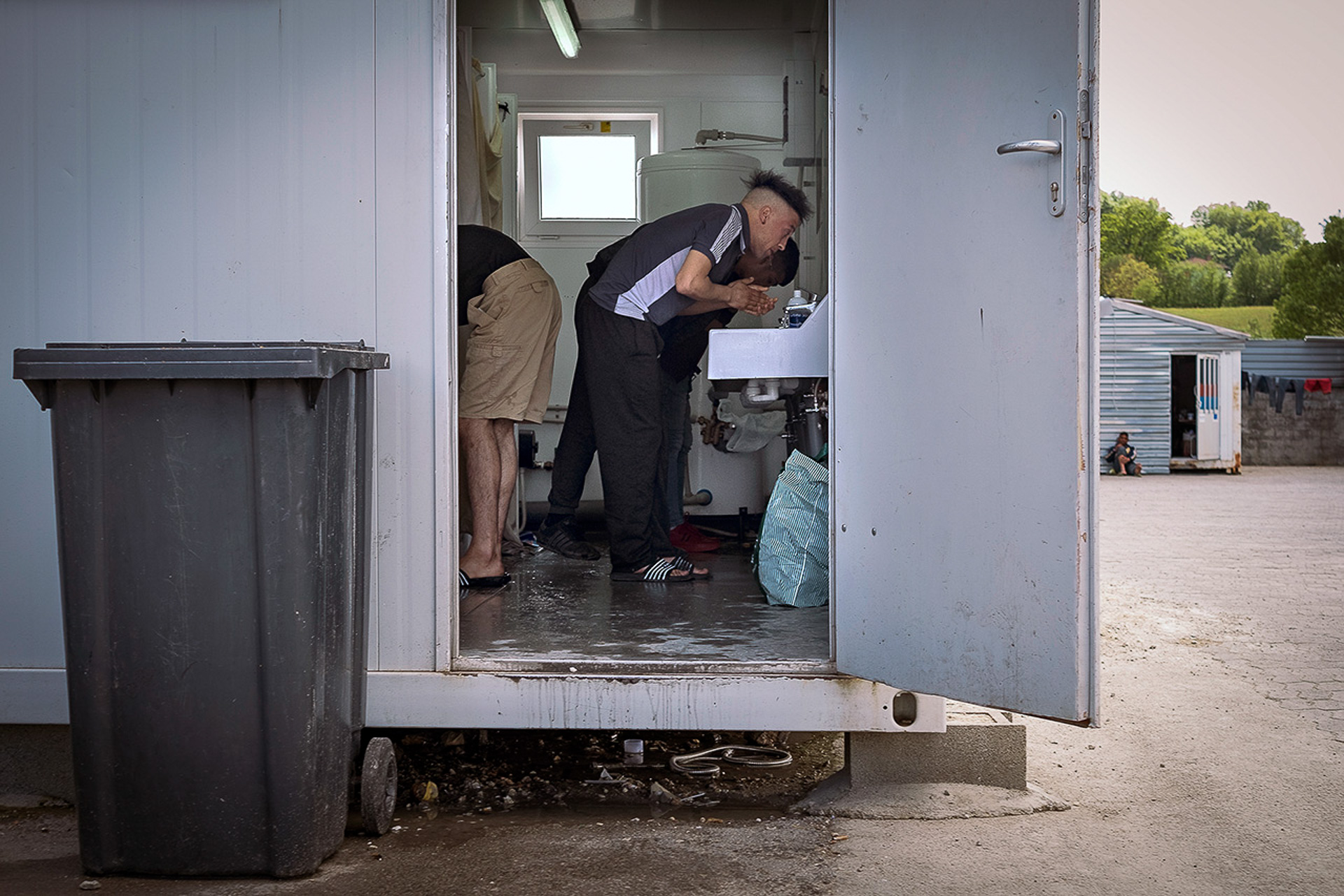
Life inside the camps is marked by waiting and queues: for food, for the doctor, for the toilets, for the showers. They stand in line, wait, and hope there will be enough for everyone. Private security is meant to maintain order, yet testimonies of corruption and violence are widespread. Bira refugees camp, Bihac, Bosnia Herzegovina, 2019
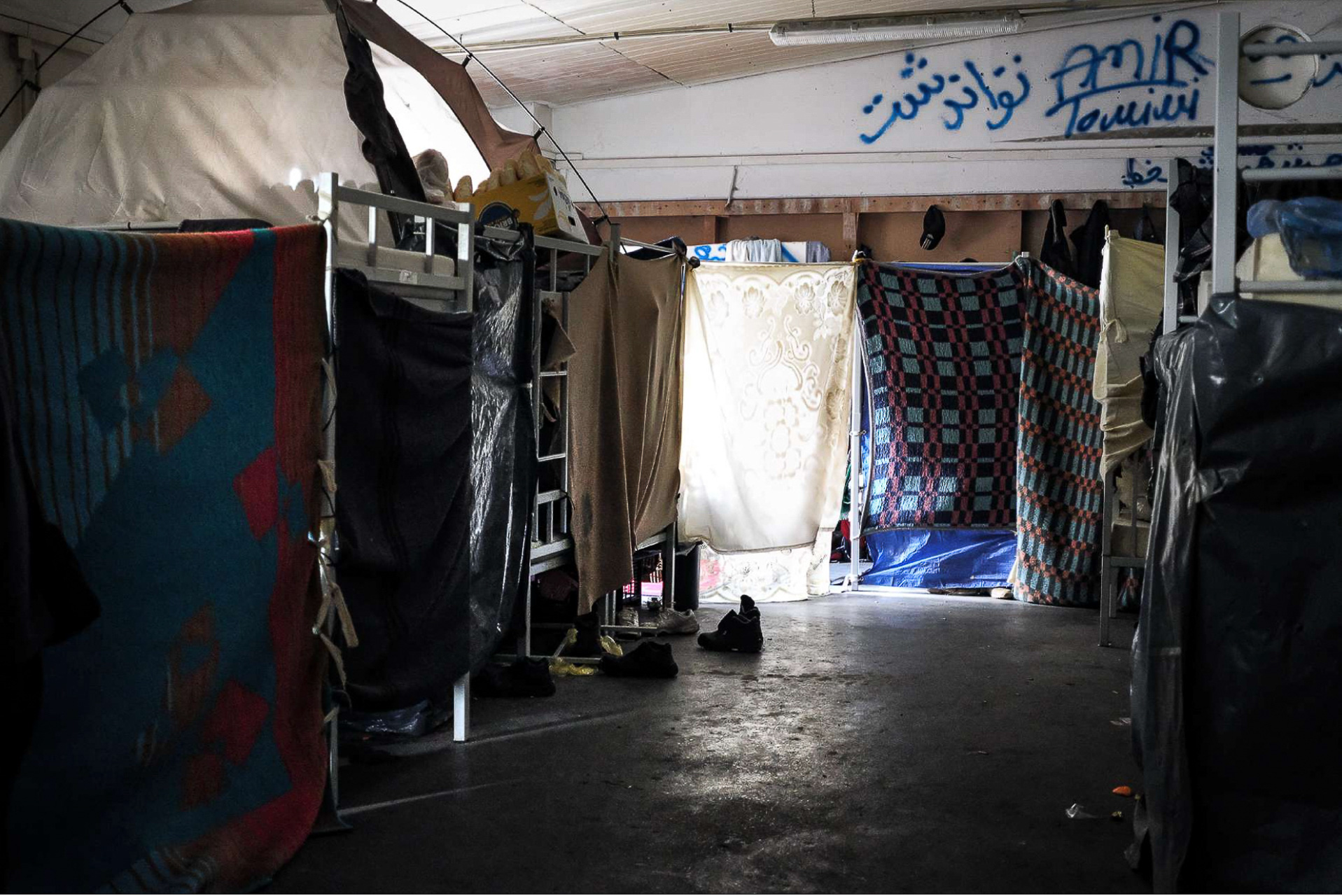
The IOM camp of Bira is located inside a former refrigerator factory. It offers around 2,000 people waiting to cross the border illegally a bed and a meal, nothing more. Tents, containers, and a space so vast that light fails to reach the people wandering through it, stripped of purpose and humanity. Bihać, Bosnia and Herzegovina, 2019.
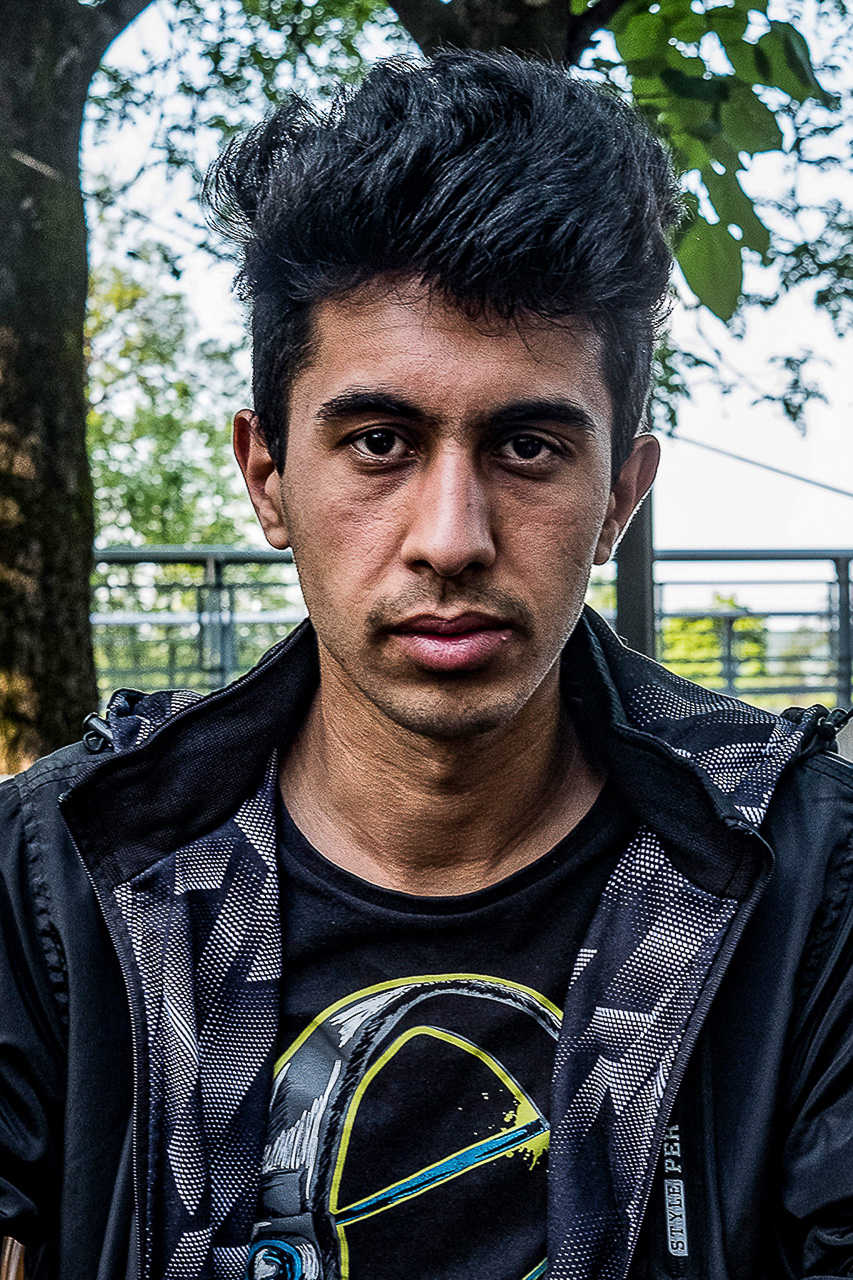
Ahmed, 16, fled Syria through Turkey, Greece, North Macedonia and Serbia. When I meet him, he is at the gates of the EU. Repeatedly pushed back and beaten by Croatian police, he waits for the right moment and says: “Prisoners know when they will be free. But we refugees don’t.” Bihać, Bosnia and Herzegovina, 2019.
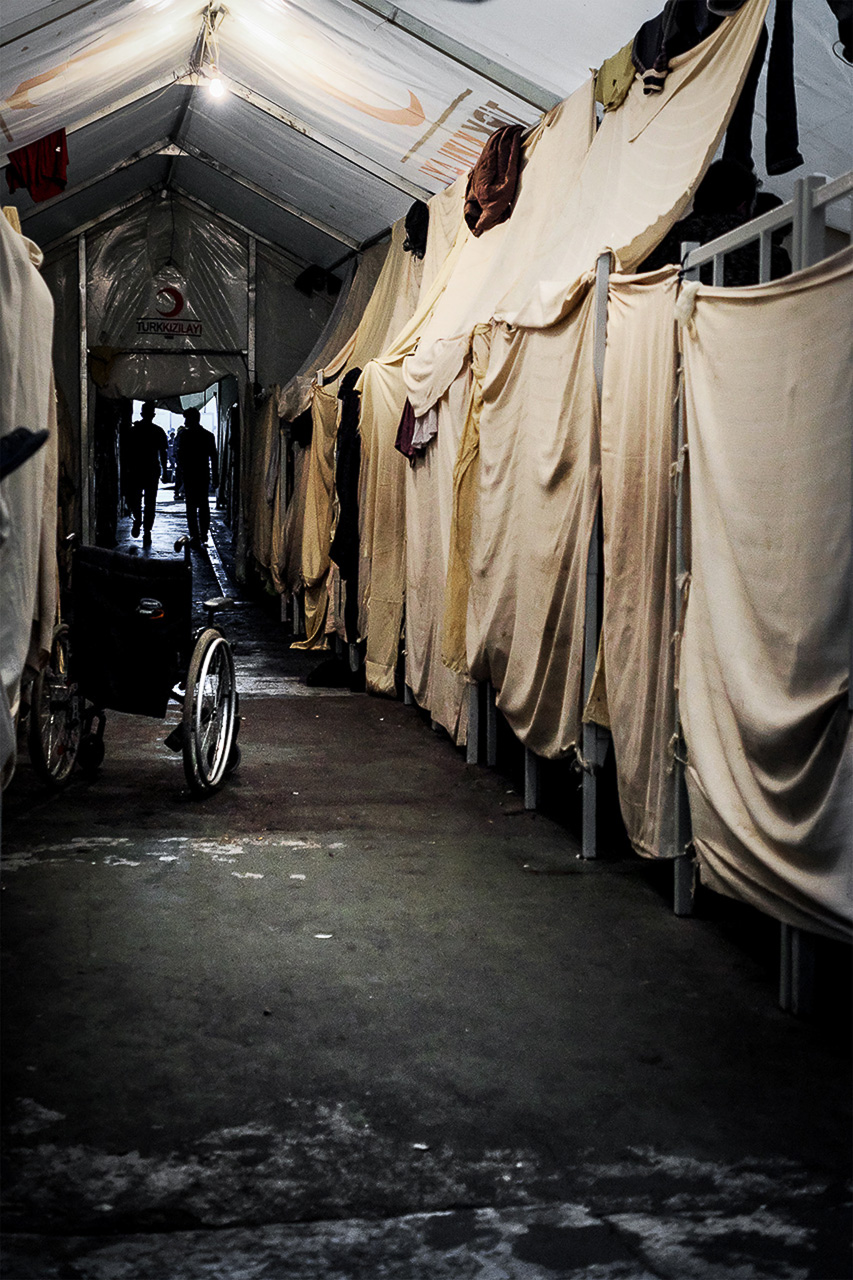
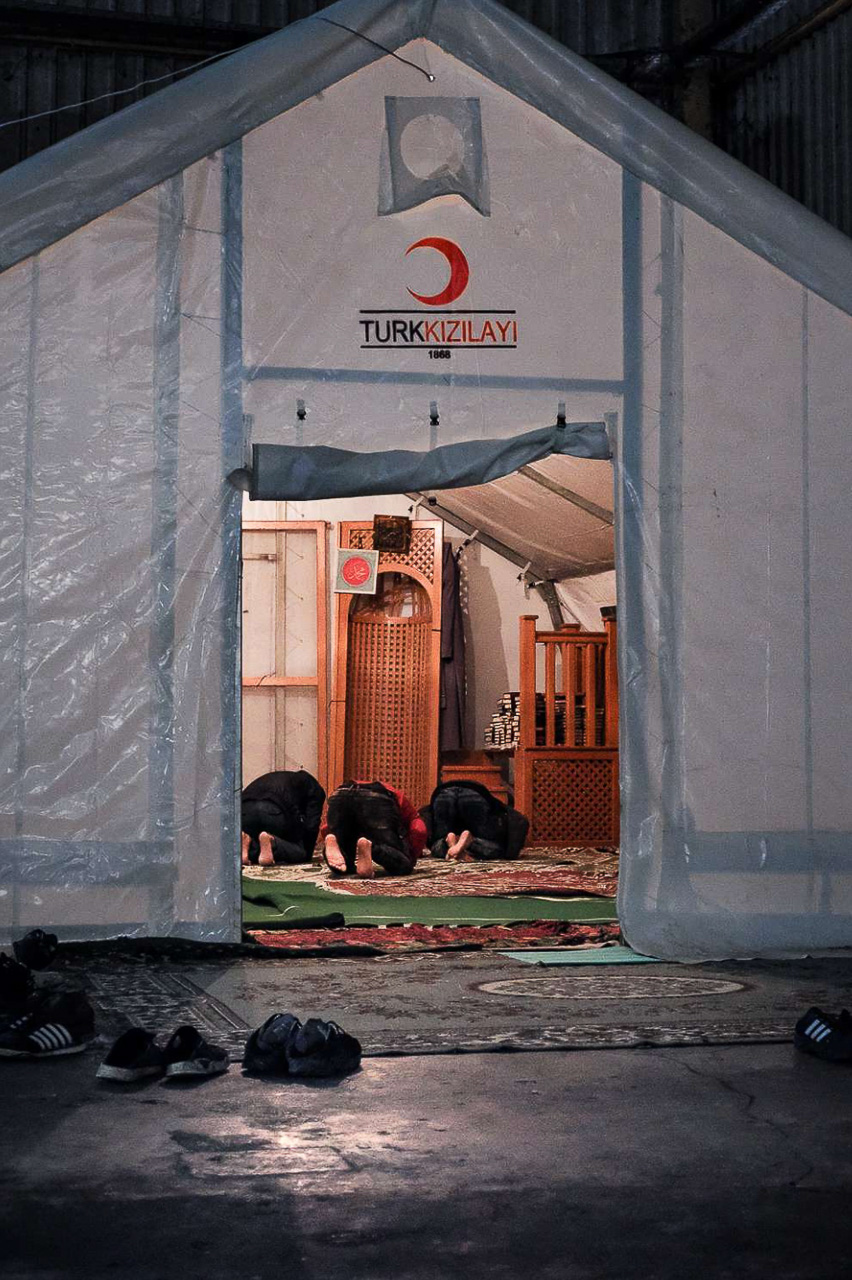
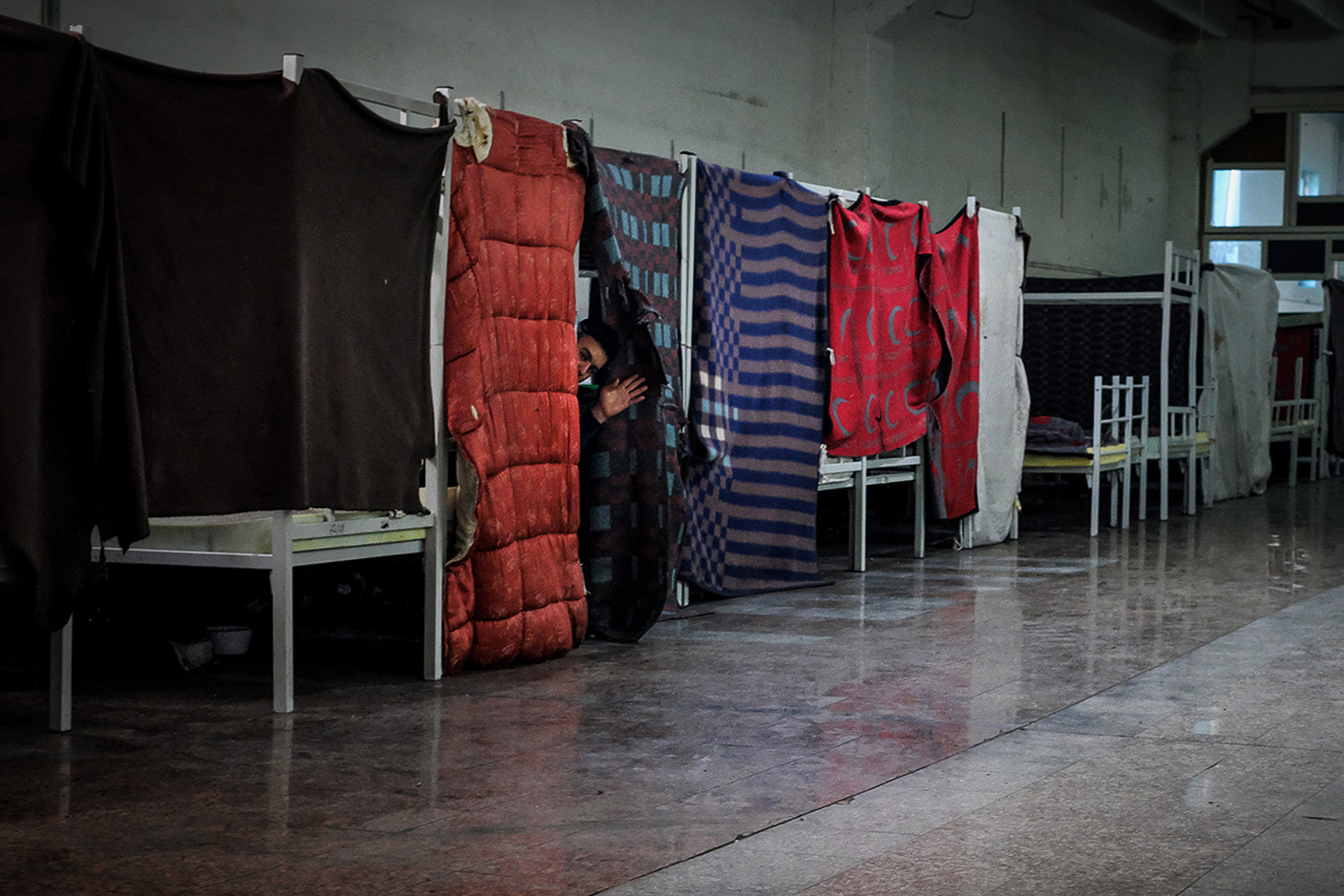
There are no windows in the camp and the walls are very high. All around, the fencing turns it into a prison. Many field tents bear the emblem of the Turkish Red Crescent. Each can host up to 150 people. Clothes and sheets are used to divide one sleeping space from another in a search for privacy. Bira refugees camp, Bihac, Bosnia Herzegovina, 2019.
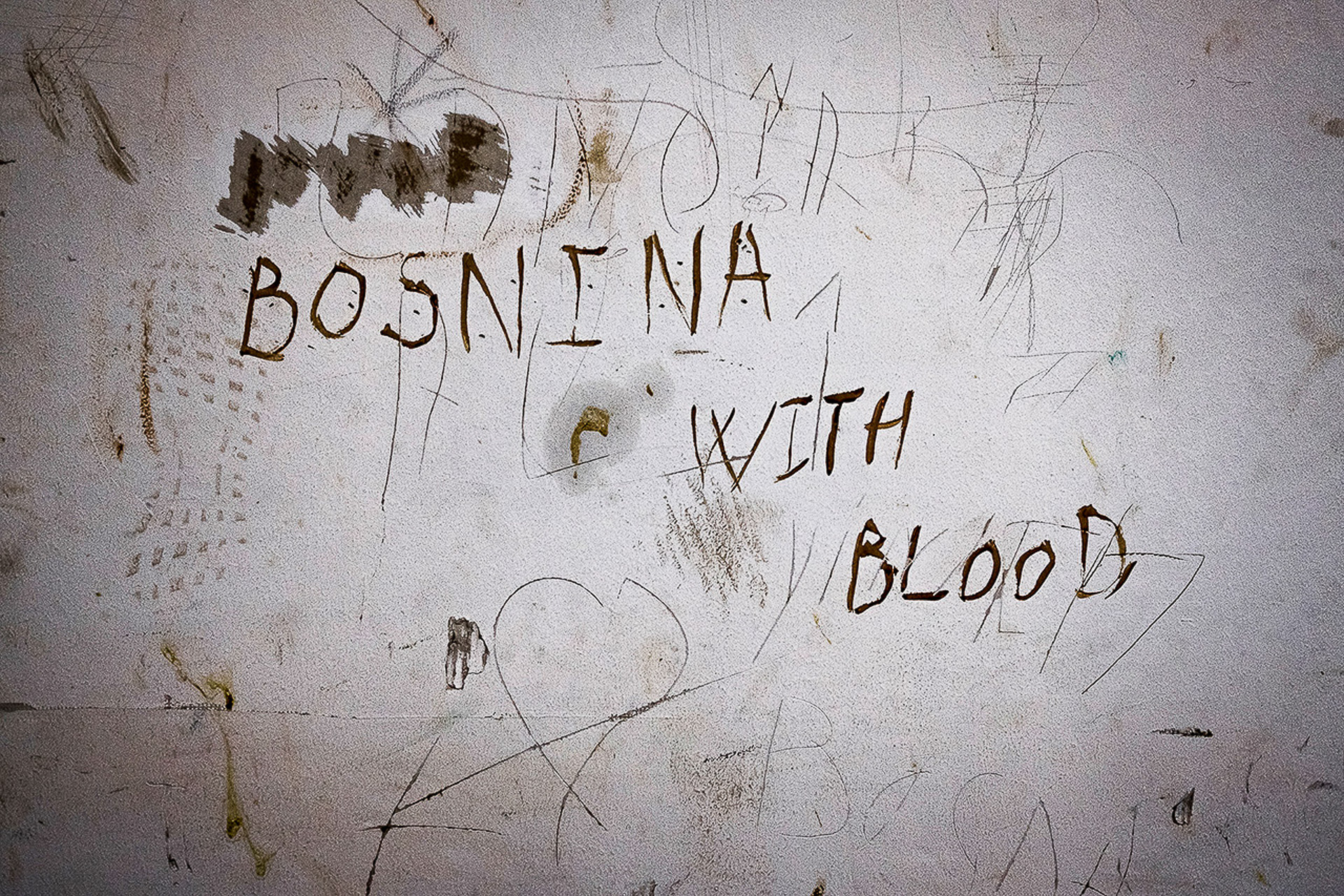
In these places of despair and possible death, leaving a trace of one’s passage, life and humanity becomes a necessity in order not to be forgotten. Miral refugees camp, Velika Kladusa, Bosnia Herzegovina, 2019
The mosque in the camp may appear as a gesture of kindness, but Bosnia is simply a majority-Muslim country. Bihać, Bosnia and Herzegovina, 2019.
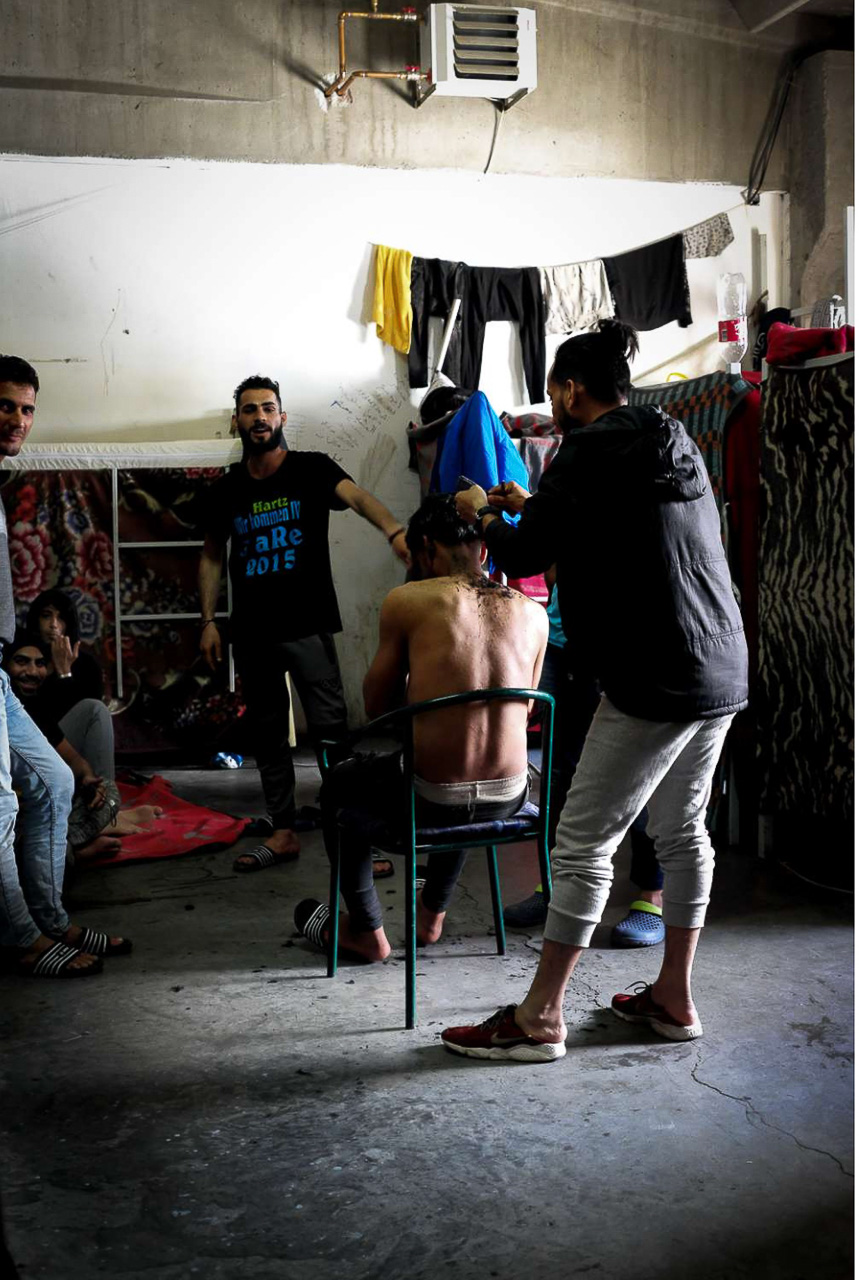
Inside the camps, people organize themselves as best they can, trying to earn some money to continue their journey, using whatever skills they have—such as working as barbers—or other informal means. Their legal status in Bosnia is undefined, and they are not allowed to work while waiting to move on. Miral Camp, Velika Kladuša, Bosnia and Herzegovina, 2019.
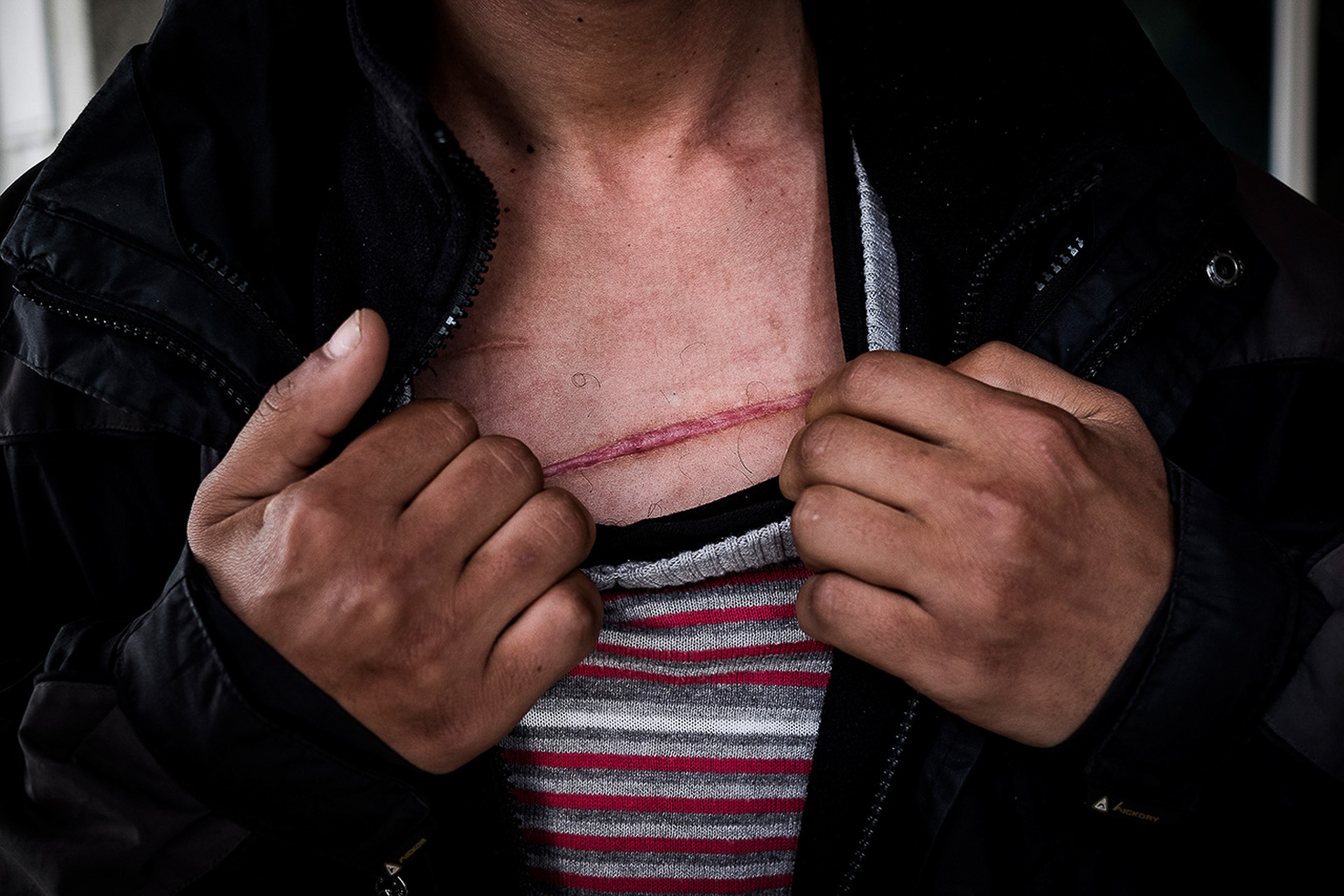
Along the Balkan route, many migrants report being beaten and robbed by Croatian police, and pushed back without the possibility of requesting asylum. In 2019, President Kolinda Grabar-Kitarović both acknowledged and denied the use of force in the defence of Europe’s borders. Velika Kladuša, Bosnia and Herzegovina, 2019.
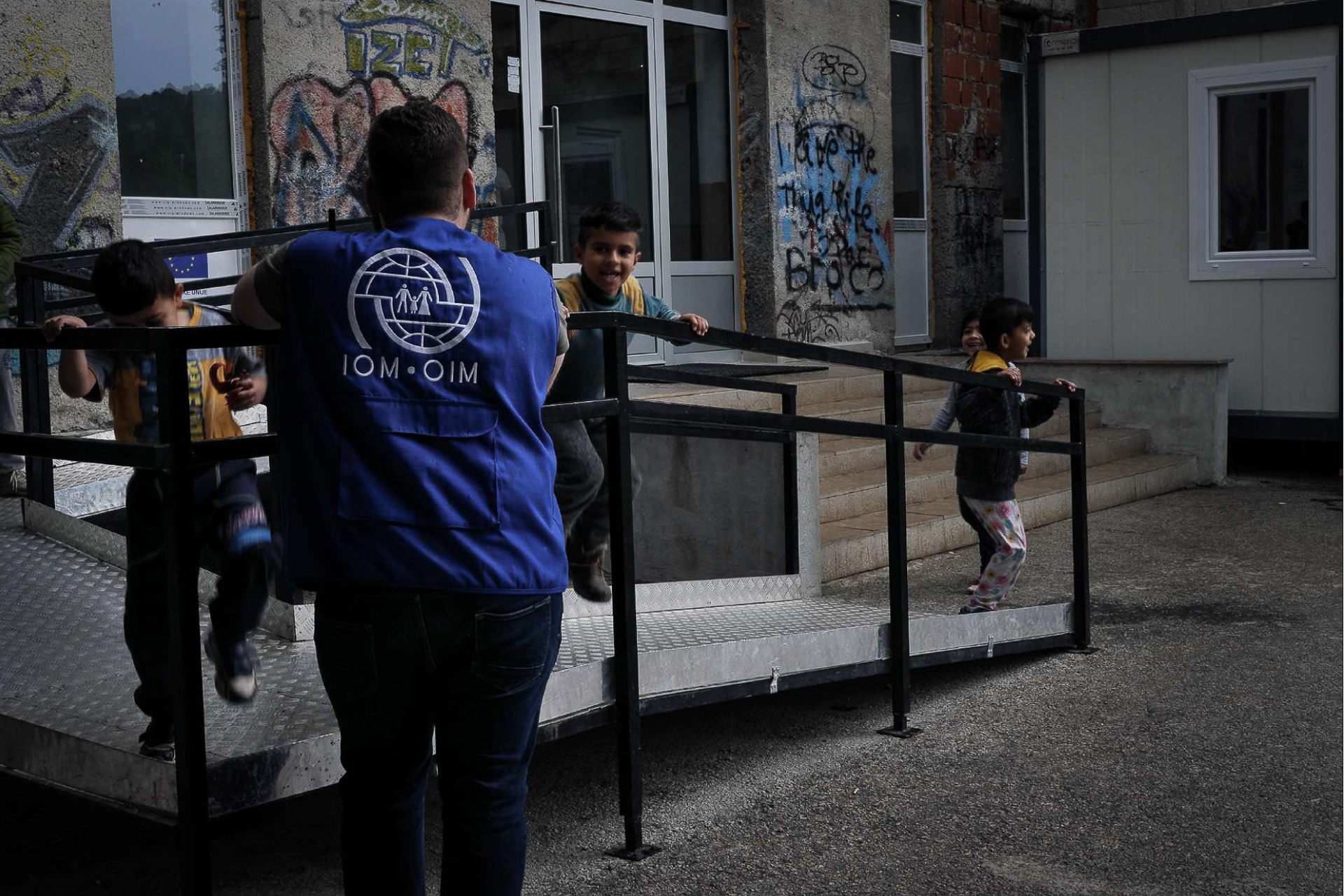
The unfinished Borici student dormitory stands above the NK Jedinstvo football stadium and hosts families and unaccompanied minors. I am not allowed to bring my camera inside. Borici refugees camp, Bihac, Bosnia Herzegovina, 2019.
A violent downpour forces me and the escort I have been “assigned” to take shelter under a roof, while the children, unfazed by the rain and everything else, play by chasing each other as if they were refugees and police. The game of pushback. Bihać, Bosnia and Herzegovina, 2019.
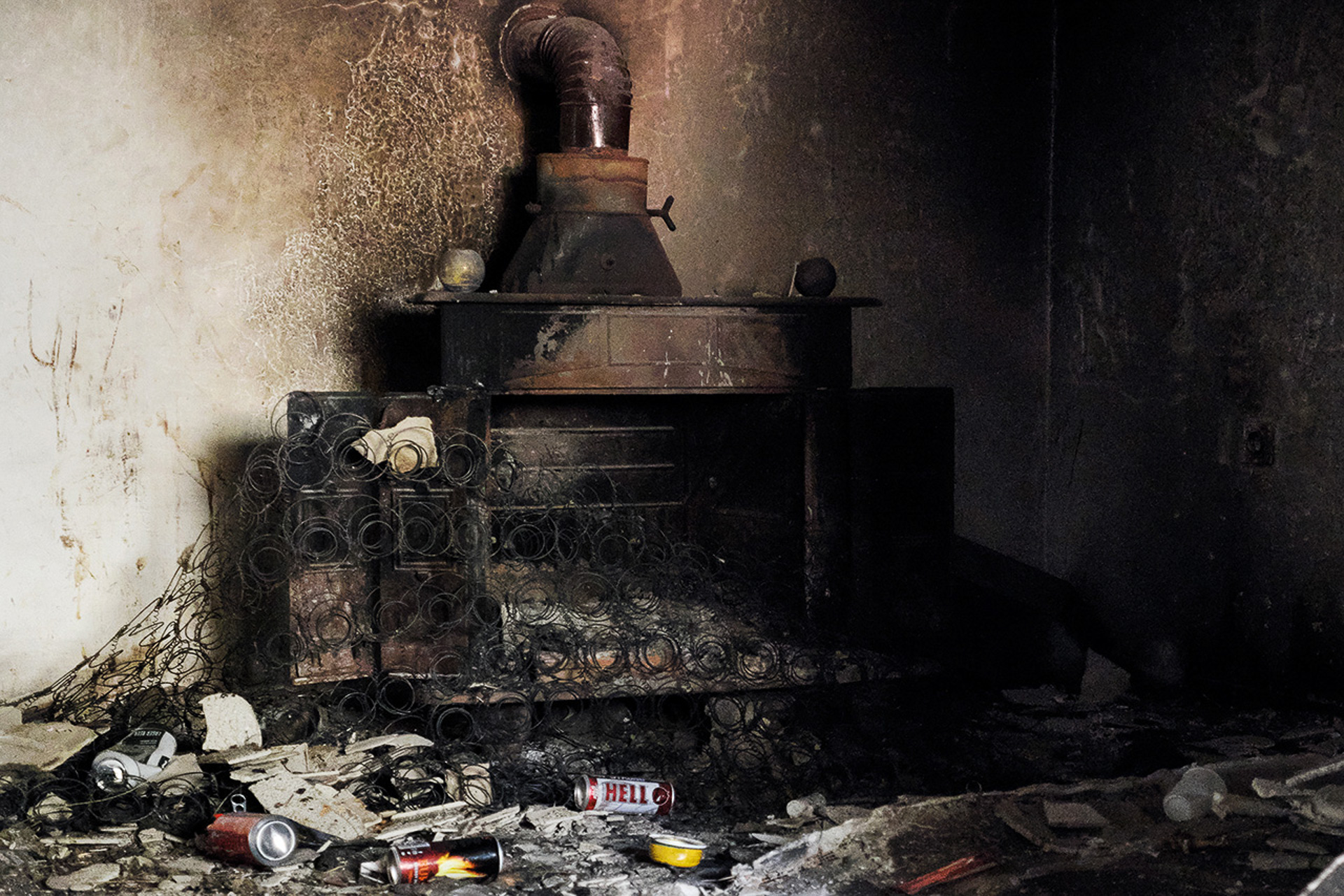
A few weeks after our departure, we learned that the Miral camp had burned down, leaving hundreds of refugees without a place to sleep. The fire, apparently caused by a faulty stove, led the IOM to take precautionary measures, including confiscating potentially dangerous electronic devices across all camps. Velika Kladuša, Bosnia and Herzegovina, 2019.
At Velika Kladuša, passage into Croatia is reportedly controlled by two groups of smugglers: Algerian Berbers and Afghans. If Bihać is a place of despair, Velika Kladuša is where anxiety takes shape. The Miral camp reflects this condition. Miral refugees camp, Velika Kladusa, Bosnia Herzegovina, 2019.
The Miral camp was also set up in an old factory. Spread over two floors, it hosts single men. Samir, a 32-year-old Algerian man, recounts his journey across half the Mediterranean. “I know the angel of death well, I am not afraid and I will not stop until I have crossed. I have no alternatives.” Miral Refugee Camp, Velika Kladuša, Bosnia and Herzegovina, 2019.
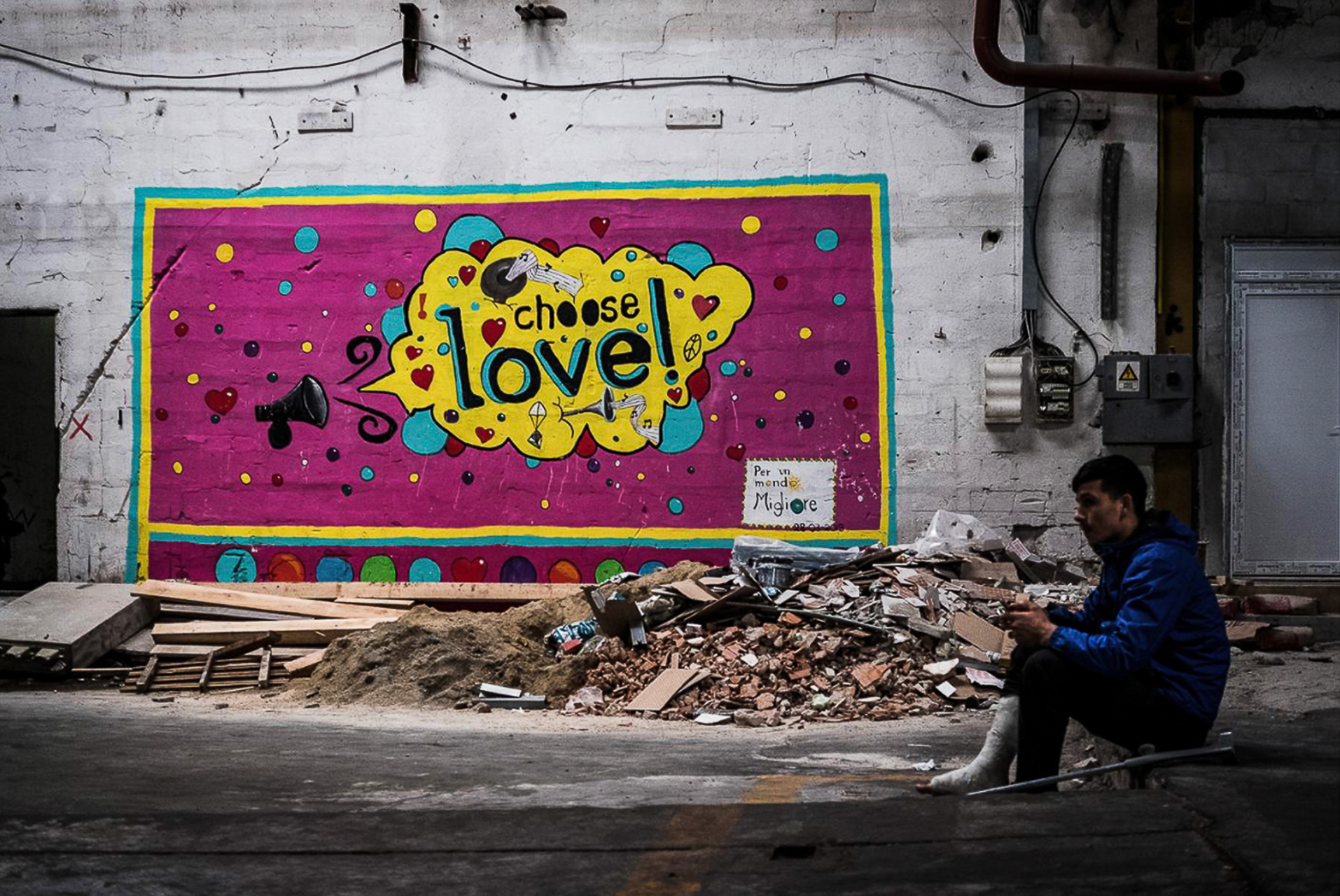
A mural made by a humanitarian organization in Bira Camp reads: “Choose love.” Choose it when you are pushed back for the twentieth time. Choose it when you realize you are confined outside the borders of the EU. Love your guards—they are ordering you to. Ignore the war in your head. Ignore the pain in your legs. Choose love. Bira refugees camp, Bihac, Bosnia Herzegovina, 2019.
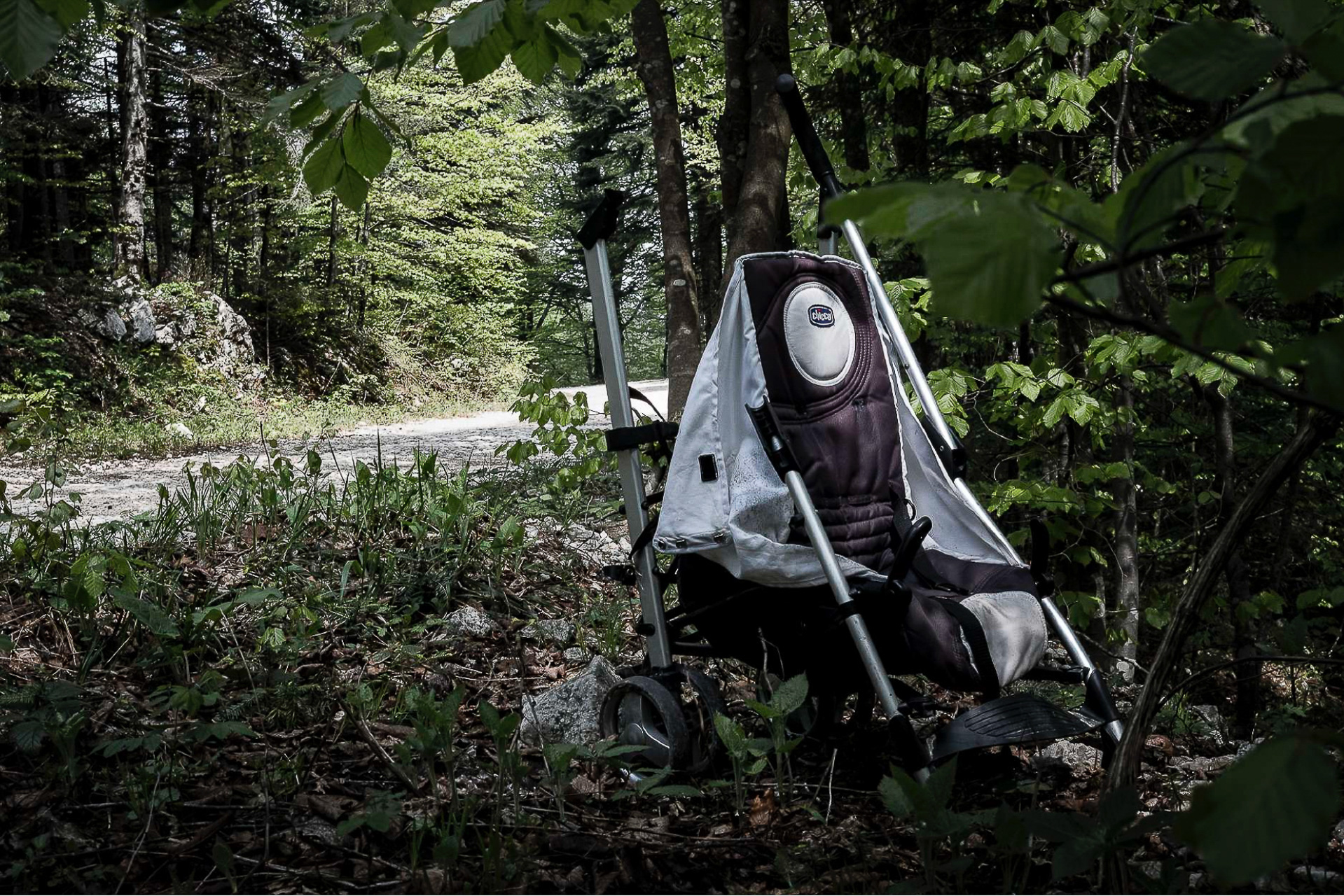
On the path through the forest leading into Croatia, where jamming systems make it impossible to determine our exact location, a trail of abandoned objects appears—broken, exhausted, or simply discarded as weight. Like a trace that does not lead back. Somewhere between Bosnia and Herzegovina and Croatia, 2019.
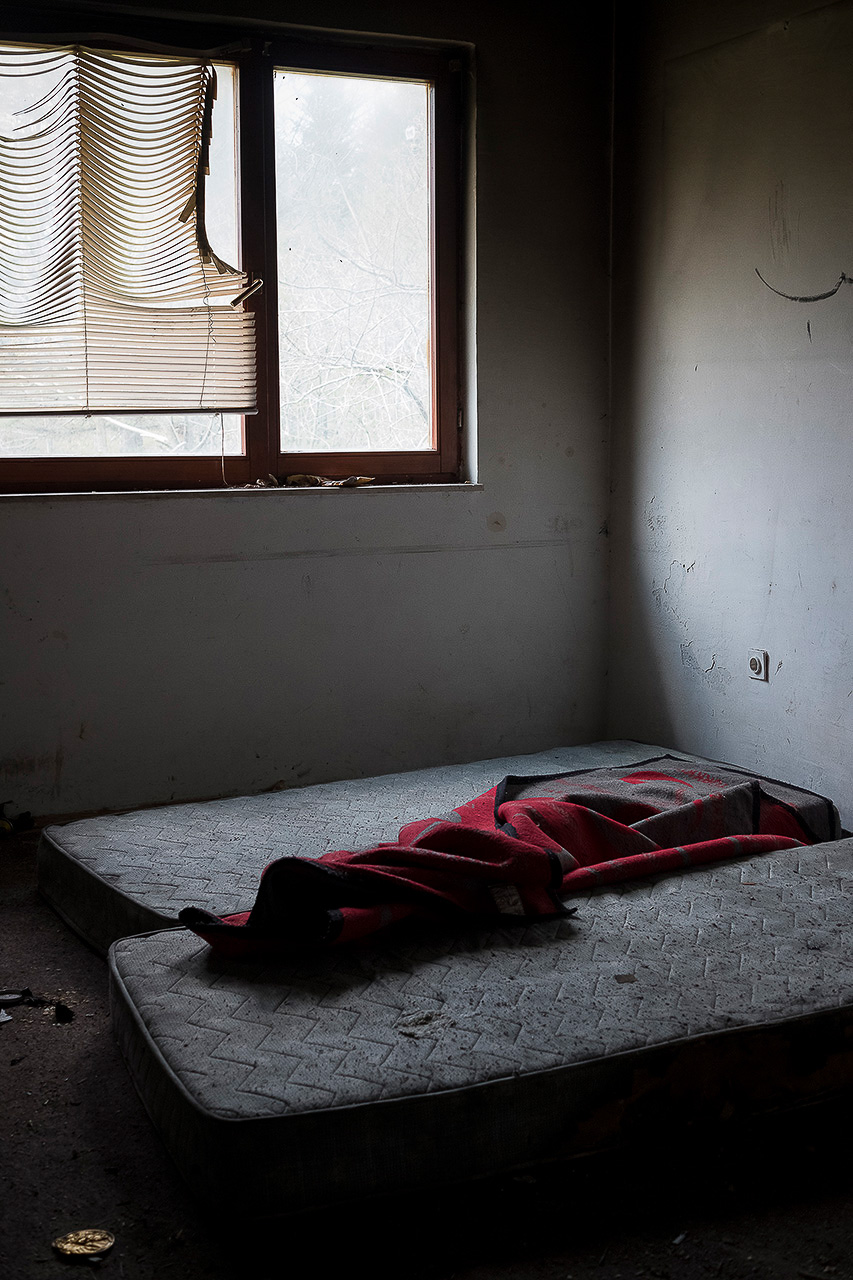
An abandoned shelter in the woods provides refuge for around twenty people, as many others before them, judging by the condition of the structure. Amid the rubbish, entire families, an elderly man alone, and a pregnant woman. Water is their most precious resource. Somewhere between Bosnia and Herzegovina and Croatia, 2019.
There are 240 km between Bihać and the Italian border. “People die here every day. In the forests, at night, when the cold gets into your bones, you look death in the eyes and stop fearing it,” says a Syrian refugee while warming himself by a fire, waiting for night to fall to continue the journey. Somewhere between Bosnia and Herzegovina and Croatia, 2019.
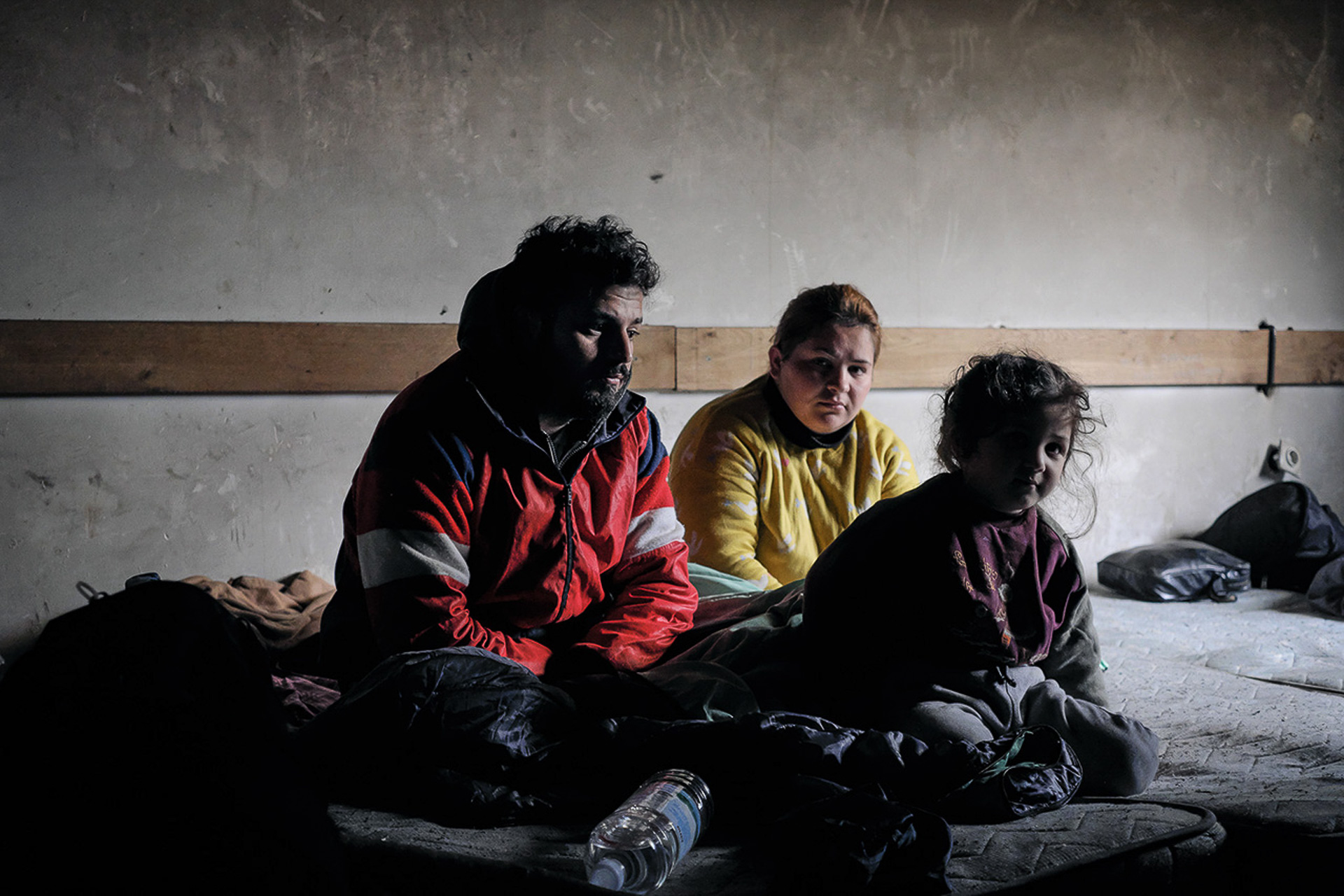
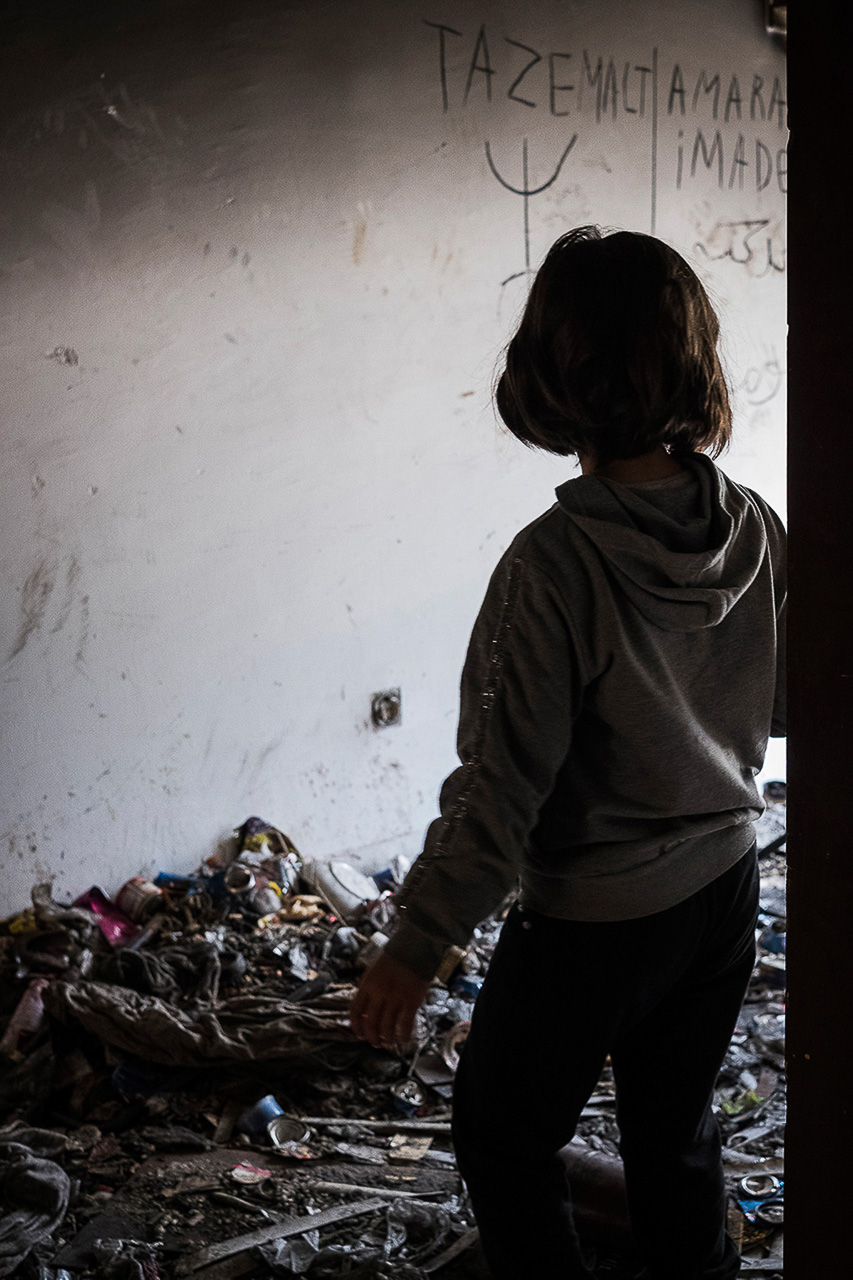
She is 10 years old and translates for her parents, guiding us to their hideout in the forest as if it were their home. Trash and excrement entirely cover the ground. An entire generation is being born and raised in exile and on the run. They grow up with nothing, in constant movement, witnessing their fathers being beaten and their mothers freezing in the forests, pushed back. And yet we expect them to adapt, embrace our culture, integrate, and thank us. Somewhere between Bosnia and Herzegovina and Croatia, 2019.
Shelters, abandoned houses, and buildings destroyed by war and never rebuilt are the places where thousands of people on the run find refuge, hiding like hunted animals. Somewhere between Bosnia and Herzegovina and Croatia, 2019.
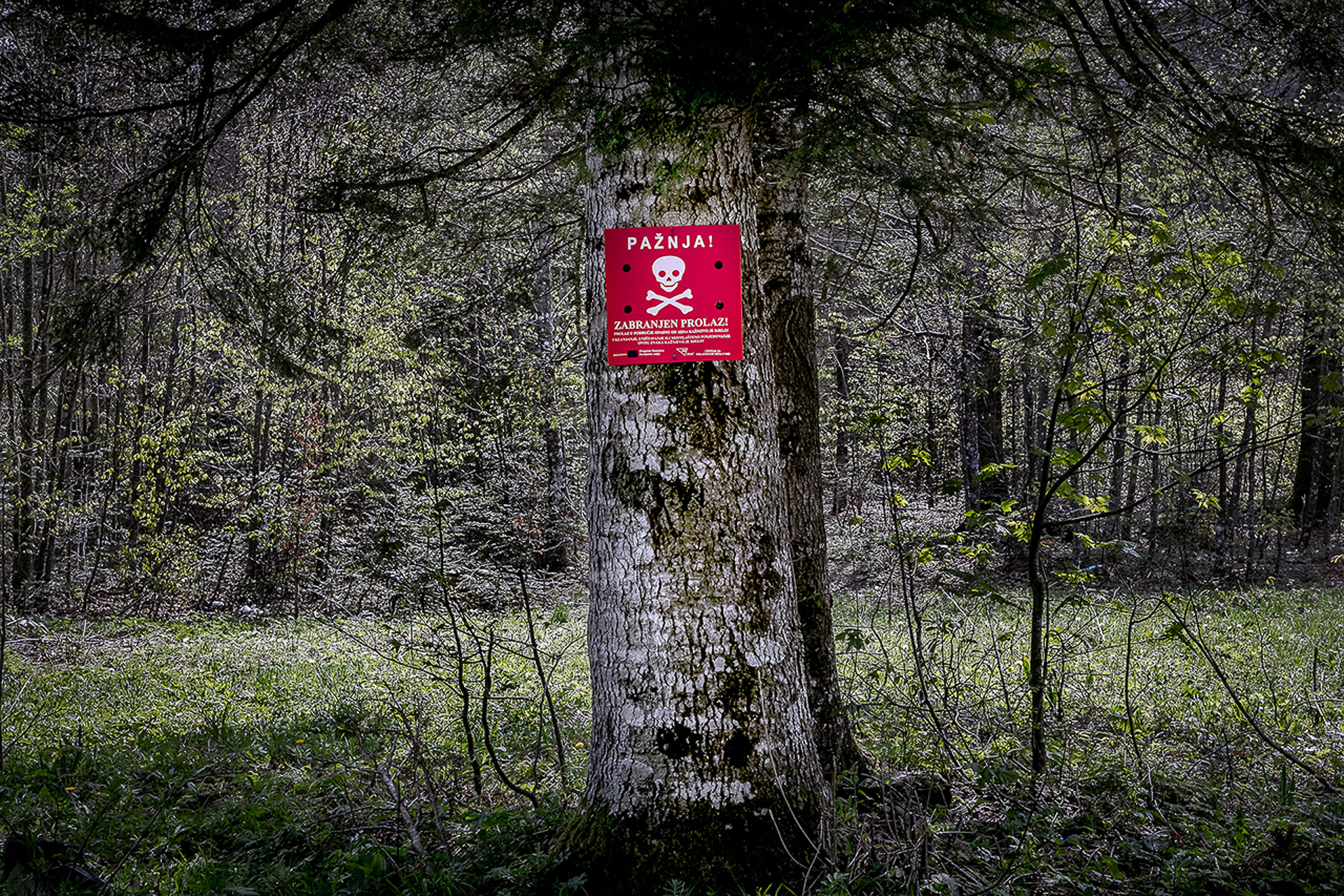
“Attention! No entry! Entering a mine-risk area is a punishable offence!” reads a sign in Croatian attached to a tree in the forest. It is one of the reasons why the migration route through this forest is called “the game.” Not only law enforcement pushing people back to the starting point, but also landmines, wolves, bears, and no way to orient oneself at night. Somewhere in the Croatian forest, 2019.
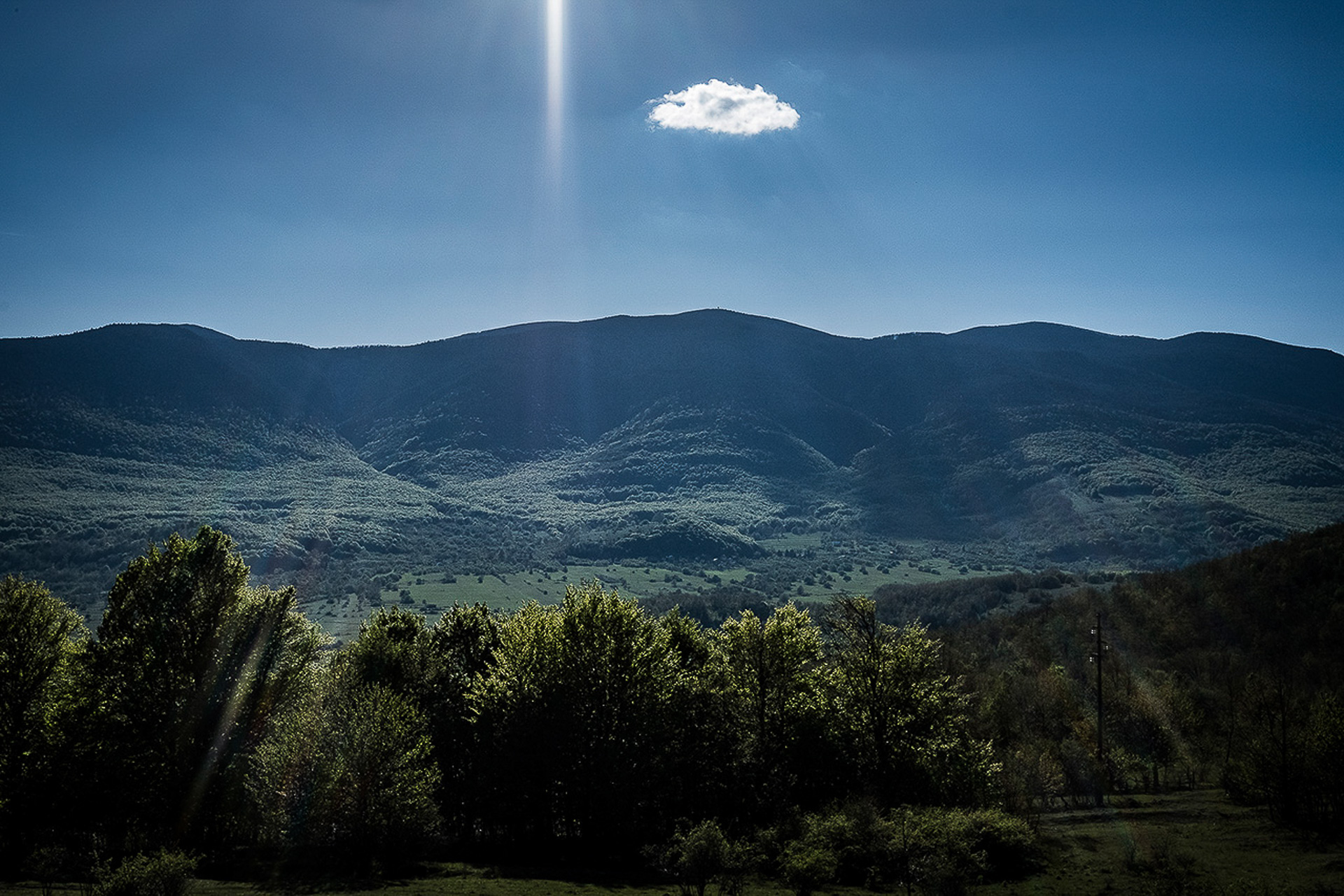
In the seemingly perfect landscape of the Croatian forest, the unwanted and out-of-place bodies of refugees and migrants become invisible and hidden, yet it is precisely behind this façade that the tragedy of a generation unfolds. Izačić border crossing, Croatia, 2019.